

Lisbon, the capital of Portugal, spreads over steep hills on the north bank of the Tagus estuary, a few kilometres from the Atlantic. One of the oldest cities in Western Europe, it was shaped by Phoenicians, Romans and Moors, became the starting point of the Portuguese voyages of discovery in the 15th and 16th centuries, and was largely rebuilt after the great earthquake of 1755. Today the city proper has about 550,000 inhabitants and its metropolitan area nearly three million. Visitors come for the labyrinth of Alfama below the castle, the grand Pombaline grid of the Baixa, the cafés of Chiado, the Manueline monuments of Belém, the melancholy of fado and an ever-changing light reflected from the river. Winters are mild, which makes Lisbon one of Europe’s most pleasant city breaks between November and February, when the city centre is decorated with Christmas lights. This guide brings together neighbourhoods, sights, day trips, food and practical information based on official sources.
Content updated: 29 October 2026 · Checked against Visit Lisboa (official tourism board), official monument and museum websites and the Portuguese consular visa portal
Lisbon at a Glance
- Country
- Portugal · capital
- Population
- About 550,000 (city); about 2.9 million (metropolitan area)
- Language
- Portuguese; English is widely spoken in tourism
- Currency
- Euro (EUR)
- Time zone
- Western European Time (WET, UTC+0), 3 hours behind Türkiye in winter
- Highlights
- Alfama, São Jorge Castle, Baixa, Belém, Tram 28, Sintra
- Airport
- Lisbon Humberto Delgado Airport (LIS), connected to the centre by metro
- Winter
- Mild: in December usually around 8–15 °C, rainy days possible
Lisbon in Pictures
The Tagus from Miradouro de Santa Luzia, the 25 de Abril Bridge and Pena Palace in Sintra: Lisbon and its surroundings in three images.


Winter, Christmas and New Year in Lisbon
Lisbon does not have a large German-style Christmas market tradition, but the festive season is very visible. Each year the city hangs lights across the streets of the Baixa, Chiado, Rossio and Avenida da Liberdade, and a large illuminated Christmas tree stands on Praça do Comércio facing the river. According to Visit Lisboa, in 2025 the lights were switched on on 22 November and stayed on until 4 January 2026, using LED lamps to save energy. In 2026 the organisation of the lights passed to the Associação Turismo de Lisboa; local media report a lighting ceremony on 21 November 2026, but dates, hours and any concerts or seasonal markets must be confirmed in the official programme. Portuguese Christmas is above all a family holiday: on Christmas Eve (consoada) families gather for salt cod, and bolo-rei, a crown-shaped cake with candied fruit, is sold everywhere from late November. New Year’s Eve has traditionally been celebrated on Praça do Comércio and along the river.


| Event | Location | 2026 dates | Note |
|---|---|---|---|
| Christmas lights (Iluminações de Natal) | Baixa, Chiado, Rossio, Avenida da Liberdade and other streets | Official 2026 dates not yet published (2025: 22 Nov – 4 Jan) | Free to view; best after dark. Check Visit Lisboa. |
| Christmas tree on Praça do Comércio | Praça do Comércio (Terreiro do Paço) | Lighting ceremony reported for 21 November 2026 (unconfirmed) | Free; programme and performers not yet announced. |
| Festive season in the shops | Baixa and Chiado shopping streets | Late November – early January | Shops are closed on 25 December; reduced hours possible on 24 and 31 December. |
| New Year’s Eve | Praça do Comércio and riverside | 31 December 2026 | Celebrations have traditionally taken place here; check the official 2026 programme. |
What to try
Bolo-rei
Crown-shaped Christmas cake with candied fruit and nuts, the symbol of a Portuguese Christmas.
Bolo-rainha
A variant of bolo-rei with nuts and dried fruit only, without candied fruit.
Filhós and sonhos
Fried dough sweets dusted with sugar and cinnamon, typical of Christmas.
Rabanadas
Portuguese “French toast” soaked in milk or wine syrup and fried.
Bacalhau da consoada
Salt cod with potatoes, cabbage and eggs, eaten on Christmas Eve.
Castanhas assadas
Roasted chestnuts sold in paper cones by street vendors in winter.
Ginjinha
Sour-cherry liqueur served in small glasses (contains alcohol).
Pastel de nata
Custard tart with crisp pastry, delicious warm with cinnamon all year round.
Tips for winter and Christmas in Lisbon
- Start the lights walk at Praça do Comércio, pass under the Arco da Rua Augusta and continue via Rua Augusta and Rossio to Chiado or Avenida da Liberdade.
- The lights are switched on in the evening; daily hours are set in each year’s programme.
- On 24 and 25 December many restaurants and museums are closed or have reduced hours; book or check in advance.
- Hills and cobblestones (calçada) are slippery in the rain; wear shoes with good grip.
- Bring a light raincoat or umbrella; winter rain usually comes in short spells.
- Winter days are short but often sunny; plan miradouros and Belém in daylight and the lights after dark.
Check before you go: Visit Lisboa · Events (official) ↗
Information was checked on 29 October 2026. On that date the official 2026 Christmas lights programme had not yet been published by Visit Lisboa or the city council; the 2025 dates are given for reference only. Check the official sources before your visit.
When to Go
Lisbon has a Mediterranean climate influenced by the Atlantic, with mild, wetter winters and warm, dry summers. Spring (March–May) and autumn (September–October) are ideal for walking the hills and visiting Belém and Sintra. Summer is hot and busy; in June the city celebrates the Festas de Lisboa, with Santo António night on 12–13 June filling Alfama with grilled sardines and street parties. Winter is mild and quieter, with lower crowds at the main monuments and Christmas lights in the centre from late November.
| Month | Sightseeing | Christmas lights | Outdoors | Crowds |
|---|---|---|---|---|
| January | Good | None | Good | Quiet |
| February | Good | None | Good | Quiet |
| March | Very good | None | Good | Moderate |
| April | Very good | None | Very good | Busy |
| May | Very good | None | Very good | Busy |
| June | Good | None | Very good | Busy |
| July | Good | None | Very good | Busy |
| August | Good | None | Very good | Busy |
| September | Very good | None | Very good | Busy |
| October | Very good | None | Very good | Moderate |
| November | Good | Partly | Good | Quiet |
| December | Good | Christmas lights | Good | Moderate |
- In December daytime temperatures are usually around 14–15 °C and nights around 8 °C; rain comes in spells.
- The Christmas lights normally run from late November to early January; the 2026 dates are to be confirmed.
- In June the Festas de Lisboa and Santo António night bring big crowds to Alfama.
- From May to September queues at Jerónimos, Belém Tower and Sintra palaces are long; book tickets online where possible.
Visa and Entry (Turkish citizens)
Turkish citizens with an ordinary (burgundy) passport need a Schengen visa for tourist travel to Portugal. Special, service and diplomatic passports have different rules; check the current situation on the website of the Turkish Ministry of Foreign Affairs.
You apply at the consulate of your main destination. If Portugal is your main destination, the Portuguese consular visa portal (vistos.mne.gov.pt) explains the application requirements and procedure.
If you combine Lisbon with Spain or other Schengen countries, apply to the country where you will spend the longest; if the stays are equal, apply to the country of first entry.
Under the EU Entry/Exit System (EES), being introduced in stages, your biometric data (facial image and fingerprints) may be recorded on your first entry; allow extra time at the airport.
Visa fees, waiting times and required documents may change; this guide does not give fees. Use the current lists on the official websites before you apply.
Travel medical insurance, proof of accommodation and return travel are part of the application; see the official sources for details.
Check before you go: T.C. Dışişleri Bakanlığı · Türk vatandaşlarının tabi olduğu vize uygulamaları ↗ · vistos.mne.gov.pt ↗ · EES · europa.eu ↗ · Rota Atlası visa guide (TR)
Travel medical insurance
Check the official visa and entry sources above first: they state whether travel medical insurance is required and the minimum cover. Compare any policy’s cover amount, validity dates and countries covered with the official requirement.
Rota Atlası does not currently offer an insurance partnership; there are no paid links in this section. Last updated: 1 November 2026
Getting to Lisbon
- By air: Lisbon Humberto Delgado Airport (LIS) lies within the city, about 7 km north of the centre. The metro red line connects the airport with the city; change at Alameda or São Sebastião for other lines. Check current flights from Türkiye only with airlines and airports; this guide does not recommend flights.
- By train: Lisbon has several main stations. Santa Apolónia and Oriente serve long-distance trains to Porto and the north; Rossio serves Sintra, and Cais do Sodré serves the coastal line to Cascais. Timetables at CP.
- By bus: Long-distance buses arrive mainly at Sete Rios and Oriente.
- By car: Driving and parking in the historic centre is difficult; for a city break public transport is far easier.
Getting Around

On foot
Baixa, Chiado, Alfama and Bairro Alto are walkable but very hilly; wear comfortable shoes.
Metro
Four metro lines (blue, yellow, green, red) connect the centre, the airport and Oriente.
Trams
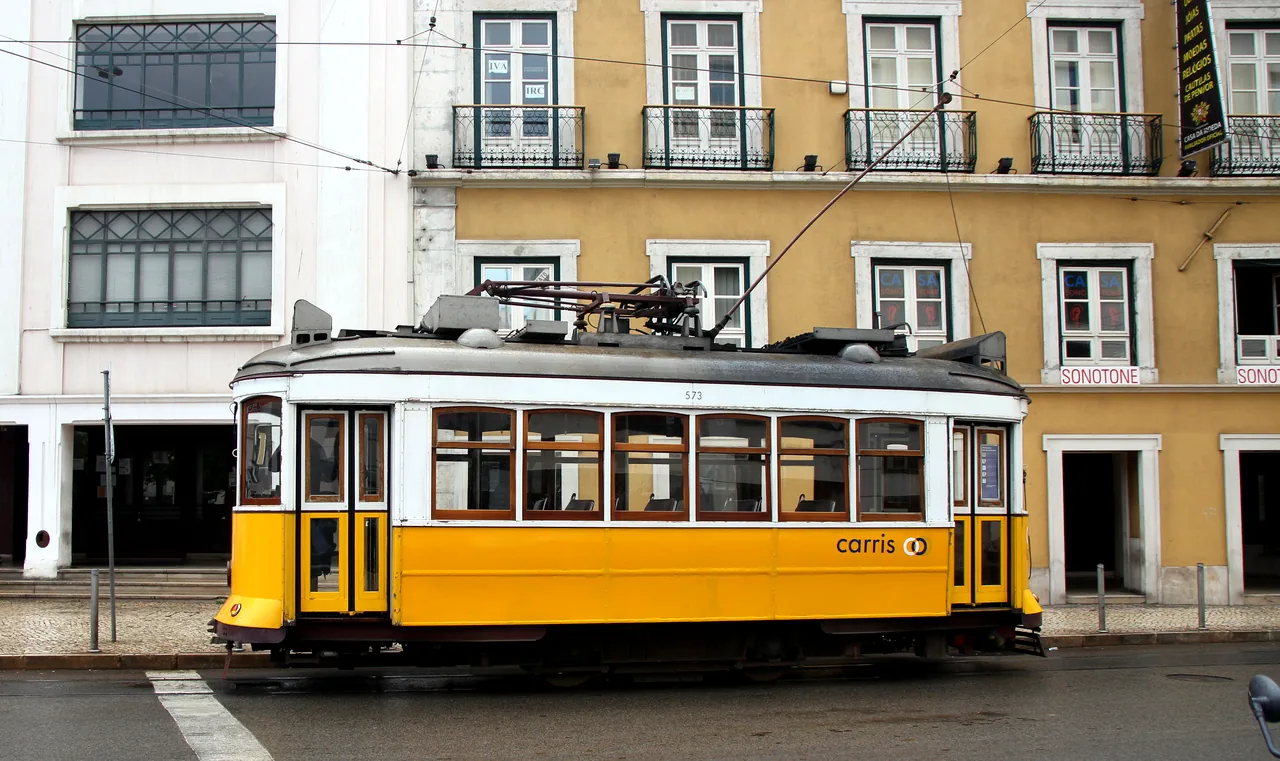
Historic trams, including the famous route 28, climb through Graça, Alfama, Baixa and Estrela; route 15E goes to Belém.
Funiculars and lifts
Historic funiculars such as Bica and Lavra and the Santa Justa Lift help on the steepest slopes; check current operating status with Carris.
Tickets
The rechargeable “navegante” card works on metro, Carris trams and buses and some ferries; check current fares on the official websites.
Ferries
Ferries cross the Tagus from Cais do Sodré to Cacilhas, near the Cristo Rei.
Things to See
Lisbon’s historic districts are close to each other but separated by hills. Baixa, the flat grid rebuilt after 1755, links the river at Praça do Comércio to Rossio. To the east Alfama climbs to São Jorge Castle and Graça; to the west Chiado and Bairro Alto sit on the opposite hill. Along the river to the west lie Belém and the new riverside around MAAT and LX Factory; to the north-east the modern Parque das Nações. Sintra and Cascais are easy day trips by train.
The oldest quarter
Alfama and Graça: alleys and miradouros

Alfama, on the slope between the castle and the river, is Lisbon’s oldest neighbourhood. Its layout of steep stairways, narrow alleys and small squares survived the 1755 earthquake better than the Baixa, and still recalls the Moorish city. Laundry hangs from tiled façades, and in the evenings fado is heard from small houses. Above Alfama, Graça offers some of the best viewpoints in the city: Miradouro da Graça and Miradouro da Senhora do Monte look out over the castle, the Baixa and the river. Miradouro de Santa Luzia and Portas do Sol, on the edge of Alfama, frame the rooftops and the Tagus. Visit Lisboa: Alfama →
Don’t miss
- Miradouro de Santa Luzia and Portas do Sol
- Miradouro da Senhora do Monte at sunset
- The church and monastery of São Vicente de Fora
- The stairways and small squares of Alfama
- The Feira da Ladra flea market (on certain days)
Tips
- Alfama is a residential area; respect residents’ privacy.
- Tram 28 passes through Graça and Alfama but is often full; walking is often faster.
- Watch your belongings on trams and in crowded viewpoints.

Above the city
São Jorge Castle

São Jorge Castle crowns the highest hill of historic Lisbon. The site was fortified long before the Moors; after Afonso Henriques took the city in 1147 the castle became a royal residence for several centuries. Today you walk along the restored walls and towers, through shady courtyards with views over the whole city and the river, and visit the archaeological site with remains from different periods. The camera obscura in one of the towers projects live images of Lisbon. São Jorge Castle (official) →
Don’t miss
- Walls and towers with views over the Tagus
- The main courtyard with its umbrella pines
- The archaeological site
- The camera obscura (check opening times)
Tips
- Buy tickets on the official website to avoid queues at busy times.
- Combine with Alfama, walking downhill afterwards.
- Check closing days and opening hours on the official website.
Romanesque fortress church
Lisbon Cathedral (Sé)

Lisbon Cathedral, the Sé, was begun shortly after the conquest of 1147 and looks like a fortress with its two crenellated towers. Over the centuries Gothic and Baroque elements were added, and the earthquake of 1755 caused heavy damage. The Gothic cloister houses archaeological excavations with remains from Roman, Moorish and medieval times. Trams 28 and 12 pass right in front of the façade, a classic photo motif.
Don’t miss
- The Romanesque façade and rose window
- The Gothic cloister and its excavations
- The treasury
- The tram passing in front of the cathedral
Tips
- The cathedral is a place of worship; dress respectfully and avoid service times.
- Check current opening hours and entry fees for the cloister and treasury.
The city of light and order
Baixa: Praça do Comércio, Rossio and the Santa Justa Lift

After the 1755 earthquake and tsunami, the Marquis of Pombal had the lower town rebuilt on a regular grid with uniform buildings, an early example of earthquake-resistant urban planning. Praça do Comércio, open to the river, was the site of the royal palace destroyed in 1755; its arcaded yellow buildings and the Arco da Rua Augusta lead into the pedestrian Rua Augusta. To the north, Rossio with its wavy black-and-white pavement and two fountains has been the city’s main square for centuries. The neo-Gothic Santa Justa Lift, opened in 1902, links the Baixa with the Largo do Carmo in Chiado. Visit Lisboa: Praça do Comércio →
Don’t miss
- Praça do Comércio and the Arco da Rua Augusta
- Rua Augusta
- Rossio and Praça da Figueira
- The Santa Justa Lift
- The wavy Portuguese pavement (calçada)
Tips
- Expect queues at the Santa Justa Lift; you can also reach the upper platform from Chiado.
- Be firm with street sellers offering “sunglasses” or other goods.
- In December the Christmas tree and lights make the Baixa the centre of the festive season.


Cafés, theatres and nightlife
Chiado, Bairro Alto and Bica

Chiado, between the Baixa and Bairro Alto, is Lisbon’s elegant district of historic cafés, bookshops, theatres and churches. A big fire in 1988 destroyed part of it; the reconstruction was led by architect Álvaro Siza. Next to it, the ruins of the Carmo Convent, roofless since 1755, house an archaeological museum. Bairro Alto, a grid of narrow streets from the 16th century, is quiet during the day and becomes the centre of nightlife at night. The Bica funicular climbs one of Lisbon’s most photographed streets, and Miradouro de Santa Catarina looks over the river and the bridge.
Don’t miss
- Largo do Chiado and Rua Garrett
- The Carmo Convent ruins
- Miradouro de São Pedro de Alcântara
- The Bica funicular
- Bairro Alto at dusk
Tips
- Bairro Alto is noisy late at night; choose accommodation accordingly.
- In December Rua Garrett and Chiado are among the most decorated streets.


The Age of Discoveries
Belém: Belém Tower and Padrão dos Descobrimentos

Belém, west of the centre on the river, is where ships set out on the Portuguese voyages of discovery. Belém Tower, built in the early 16th century in the Manueline style to guard the river entrance, is a UNESCO World Heritage Site together with the Jerónimos Monastery. Further east the Padrão dos Descobrimentos, a monument shaped like a caravel prow, was erected in its current form in 1960 for the 500th anniversary of the death of Henry the Navigator; from its top you look down on a giant compass rose with a world map in the pavement. Belém Tower (official) →
Don’t miss
- Belém Tower and its Manueline decoration
- The Padrão dos Descobrimentos and its viewpoint
- The compass rose in the pavement
- The riverside promenade
Tips
- Tram 15E and trains from Cais do Sodré reach Belém.
- Check opening days and whether booking is required on the official websites.
- Belém fits well into a full day with Jerónimos and MAAT.

Manueline masterpiece
Jerónimos Monastery

The Jerónimos Monastery was founded by King Manuel I at the beginning of the 16th century, financed largely by the wealth of the spice trade. Its long limestone façade and the two-storey cloister are the finest example of the Manueline style, with ropes, sea creatures, armillary spheres and exotic plants carved in stone. The church of Santa Maria houses the tombs of Vasco da Gama and the poet Luís de Camões. Since 1983 the monastery and Belém Tower have been a UNESCO World Heritage Site. Jerónimos Monastery (official) →
Don’t miss
- The two-storey cloister
- The church of Santa Maria and the tomb of Vasco da Gama
- The south portal
- Jardim da Praça do Império in front of the monastery
Tips
- Queues can be long; booking online and arriving early helps.
- The church entrance can be separate from the cloister; check on site.
- Check closing days on the official website.

New Lisbon on the river
MAAT, the 25 de Abril Bridge and Cristo Rei

Between Belém and Cais do Sodré the riverbank has been transformed into a long promenade. The MAAT – Museum of Art, Architecture and Technology, with its wave-shaped building opened in 2016 next to a former power station, has a roof you can walk on with views of the river. The 25 de Abril Bridge, opened in 1966, spans the Tagus; on the south bank, in Almada, the Cristo Rei statue looks across to the city. A short ferry trip from Cais do Sodré to Cacilhas gives a different view of Lisbon. MAAT (official) →
Don’t miss
- The walkable roof of MAAT
- The riverside promenade
- The 25 de Abril Bridge at sunset
- Cristo Rei and its viewpoint in Almada
Tips
- Cycling and walking on the riverbank are flat and easy.
- Check Cristo Rei opening times before crossing the river.

Creative quarter
LX Factory and Alcântara

LX Factory occupies a former 19th-century industrial complex in Alcântara, beneath the 25 de Abril Bridge. Old factory halls now house design shops, studios, cafés and a well-known bookshop, and walls are covered with street art. On weekends it is a popular meeting place for locals. LX Factory (official) →
Don’t miss
- Industrial architecture and street art
- Independent shops and studios
- The view of the bridge from below
Tips
- Easy to combine with Belém by tram 15E.
- Opening hours vary by shop; this guide does not recommend specific businesses.
Art and tiles
Gulbenkian and the National Tile Museum

The Calouste Gulbenkian Museum houses the collection of the Armenian oil magnate who spent his final years in Lisbon: Egyptian, Greek and Islamic art, European painting and Lalique jewellery. The museum and its modern collection are set in a lovely garden. In the east of the city, the National Tile Museum (Museu Nacional do Azulejo) occupies the former Madre de Deus convent and tells the story of Portuguese azulejos from the 15th century to today; its highlight is a large tile panorama of Lisbon before the earthquake. Gulbenkian Museum (official) →
Don’t miss
- The Founder’s Collection at the Gulbenkian
- The Gulbenkian garden
- The tile panorama of Lisbon at the Azulejo Museum
- The gilded church of Madre de Deus
Tips
- Both museums are good choices on rainy days.
- Check current opening days, exhibitions and any renovation closures on the official websites.

Expo 98
Parque das Nações and the Oceanário

In the north-east, the site of the 1998 World Exposition has become a modern district on the river. The Oceanário de Lisboa, one of the largest aquariums in Europe, is built around a huge central tank representing the ocean. Gare do Oriente, Santiago Calatrava’s station, the cable car along the river and the long Vasco da Gama Bridge on the horizon complete the scene. Oceanário de Lisboa (official) →
Don’t miss
- The Oceanário and its central tank
- Gare do Oriente
- The riverside promenade
- The view of the Vasco da Gama Bridge
Tips
- Reach the area directly with the red metro line (Oriente).
- A good option for families and rainy days.
Quiet hills
Estrela, Príncipe Real and Campo de Ourique

West of Bairro Alto lie quieter, residential neighbourhoods. The Basílica da Estrela, built in the late 18th century for Queen Maria I, has a large white dome; from its roof you look out over the city. Opposite is the Jardim da Estrela park. Príncipe Real, with its garden and huge cedar, is known for concept stores and 19th-century mansions, and Campo de Ourique has a lively local market.
Don’t miss
- The dome and roof of the Basílica da Estrela
- Jardim da Estrela
- Príncipe Real garden
- Tram 28 to its terminus at Campo de Ourique
Tips
- A good area to escape the crowds of the centre.
- Check whether the basilica roof is open on the day of your visit.
Palaces and the Atlantic
Day trips: Sintra and Cascais

Sintra, about 40 minutes by train from Rossio, is a romantic landscape of palaces and gardens in wooded hills, listed by UNESCO in 1995 as a cultural landscape. The colourful Pena Palace, the Moorish Castle, the Sintra National Palace and Quinta da Regaleira with its initiation well are the main sights. Cascais, a former fishing village and royal summer resort on the coast, is reached by the coastal train from Cais do Sodré; its promenade leads to Boca do Inferno, and on the way the train passes Estoril. Parques de Sintra (official) →
Don’t miss
- Pena Palace and park
- The Moorish Castle
- Quinta da Regaleira
- The Cascais seafront and Boca do Inferno
- Cabo da Roca, the westernmost point of mainland Europe
Tips
- Book Sintra palace tickets online with a time slot, especially on weekends.
- Sintra is cooler and more humid than Lisbon; bring a jacket.
- The roads in Sintra are narrow; trains and local buses are easier than a car.
1–3 Day Itineraries, a Winter Lights Day + 5-Day Lisbon & Sintra Route
The itineraries group neighbourhoods by hill to limit climbs and leave the lights for the evening. Day 1: Baixa, Alfama and the castle; day 2: Belém and the riverside; day 3: Sintra. The winter lights day combines Chiado, the Baixa and Praça do Comércio after dark; the 5-day route adds museums, Cascais and Parque das Nações.
Day 1: Baixa, Alfama and the castle
- Morning: Praça do Comércio, Arco da Rua Augusta and Rua Augusta.
- Rossio and the Santa Justa Lift.
- Climb to the Sé and Miradouro de Santa Luzia.
- Afternoon: São Jorge Castle.
- Evening: an Alfama walk, with fado if you wish.
Day 2: Belém and the riverside
- Morning: Jerónimos Monastery and its cloister.
- Padrão dos Descobrimentos and Belém Tower.
- Riverside walk to MAAT.
- Afternoon: LX Factory in Alcântara.
- Evening: Chiado and Bairro Alto.
Day 3: Sintra
- Early train from Rossio to Sintra.
- Pena Palace and park (time slot booked).
- The Moorish Castle or Quinta da Regaleira.
- The historic centre and the National Palace.
- Evening: return to Lisbon.
Winter lights day
- Late morning: Gulbenkian Museum and garden.
- Afternoon: Chiado, Rua Garrett and the Carmo ruins.
- At sunset: Miradouro de São Pedro de Alcântara.
- After dark: Rossio, Rua Augusta and the Christmas tree on Praça do Comércio.
- Roasted chestnuts and a warm pastel de nata on the way.
5 days: Lisbon, Sintra and Cascais
- Days 1–3: as above.
- Day 4: National Tile Museum, Graça and tram 28 to Estrela.
- Day 5: Cascais by the coastal train, Boca do Inferno; or Parque das Nações and the Oceanário.
- Optional: ferry to Cacilhas and Cristo Rei.
- Departure via Humberto Delgado Airport.
Lisbon and Portuguese Cuisine
Portuguese cuisine is built on fish and seafood, olive oil, bread and pastries. The following are traditional dishes and products, not restaurant recommendations.


Pastel de nata
Custard tart with crisp puff pastry; in Belém it is called pastel de Belém.
Bacalhau
Salt cod, said to be prepared in hundreds of ways; bacalhau à Brás is with eggs and potato straws.
Sardinhas assadas
Grilled sardines, the summer and Santo António classic.
Caldo verde
Kale and potato soup, perfect in winter.
Bifana
A sandwich with marinated pork; ask about ingredients.
Arroz de marisco
A soupy seafood rice.
Queijo and presunto
Portuguese cheeses such as Serra da Estrela and cured ham.
Portuguese wine
Vinho verde, Douro and Alentejo wines, and port.
- Bread, olives and cheese (couvert) placed on the table are usually charged if you eat them; you can send them back.
- Pork is common in Portuguese cuisine; ask about ingredients.
- Lunch is often eaten between 12:30 and 14:30, dinner after 19:30.
- Service is not always included; rounding up or leaving about 5–10% is common for good service.
Culture and Etiquette

- A “bom dia” and “obrigado/obrigada” are appreciated.
- Churches are places of worship; dress respectfully and do not visit during services.
- Fado is listened to in silence; avoid talking during performances.
- Stand on the right on escalators and let passengers get off first on trams and the metro.
- Portuguese people often eat dinner later than in Türkiye.
- Do not take stones from the calçada pavement or tiles from buildings; azulejo theft is a problem for the city.
Safety and Health
- Lisbon is generally safe; pickpockets are active on tram 28, in Baixa and at viewpoints.
- Be firm with street sellers offering drugs or fake goods in the Baixa and Bairro Alto.
- The calçada is slippery when wet; wear shoes with good grip.
- In an emergency call 112.
- Make sure your travel medical insurance is valid in Portugal.
- Keep a copy of your passport and visa separately.
What Your Budget Depends On
This guide does not give prices; prices change with season and year. Your budget depends on these factors:
Travel period
Summer, Easter, the June festivals and New Year are the busiest periods.
Accommodation
Options in Baixa, Chiado, Avenida da Liberdade, Alfama and Parque das Nações; a municipal tourist tax applies per night.
Transport
Metro, trams, buses, funiculars and trains to Sintra and Cascais; the navegante card is rechargeable.
Sights
Monuments, palaces and museums charge separate entry; the official Lisboa Card combines transport and some entries.
Day trips
Train tickets to Sintra and Cascais and palace tickets.
Food
Bakeries, local tascas and restaurants vary widely in price.
Practical Information
- Money: euro (EUR); cards are widely accepted, carry some cash for small shops.
- Language: Portuguese; English is widely spoken in tourism.
- Electricity: 230 V, type C/F.
- Time: WET (UTC+0) in winter, 3 hours behind Türkiye.
- Shops: usually open on weekdays and Saturdays; many central shops also on Sundays.
- Holidays: 8 December (Immaculate Conception), 25 December and 1 January are public holidays.
- Tap water: safe to drink.
- Emergency: 112.
Frequently Asked Questions
When are the Christmas lights in Lisbon in 2026?
On 29 October 2026 the official programme had not been published. In 2025, according to Visit Lisboa, the lights ran from 22 November 2025 to 4 January 2026. Local media report a lighting ceremony on 21 November 2026 on Praça do Comércio; check Visit Lisboa before you travel.
Does Lisbon have a Christmas market?
Lisbon is not known for a large German-style Christmas market. The festive season is mainly visible through the street lights and the Christmas tree on Praça do Comércio; seasonal markets vary from year to year, so check the official events calendar.
Is Lisbon a good winter destination?
Yes. Winters are mild, with December days usually around 14–15 °C, and monuments are less crowded; occasional rain is likely.
How do I get from the airport to the centre?
The metro red line connects the airport to the city, with connections to the other lines at Alameda and São Sebastião. Taxis and ride-hailing services are also available.
Do Turkish citizens need a visa for Portugal?
Holders of ordinary passports need a Schengen visa. Check the current rules with the Turkish Ministry of Foreign Affairs and on the Portuguese consular visa portal.
Is tram 28 worth it?
It is a classic route through Graça, Alfama, Baixa and Estrela, but it is often very crowded. Ride early in the morning or walk part of the route.
How many days do I need in Lisbon?
Three days for the city and Sintra; five days for museums, Cascais and a more relaxed pace.
Do I need to book Sintra in advance?
For Pena Palace, booking a time slot online is strongly recommended, especially on weekends and in high season.
What is the time difference with Türkiye?
In winter Lisbon is on UTC+0, 3 hours behind Türkiye.
Is the Lisboa Card worth it?
It depends on your plans: it includes public transport and some entries. Compare the official list with the sights you want to visit.
Where to stay
Stay close to the areas where you will spend most time. The areas below are covered in detail in this guide; check public transport links in the getting-around section.
- The oldest quarterAlfama and Graça: alleys and miradouros
- Above the citySão Jorge Castle
- Romanesque fortress churchLisbon Cathedral (Sé)
- The city of light and orderBaixa: Praça do Comércio, Rossio and the Santa Justa Lift
- Cafés, theatres and nightlifeChiado, Bairro Alto and Bica
- The Age of DiscoveriesBelém: Belém Tower and Padrão dos Descobrimentos
- Manueline masterpieceJerónimos Monastery
- New Lisbon on the riverMAAT, the 25 de Abril Bridge and Cristo Rei
- Creative quarterLX Factory and Alcântara
- Art and tilesGulbenkian and the National Tile Museum
- Expo 98Parque das Nações and the Oceanário
- Quiet hillsEstrela, Príncipe Real and Campo de Ourique
Search hotels in these areas (Hotellook) ↗ (affiliate link)Search on Booking.com ↗
Where to stay in Lisbon → · 3 days in Lisbon: ready-made itinerary →
Affiliate disclosure: Hotellook, Aviasales, Klook, Airalo, Tiqets and DiscoverCars links are affiliate links; Rota Atlası may earn a commission on bookings made through them, at no extra cost to you. Official and in-guide links are not paid. Last updated: 1 November 2026 · Privacy and affiliates
Transport and connectivity
- Airport transferOptions from the airport to the city are in this guide’s getting there section.
- Mobile data (eSIM)Airalo eSIM ↗ (affiliate link)
- TrainsOfficial rail website ↗
- Car hireYou rarely need a car within the city; see getting around first. Compare car hire on DiscoverCars ↗ (affiliate link)
Affiliate disclosure: Hotellook, Aviasales, Klook, Airalo, Tiqets and DiscoverCars links are affiliate links; Rota Atlası may earn a commission on bookings made through them, at no extra cost to you. Official and in-guide links are not paid. Last updated: 1 November 2026 · Privacy and affiliates
Search flights (affiliate link)
Search flights from any airport in any country. Results open on Aviasales in a new tab, where you book.
This form is an affiliate link: Rota Atlası may earn a commission on bookings made via Aviasales (Travelpayouts), at no extra cost to you. Check price, baggage and terms on the booking site. Airport data: OurAirports (public domain).
Flights, hotels and tours
Find tours and tickets
- Alfama & Miradouro de Santa Luzia
GetYourGuide ↗ · Klook ↗ (affiliate link) - São Jorge Castle
GetYourGuide ↗ · Klook ↗ (affiliate link) - Praça do Comércio & Baixa
GetYourGuide ↗ · Klook ↗ (affiliate link) - Tram 28
GetYourGuide ↗ · Klook ↗ (affiliate link)
Hotellook, Aviasales, Klook, Airalo and Tiqets links in this box are affiliate links (Travelpayouts): Rota Atlası may earn a commission on bookings made through them, at no extra cost to you. GetYourGuide links currently carry no affiliate code. Check prices and terms with the provider. Last updated: 1 November 2026 · Privacy and affiliates
Sources
- T.C. Dışişleri Bakanlığı · Türk vatandaşlarının tabi olduğu vize uygulamaları ↗
- Ministério dos Negócios Estrangeiros · Portal Consular de Vistos (official) ↗
- European Union · Entry/Exit System (EES) ↗
- Visit Lisboa · Events (official) ↗
- Visit Lisboa · Alfama (official) ↗
- Visit Lisboa · Praça do Comércio (official) ↗
- Visit Lisboa · Tram 28 (official) ↗
- Castelo de São Jorge (official) ↗
- Mosteiro dos Jerónimos (official) ↗
- Torre de Belém (official) ↗
- UNESCO World Heritage Centre · Monastery of the Hieronymites and Tower of Belém ↗
- Padrão dos Descobrimentos (official) ↗
- MAAT (official) ↗
- Museu Calouste Gulbenkian (official) ↗
- Museu Nacional do Azulejo (official) ↗
- Oceanário de Lisboa (official) ↗
- Museu do Fado (official) ↗
- LX Factory (official) ↗
- Parques de Sintra (official) ↗
- UNESCO World Heritage Centre · Cultural Landscape of Sintra ↗
- Metropolitano de Lisboa (official) ↗
- Carris · trams and buses (official) ↗
- CP · Comboios de Portugal (official) ↗
- Aeroporto de Lisboa (official) ↗
- Visit Portugal (official tourism portal) ↗
- GOV.UK · Foreign travel advice · Portugal ↗
This page is for information only. Dates, hours, entry rules and transport information can change; check the official sources above before travelling. No prices, flights, hotels or restaurants have been invented in this guide.
Photo credits
The photos on this page come from Wikimedia Commons and are used under the stated authors and licences (CC BY, CC BY-SA, CC0 or public domain). Full list of sources
- The rooftops of Alfama and the Tagus river — Dale Cruse - 10M views from San Francisco, CA, USA · CC BY 4.0 · Wikimedia Commons
- The giant Christmas tree on Praça do Comércio — RickMorais · CC BY-SA 4.0 · Wikimedia Commons
- Christmas lights on Rossio square — RickMorais · CC BY-SA 4.0 · Wikimedia Commons
- Christmas lights in the streets of Chiado — Heather Cowper from Bristol, UK · CC BY 2.0 · Wikimedia Commons
- The narrow lanes of Alfama — dirk.olbertz · CC BY 2.0 · Wikimedia Commons
- View of the Tagus from Miradouro de Santa Luzia — Jakub Hałun · CC BY 4.0 · Wikimedia Commons
- São Jorge Castle above the city — Jakub Hałun · CC BY 4.0 · Wikimedia Commons
- The façade of Lisbon Cathedral (Sé) — Diego Delso · CC BY-SA 3.0 · Wikimedia Commons
- The Rua Augusta Arch on Praça do Comércio — Diego Delso · CC BY-SA 3.0 · Wikimedia Commons
- The Neo-Manueline façade of Rossio station — Diego Delso · CC BY-SA 4.0 · Wikimedia Commons
- Café terraces on Largo do Chiado — Bahnfrend · CC BY-SA 4.0 · Wikimedia Commons
- A street in Bairro Alto — Neil · CC BY 2.0 · Wikimedia Commons
- The Ascensor da Bica funicular — BKP · CC BY-SA 3.0 · Wikimedia Commons
- Ironwork of the Santa Justa Lift — Diego Delso · CC BY-SA 4.0 · Wikimedia Commons
- A yellow tram on route 28 — Yvesdebxl · CC BY-SA 4.0 · Wikimedia Commons
- Belém Tower on the Tagus — Diego Delso · CC BY-SA 3.0 · Wikimedia Commons
- The façade of the Jerónimos Monastery — NorbertNagel · CC BY-SA 4.0 · Wikimedia Commons
- The Manueline cloister of the Jerónimos Monastery — Jakub Hałun · CC BY 4.0 · Wikimedia Commons
- The Padrão dos Descobrimentos monument at night — · CC BY-SA 4.0 · Wikimedia Commons
- The MAAT museum on the riverfront — Jakub Hałun · CC BY 4.0 · Wikimedia Commons
- The 25 de Abril Bridge — Jakub Hałun · CC BY 4.0 · Wikimedia Commons
- Cristo Rei on the hill across the river — Jakub Hałun · CC BY 4.0 · Wikimedia Commons
- The LX Factory entrance at night — Shadowgate from Novara, ITALY · CC BY 2.0 · Wikimedia Commons
- Sea otters at the Oceanário de Lisboa — Joseolgon · CC BY-SA 4.0 · Wikimedia Commons
- The Gulbenkian Museum building and garden — Fundação Calouste Gulbenkian · CC BY-SA 4.0 · Wikimedia Commons
- An azulejo tile panel showing a townscape — Gerda Arendt · CC0 · Wikimedia Commons
- View over Lisbon from the Graça viewpoint — Diego Delso · CC BY-SA 3.0 · Wikimedia Commons
- Inside the dome of the Estrela Basilica — T meltzer · CC BY-SA 4.0 · Wikimedia Commons
- Pena Palace on its hill in Sintra — Jakub Hałun · CC BY 4.0 · Wikimedia Commons
- The walls of the Cascais citadel — Diego Delso · CC BY-SA 4.0 · Wikimedia Commons
- Pastéis de nata custard tarts — Photo Claude TRUONG-NGOC · CC BY-SA 3.0 · Wikimedia Commons
- Salted cod (bacalhau) in a shop — Sharon Hahn Darlin · CC BY 2.0 · Wikimedia Commons
- A guitarist playing the Portuguese guitar on stage — PolifoniaAlentejana · CC BY-SA 4.0 · Wikimedia Commons
Porto → · Seville → · Barcelona → · Paris → · Rome → · London → · Amsterdam → · Christmas markets