

Sofia is the capital and largest city of Bulgaria, lying at around 550 metres on a high plain at the foot of Vitosha Mountain. The Thracian Serdi gave their name to the settlement; under the Romans it became Serdica, an important city on the road between Constantinople and Central Europe, and its remains still lie beneath today’s centre, visible in the metro station and in open-air archaeological areas. The city took its present name from the 6th-century St Sophia Church in the late Middle Ages. Sofia was part of the Ottoman Empire for nearly five centuries and became the capital of the newly established Bulgarian state in 1879. Its motto, “Grows but does not age”, sums up its character: a 4th-century rotunda, a 16th-century mosque, an early 20th-century synagogue and the golden domes of Alexander Nevsky Cathedral stand within walking distance of socialist-era boulevards and modern cafés. About 1.25 million people live in the city (2021 census). The official language is Bulgarian, written in the Cyrillic alphabet. Bulgaria has been a full member of the Schengen area since 1 January 2025 and has used the euro since 1 January 2026. The Bulgarian Orthodox Church celebrates Christmas on 25 December. This guide brings together districts, museums, day trips, food, etiquette, safety and entry rules based on official sources; it does not recommend prices, hotels, restaurants or flights.
Content updated: 30 October 2026 · Visa information checked with the Turkish Ministry of Foreign Affairs and the European Commission, the euro changeover with the European Central Bank, city information with Sofia Municipality (sofia.bg) and Visit Sofia
Sofia at a Glance
- Country
- Bulgaria · capital and largest city
- Population
- About 1.25 million (2021 census)
- Language
- Bulgarian, written in Cyrillic; English is common in tourist areas and among younger people
- Currency
- Euro (EUR) since 1 January 2026; the lev is no longer used for payments
- Time zone
- Eastern European Time (UTC+2, UTC+3 in summer); same time as Türkiye in summer, 1 hour behind in winter
- Highlights
- Alexander Nevsky Cathedral, the Rotunda and Serdica, Vitosha Boulevard, Boyana Church, Vitosha Mountain, Rila Monastery
- Airport
- Sofia Airport (SOF), east of the city; metro line M4 reaches Terminal 2
- Christmas
- 25 December; Christmas market in the City Garden 14 November – 21 December 2026 (organiser’s announcement)
Sofia in Pictures
Pedestrianised Vitosha Boulevard with the mountain behind it, a yellow-and-red tram on the city’s streets and Sofia under snow: three frames from a capital where daily life and history share the same pavements. All photos come from Wikimedia Commons under free licences; authors and licences are listed on the sources page.


Christmas in Sofia: the Christmas Market in the City Garden and Bulgarian Winter Customs
Sofia’s Christmas season begins in mid-November. According to its organiser, the Sofia German Christmas Market sets up its wooden stalls in the City Garden (Gradska gradina), between the Ivan Vazov National Theatre and the Central Military Club, from 14 November to 21 December 2026; Sofia Municipality has announced that the market area will be set up in early November. Mulled wine, gingerbread, handmade decorations and German and Bulgarian winter snacks are typical, but the stalls and programme change from year to year. In December the central streets, Vitosha Boulevard and the area around the National Palace of Culture are usually decorated with lights; the municipality had not yet published its 2026 lighting and concert programme when this guide was written. The Bulgarian Orthodox Church uses the revised Julian calendar, so Christmas (Koleda) falls on 25 December. On Christmas Eve, Badni vecher, families gather around a meatless table with an odd number of dishes, such as bean soup, peppers stuffed with beans or rice, sarmi with rice, pumpkin pastry and oshav (dried-fruit compote), and break a round bread (pitka) with a coin hidden inside. Young men called koledari traditionally go from house to house singing carols during the night. On New Year’s Day children tap their elders on the back with a decorated cornel twig (survachka) and wish them health: this is survakane. On 6 January, Yordanovden (Epiphany), priests throw a cross into rivers and lakes and young men dive in to retrieve it. In late January the region around Pernik, near Sofia, is known for masked kukeri games; the Surova folk feast in the Pernik area is on UNESCO’s Intangible Cultural Heritage list.


| Event | Place | Dates | Note |
|---|---|---|---|
| Sofia German Christmas Market | City Garden (Gradska gradina), next to the National Theatre | 14 November – 21 December 2026 (organiser’s announcement) | Sofia Municipality announced the set-up for early November; check stalls and opening hours before you go. |
| Christmas lights and winter programme | Vitosha Boulevard, the National Palace of Culture area, central squares | December; 2026 programme not yet published | Concerts and lighting dates are announced by Sofia Municipality. |
| Badni vecher (Christmas Eve) | Homes and churches | 24 December | A meatless family dinner with an odd number of dishes; public holiday. |
| Koleda (Christmas) | Alexander Nevsky Cathedral and other churches | 25–26 December | Public holidays; morning liturgies, some shops and museums may be closed. |
| New Year and survakane | City centre and homes | 31 December – 1 January | 1 January is a public holiday; children bless their elders with the survachka twig. |
| Yordanovden (Epiphany) | Rivers and lakes across the country | 6 January | The cross is thrown into the water; places and times vary by locality. |
What to try at the winter table
Greyano vino
Mulled wine; a classic at the Christmas market and on winter evenings.
Pitka
A round festive bread broken on Christmas Eve; whoever finds the hidden coin is said to have a lucky year.
Sarmi
Cabbage or vine leaves rolled with rice on Christmas Eve, and with meat and rice on later feast days.
Tikvenik
Filo pastry with pumpkin, walnuts and cinnamon; a typical sweet of the Christmas Eve table.
Oshav
A compote of dried fruit such as plums, apples and pears, served cold or warm.
Boza
A thick, slightly sour fermented grain drink; traditionally eaten with banitsa in winter.
Winter tips
- The Christmas market is busiest in the evenings and at weekends; weekday afternoons are quieter.
- 24–26 December and 1 January are public holidays; check museum and shop opening days.
- Pavements can be icy in December and January; wear shoes with a good grip.
- Snow and wind can close mountain roads and lifts on Vitosha; check conditions on the nature park’s official website.
Check before you go: Sofia Municipality · Christmas market in the City Garden (official notice) ↗ · Visit Sofia (official) ↗
As of 30 October 2026 the organiser of the Sofia German Christmas Market lists the dates as 14 November – 21 December 2026, and a Sofia Municipality notice covers the set-up of the market area in the City Garden in early November. The municipality’s 2026 lighting and concert programme had not yet been published. Dates and programmes may change; check the official website before you travel.
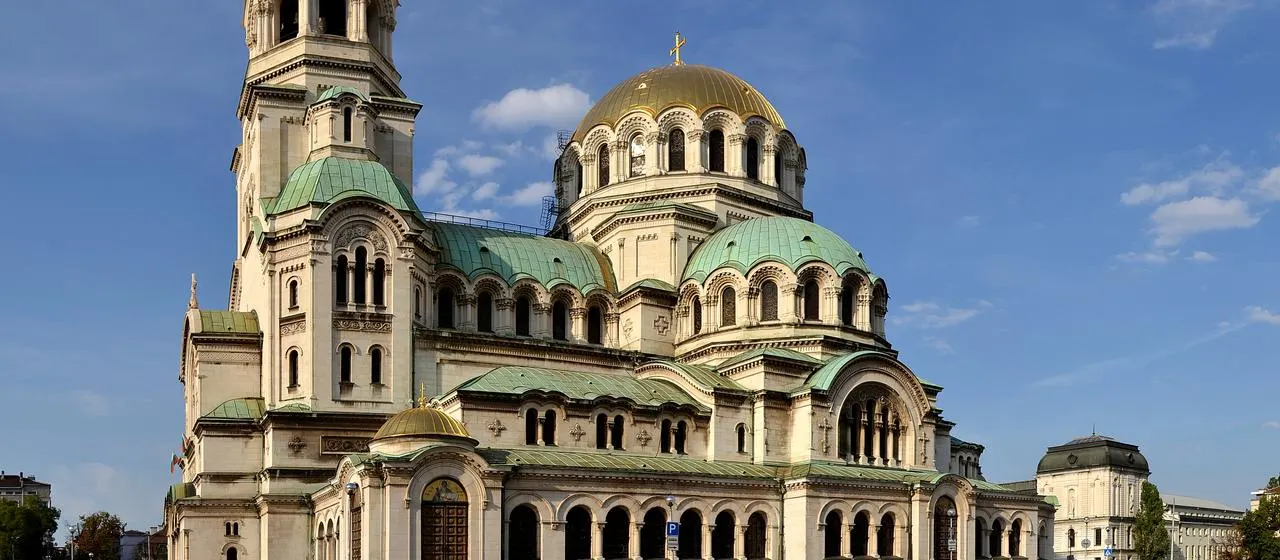
Photo: Pudelek (Marcin Szala) · CC BY-SA 3.0 · Wikimedia Commons
When to Go
Sofia has a continental climate softened by its altitude. Summers are warm but usually less humid than in lowland cities, and evenings are pleasantly cool. Winters are cold; snow is common from December to February, and Vitosha, just above the city, is often white for several months. Late April to June and September to October are the most comfortable periods for walks in the centre, parks and trips to Rila and Plovdiv. December is interesting for the Christmas market and lights, and January for winter customs and snow on Vitosha. In spring and autumn the weather can change quickly, so carry a rain jacket; mountain trips need warm layers even in summer. Hikes to the Seven Rila Lakes are usually possible only in the snow-free months, which vary from year to year.
| Month | Sightseeing | Christmas season | Weather | Crowds |
|---|---|---|---|---|
| January | Good | None | Cold | Quiet |
| February | Good | None | Cold | Quiet |
| March | Good | None | Cold | Quiet |
| April | Very good | None | Mild | Moderate |
| May | Very good | None | Mild | Moderate |
| June | Very good | None | Hot | Moderate |
| July | Very good | None | Hot | Moderate |
| August | Very good | None | Hot | Moderate |
| September | Very good | None | Mild | Moderate |
| October | Very good | None | Mild | Moderate |
| November | Good | Partly | Cold | Quiet |
| December | Very good | Christmas market | Cold | Moderate |
- April – May: parks and Vitosha turn green; comfortable weather for long walks.
- June – August: warm days; the best time for mountain walks and the Seven Rila Lakes, as long as trails are snow-free.
- September – October: mild weather and autumn colours on Vitosha and in Borisova Gradina.
- November – December: Christmas market in the City Garden (14 November – 21 December 2026, organiser’s announcement) and city lights.
- January – February: cold and snowy; 6 January Yordanovden, kukeri games in the Pernik region in late January.
Visa and Entry (Turkish citizens)
Bulgaria is a full member of the Schengen area: air and sea borders since 31 March 2024, land borders since 1 January 2025. According to the Turkish Ministry of Foreign Affairs, Turkish citizens holding ordinary passports need a Schengen visa to travel to Bulgaria.
Short stays follow the Schengen rule of a maximum of 90 days in any 180-day period, and days spent in Bulgaria count towards this total. A valid Schengen visa issued by another member state can also be used, subject to its conditions.
The EU Entry/Exit System (EES) is used at Bulgarian borders: when you first enter, your fingerprints and facial image are registered instead of a passport stamp. Allow extra time at the border.
Apply through the Bulgarian consular representation or its authorised service provider; check the documents, appointment process and passport validity on official websites.
Rules may change; this guide does not state fees. Check the official website before you travel.
Check before you go: T.C. Dışişleri Bakanlığı · Türk vatandaşlarının tabi olduğu vize uygulamaları ↗ · EES · europa.eu ↗ · Schengen · ec.europa.eu ↗ · Rota Atlası visa guide (TR)
Travel medical insurance
Check the official visa and entry sources above first: they state whether travel medical insurance is required and the minimum cover. Compare any policy’s cover amount, validity dates and countries covered with the official requirement.
Rota Atlası does not currently offer an insurance partnership; there are no paid links in this section. Last updated: 1 November 2026
Getting to Sofia
- By air: Sofia Airport (SOF) is east of the city. Terminal 2 is served by metro line M4, which runs to the city centre; there are also buses and taxis. Check timetables and the connection to Terminal 1 on the airport’s official website.
- By train: the Central Railway Station (Tsentralna gara) is north of the centre and is served by metro line M2. Bulgarian State Railways (BDZ) runs trains to Plovdiv and other cities; check international connections from Türkiye with the railway operators.
- By road: from Türkiye the route crosses the border at Kapıkule – Kapitan Andreevo and continues via Plovdiv to Sofia. Bulgarian roads require an electronic vignette; check current rules and border waiting times on official websites.
- This guide does not recommend flights, bus companies or prices; check official sources again as your travel date approaches.
Getting Around

Metro
Four metro lines (M1–M4) link the centre with the airport, the Central Railway Station, the National Palace of Culture and the suburbs; it is the fastest way across the city.
Tram, bus, trolleybus
Surface lines are run by the city’s public transport company; contactless bank cards are accepted at many validators. Check current tickets and rules on sofiatraffic.bg.
On foot
Alexander Nevsky, St Sophia, the Rotunda, Serdica, Banya Bashi, the Central Market Hall and Vitosha Boulevard are all within walking distance of each other.
Taxi
Use only official taxi ranks or cars ordered by app or phone; check that the tariff is displayed on the door and that the meter is on.
To Vitosha
Buses run from the city to the foot of Vitosha and areas such as Aleko and Dragalevtsi; lift operations depend on the season and the weather.
Regional
Trains and buses go to Plovdiv; connections to Rila Monastery and Koprivshtitsa are limited, so check timetables in advance or plan a car.
Things to See
The easiest way to understand Sofia is to start at the golden domes of Alexander Nevsky, walk down to the Roman streets of Serdica beneath the Largo, see a mosque, a synagogue and a church within a few hundred metres of one another, and then look up at Vitosha at the end of Vitosha Boulevard. Each section below gives a short history, things not to miss and practical tips. The last three are day trips: Rila Monastery in the mountains, Plovdiv, one of the oldest cities in Europe, and Koprivshtitsa with its Revival-era houses. This guide does not list fixed opening hours or ticket prices; check them on official websites before your visit.
Golden domes
Alexander Nevsky Cathedral and St Sophia Church

Alexander Nevsky Cathedral, with its gilded domes, is the symbol of Sofia and one of the largest Orthodox churches in the Balkans. It was built in the late 19th and early 20th centuries in memory of the Russian soldiers who died in the war of 1877–1878, which led to the establishment of the Bulgarian state. Its interior is decorated with murals, mosaics and marble from several countries; the crypt houses a collection of icons belonging to the National Gallery. Across the square stands St Sophia Church, a red-brick basilica from the 6th century that gave the city its name. Beside its wall is the Tomb of the Unknown Soldier with its eternal flame, and the necropolis of ancient Serdica lies under the church.
Don’t miss
- The domes and the large square of Alexander Nevsky
- Murals and the iconostasis inside the cathedral
- The 6th-century St Sophia basilica
- Tomb of the Unknown Soldier and the eternal flame
Tips
- These are active churches; cover shoulders and knees, keep quiet during services and check photo rules.
- The crypt’s icon collection has separate opening days; check them on the National Gallery’s website.


Roman city under the centre
Serdica and the Rotunda of St George

Ancient Serdica lies beneath the Largo, Sofia’s ensemble of 1950s administrative buildings. Excavations for the metro revealed Roman streets, building remains and parts of the city walls; the Ancient Serdica archaeological complex now presents them in the open air and inside the Serdica metro station. A few steps away, in the courtyard of the Presidency, stands the Rotunda of St George, a 4th-century red-brick building and considered the oldest surviving building in Sofia. Its interior holds layers of medieval frescoes. Constantine the Great is said to have called the city “my Rome”; whether or not the saying is true, the layering of the Roman, Byzantine, Ottoman and modern city is clearest here.
Don’t miss
- The Roman streets of Ancient Serdica
- Remains visible inside the Serdica metro station
- The Rotunda of St George and its frescoes
- The ceremonial guard in front of the Presidency
Tips
- The Rotunda is an active church; mind service times and photo rules.
- The archaeological area is open-air; plan for rain and snow.

Square of tolerance
Banya Bashi Mosque, the Synagogue and Sveta Nedelya

Sofia is sometimes described as having a “square of tolerance”, because places of worship of different faiths stand within a few hundred metres. Banya Bashi Mosque was built in the 16th century and is attributed to Mimar Sinan; its name refers to the thermal baths nearby. The Sofia Synagogue, opened in 1909, is one of the largest Sephardic synagogues in Europe and stands out for its Moorish-revival architecture. Sveta Nedelya Cathedral stands on the square of the same name, and the Catholic St Joseph Cathedral is also nearby. Together they tell the story of the city’s Orthodox, Muslim, Jewish and Catholic communities.
Don’t miss
- The domes and minaret of Banya Bashi Mosque
- The Synagogue’s façade and interior (check visiting days)
- Sveta Nedelya Cathedral
- A short walk linking the four places of worship
Tips
- When visiting the mosque, mind prayer times and dress modestly; women may be asked to cover their heads.
- The Synagogue may have security checks and specific visiting hours; check them in advance.


Mineral water and markets
Central Mineral Baths and Central Market Hall

Sofia stands on thermal mineral springs, and drinking fountains with free warm mineral water can be found behind the old bath building. The Central Mineral Baths, built in the early 20th century with colourful ceramic decoration, now house the Regional History Museum, which tells the history of Sofia from prehistory to the 20th century. Across the street, the Central Market Hall (Tsentralni hali), opened in 1911, is a covered market building with a façade in the same eclectic style. The nearby Women’s Market (Zhenski pazar) is one of the city’s oldest open-air markets and a lively place to see fruit, vegetables and everyday life.
Don’t miss
- The ceramic-decorated façade of the Central Mineral Baths
- The Regional History Museum’s Sofia collection
- The mineral-water fountains behind the building
- The Central Market Hall and the Women’s Market
Tips
- Check the Regional History Museum’s opening days and guided tours on sofiahistorymuseum.bg.
- Locals fill bottles at the fountains; queue patiently and keep the area clean.

Art and stage
National Gallery, National Theatre and the Russian Church

The former royal palace on Battenberg Square is now home to the National Gallery, with a rich collection of Bulgarian art. The Ivan Vazov National Theatre, opened in the early 20th century, faces the City Garden with its neoclassical façade; the garden is where the Christmas market is set up in winter. On Tsar Osvoboditel Boulevard, the street paved with distinctive yellow cobbles, stands the small Russian Church of St Nicholas with its gilded onion domes. A walk along this boulevard passes the Parliament building, Sofia University and the Monument to the Tsar Liberator, and leads back to Alexander Nevsky.
Don’t miss
- Bulgarian art in the National Gallery (former royal palace)
- The National Theatre façade and the City Garden
- The domes of the Russian Church
- The yellow cobbles of Tsar Osvoboditel Boulevard
Tips
- Check exhibitions and opening days on nationalgallery.bg.
- The theatre programme and ticket rules are published on the theatre’s official website.


The city’s green lung
Borisova Gradina and the National Palace of Culture

Borisova Gradina is Sofia’s oldest and largest central park; its lakes, avenues, sports grounds and old trees are popular with locals at any time of year. To its west, the National Palace of Culture (NDK), opened in 1981, is one of the largest congress and cultural centres in South-East Europe; the park in front of it, with fountains and a view of Vitosha, is a meeting point. The pedestrian Vitosha Boulevard begins near NDK and runs north to Sveta Nedelya, lined with cafés and shops; the mountain rises at its southern end.
Don’t miss
- A walk around the Ariana Lake in Borisova Gradina
- The NDK building and its park
- Vitosha Boulevard with the mountain in the background
- Autumn colours in the park
Tips
- NDK’s concert and exhibition programme is published on its official website.
- The park is very large; choose your entrance according to your next stop.
UNESCO · medieval frescoes
Boyana Church

Boyana Church, at the foot of Vitosha in the Boyana district, was built in several stages; its best-known frescoes date from 1259. They are considered among the most important works of medieval Eastern European painting because of their realistic faces and expressive figures, and the church was inscribed on the UNESCO World Heritage List in 1979. The building is small, so visitors enter in limited groups for a short time to protect the frescoes. The garden around the church is quiet and green. UNESCO listing ↗
Don’t miss
- The 1259 frescoes
- Portraits of the founders Kaloyan and Desislava
- The church’s three building phases
- The garden and the foot of Vitosha
Tips
- Visitor numbers and time inside are limited; check opening hours and rules on the museum’s official website.
- It can be combined with the National Museum of History in the same district.

The country’s past
National Museum of History

The National Museum of History is in the Boyana district, in a former government residence set in a large park. Its collection covers the history of the Bulgarian lands from prehistory to the modern era; Thracian gold treasures, Roman finds, medieval church art and objects from the Revival period are among its highlights. Some of the most famous treasures may be lent to exhibitions abroad, so check what is on display before you go. Combined with Boyana Church nearby, it makes a full half day.
Don’t miss
- Thracian gold and silver treasures
- Roman and early Christian finds
- Medieval icons and manuscripts
- The park around the museum
Tips
- Check opening days and what is on display on historymuseum.org.
- Public transport to the Boyana district takes time; plan the trip together with Boyana Church.
The mountain next door
Vitosha Nature Park

Vitosha rises right above Sofia; Vitosha Nature Park, established in 1934, is considered the oldest nature park in the Balkans. Its highest peak, Cherni Vrah, reaches 2,290 metres. Areas such as Aleko, Dragalevtsi and Zlatni Mostove (“Golden Bridges”, a river of large stones) are the best-known starting points for walks; in winter there are also small ski areas. The Boyana Waterfall is another popular walking destination. Because it is so close to the city, the mountain is visited by locals for everything from a short Sunday walk to a full day hike.
Don’t miss
- The stone river of Zlatni Mostove
- City views from Aleko
- A walk on marked trails to Cherni Vrah
- The Boyana Waterfall
Tips
- Mountain weather changes quickly; take warm, waterproof clothing even in summer.
- Lift and road conditions vary by season; check current information on park-vitosha.org.
Day trip · UNESCO
Rila Monastery and the Seven Rila Lakes

Rila Monastery, in the Rila Mountains south of Sofia, was founded in the 10th century by the hermit St John of Rila and became one of the most important spiritual and cultural centres of Bulgaria. The present complex, with its striped arcades and colourful frescoes, was largely rebuilt in the 19th century; the medieval Hrelyo Tower is its oldest building. It has been on the UNESCO World Heritage List since 1983. The Rila Mountains also include Musala, the highest peak in the Balkans (2,925 m), and the Seven Rila Lakes, a chain of glacial lakes; in the snow-free months they are a popular hiking route reached via the Panichishte area. UNESCO listing ↗
Don’t miss
- The monastery courtyard and its striped arcades
- The frescoes of the main church
- Hrelyo Tower
- The Seven Rila Lakes (snow-free months)
Tips
- It is an active monastery; dress modestly and follow photo rules.
- Public transport is limited; check bus timetables in advance or plan a car. The lakes need a separate day and suitable mountain gear.


Day trip · one of Europe’s oldest cities
Plovdiv

Plovdiv, Bulgaria’s second-largest city, south-east of Sofia, is considered one of the oldest continuously inhabited cities in Europe. The ancient city of Philippopolis built on its hills is today represented by the Roman theatre, still used for performances, and the remains of the stadium beneath the main street. The Old Town is known for its colourful Revival-era houses with overhanging upper floors; the Kapana district is full of art galleries and cafés. Plovdiv was a European Capital of Culture in 2019.
Don’t miss
- The Roman theatre and stadium remains
- Revival houses in the Old Town
- The art streets of Kapana
- The view from Nebet Tepe
Tips
- There are train and bus connections from Sofia; check timetables with BDZ and on official websites.
- The Old Town is cobbled and hilly; wear comfortable shoes.

Day trip · Revival town
Koprivshtitsa

Koprivshtitsa, in the Sredna Gora mountains east of Sofia, is a small town known for its colourful houses from the Bulgarian National Revival period, wooden gates and stone bridges. In 1876 the April Uprising began here, and many of the old houses are now house-museums of the leaders of that period. Its slow pace and well-preserved streets make it one of the most photogenic small towns in the country. It also hosts a large national folklore festival held every few years.
Don’t miss
- Colourful Revival houses
- House-museums
- Stone bridges over the river
- A slow walk through the old streets
Tips
- Public transport is limited and the railway station is outside the town; check connections or plan a car.
- Opening days of the house-museums vary by season; check them in advance.
Sofia Itineraries: 1, 2 and 3–4 Days
The itineraries group nearby places, put museums in the mornings and parks and the mountain in the afternoons, and leave room for rest. Opening hours change by season; check them on official websites before your visit. Itineraries are editorial suggestions, not real-time navigation.
1 day: Sofia in brief
- Morning: Alexander Nevsky Cathedral, St Sophia Church and the Russian Church.
- Midday: the Largo, Ancient Serdica and the Rotunda of St George.
- Afternoon: Banya Bashi Mosque, the Synagogue, the Central Mineral Baths and the Central Market Hall.
- Evening: a walk along Vitosha Boulevard towards NDK, with Vitosha at sunset.
2 days: Centre, art and Boyana
- Day 1: the “Sofia in brief” route above.
- Day 2 morning: Boyana Church and the National Museum of History.
- Day 2 afternoon: the National Gallery, the National Theatre and the City Garden.
- Day 2 evening: a park walk in Borisova Gradina or the Regional History Museum.
3–4 days: Sofia, Rila and Plovdiv
- Days 1–2: the two-day Sofia route above.
- Day 3: a full-day trip to Rila Monastery; plan transport in advance.
- Day 4: by train or bus to Plovdiv: the Roman theatre, the Old Town and Kapana.
- Alternative day 4: a hike on Vitosha (Aleko or Zlatni Mostove) or a day in Koprivshtitsa.
Winter and Christmas day route
- Morning: a warm indoor visit such as the Regional History Museum or the National Gallery.
- Midday: the domes of Alexander Nevsky in snow and a short visit to the crypt.
- Late afternoon: the Christmas market in the City Garden (14 November – 21 December 2026, organiser’s announcement).
- Evening: the lights on Vitosha Boulevard; mulled wine and banitsa as a break.
Day trip: Plovdiv
- Morning: train or bus from Sofia to Plovdiv.
- Midday: the Roman stadium remains on the main street and the Roman theatre.
- Afternoon: the Old Town’s Revival houses and the view from Nebet Tepe.
- Evening: the Kapana district and the return to Sofia; check timetables.
Bulgarian Food: What to Eat
Bulgarian cuisine is built on vegetables, white brine cheese (sirene), yoghurt and grills, with Ottoman, Greek and Slavic influences. Many dishes will feel familiar to visitors from Türkiye, though names and recipes differ. This guide does not recommend restaurants; check menus and opening hours before you go in.


Banitsa
Filo pastry with sirene cheese and eggs; a classic breakfast, often with boza or yoghurt.
Shopska salad
Tomatoes, cucumber, peppers and onion topped with grated sirene; one of the national dishes.
Tarator
A cold soup of yoghurt, cucumber, walnuts, garlic and dill; popular in summer.
Kebapche and kyufte
Grilled minced-meat sausages and patties; the core of Bulgarian grill food.
Lyutenitsa
A relish of roasted peppers and tomatoes; spread on bread.
Kavarma
A meat and vegetable stew slow-cooked in a clay pot.
Kiselo mlyako
Bulgarian yoghurt, made with the characteristic Lactobacillus bulgaricus bacteria.
- Pork is common in Bulgarian cuisine; ask about ingredients if unsure.
- On Christmas Eve and during fasting periods many places offer meat-free dishes.
- Sirene is a brine cheese similar to white cheese; kashkaval is a yellow cheese.
- Tap water in Sofia is generally considered drinkable; choose bottled water if unsure.
Culture and Etiquette

- Traditionally, shaking the head means “yes” and nodding means “no”; many people now adapt to foreigners, so confirm with words.
- A handshake is common when greeting; first names are used once you know people better.
- Cover shoulders and knees in churches and monasteries; do not take photos during services.
- On 1 March people give each other red-and-white martenitsa bracelets; this tradition is on the UNESCO list.
- The Cyrillic alphabet is a source of national pride; 24 May is celebrated as the Day of the Bulgarian Alphabet and Culture.
- Recent history, including the Ottoman period and the communist era, is a sensitive topic; stay respectful.
Safety and Health
- The emergency number in Bulgaria is 112 (police, ambulance and fire brigade).
- Watch out for pickpockets in crowded areas, on trams and in the metro.
- Use only official taxi ranks or cars ordered by app or phone; check the tariff on the door.
- At ATMs and card terminals, choose to be charged in euros rather than in your home currency.
- Wear shoes with a good grip on icy pavements in winter, and dress for the cold on Vitosha.
- Check current travel advice from the Turkish Ministry of Foreign Affairs and the GOV.UK Bulgaria page.
What Your Budget Depends On
This guide does not give prices; prices change with season and year. Your budget depends on these factors:
Season
The Christmas market season, summer and long weekends are busier; February and November (before the market) are usually quieter.
Location
The centre (Oborishte, Serdika, the area around Vitosha Boulevard) is walkable; Lozenets and Mladost are further out but linked by metro.
Transport
The metro links the airport and the main station with the centre; day trips to Rila and Koprivshtitsa need separate planning.
Museums
Some museums have free admission on certain days; check current rules on museum websites.
Money
Bulgaria uses the euro since 2026; card payment is common, carry some cash for small market stalls.
Day trips
Plovdiv is reachable by train or bus, while Rila Monastery and the Seven Rila Lakes may require a car; costs depend on the option.
Practical Information
- European sockets (type C/F), 230 V.
- Mobile data: Bulgaria is in the EU; travellers with Turkish SIM cards should check their provider’s roaming packages.
- Many museums close one day a week; check opening days on official websites.
- Public holidays include 1 January, 3 March (Liberation Day), Orthodox Easter, 6 May, 24 May, 6 September, 22 September and 24–26 December.
- Smoking is banned in enclosed public spaces, including restaurants and cafés.
- Card payment is common; contactless cards are accepted on public transport.
- Water: Sofia’s tap water, which comes partly from the Rila Mountains, is generally considered drinkable.
- Signs are in Cyrillic; most signs in the centre and the metro also have Latin transliteration.
Frequently Asked Questions
Do Turkish citizens need a visa for Sofia?
Yes. Bulgaria is a full Schengen member, and according to the Turkish Ministry of Foreign Affairs Turkish citizens with ordinary passports need a Schengen visa. The EES applies at the border. Rules may change; check the official website before you travel.
What currency is used in Bulgaria?
The euro has been the official currency since 1 January 2026, according to the European Central Bank. The lev is no longer used for payments; card payment is common.
When is Christmas celebrated in Sofia?
On 25 December. The Bulgarian Orthodox Church uses the revised calendar; Christmas Eve, Badni vecher, is on 24 December, and 24–26 December are public holidays.
When is the Sofia Christmas market?
According to its organiser, the Sofia German Christmas Market in the City Garden runs from 14 November to 21 December 2026. Check opening hours before you go.
How do I get from the airport to the city centre?
Terminal 2 of Sofia Airport is served by metro line M4; there are also buses and taxis. Check timetables and the connection to Terminal 1 on the airport’s official website.
How many days are enough for Sofia?
Two days are enough for the centre and Boyana; with trips to Rila Monastery and Plovdiv, 3–4 days give a more relaxed programme.
Is there a time difference with Türkiye?
Bulgaria uses Eastern European Time: the same time as Türkiye in summer and 1 hour behind in winter.
Is Rila Monastery a day trip from Sofia?
Yes, it is usually visited as a full-day trip. Public transport is limited, so check bus timetables in advance or plan a car or an organised trip.
Is Sofia worth visiting in winter?
Yes; the Christmas market, the lights, snow on Vitosha and winter customs make it interesting. It is cold, so dress warmly and check mountain conditions.
Where to stay
Stay close to the areas where you will spend most time. The areas below are covered in detail in this guide; check public transport links in the getting-around section.
- Golden domesAlexander Nevsky Cathedral and St Sophia Church
- Roman city under the centreSerdica and the Rotunda of St George
- Square of toleranceBanya Bashi Mosque, the Synagogue and Sveta Nedelya
- Mineral water and marketsCentral Mineral Baths and Central Market Hall
- Art and stageNational Gallery, National Theatre and the Russian Church
- The city’s green lungBorisova Gradina and the National Palace of Culture
- UNESCO · medieval frescoesBoyana Church
- The country’s pastNational Museum of History
- The mountain next doorVitosha Nature Park
Search hotels in these areas (Hotellook) ↗ (affiliate link)Search on Booking.com ↗
Affiliate disclosure: Hotellook, Aviasales, Klook, Airalo, Tiqets and DiscoverCars links are affiliate links; Rota Atlası may earn a commission on bookings made through them, at no extra cost to you. Official and in-guide links are not paid. Last updated: 1 November 2026 · Privacy and affiliates
Transport and connectivity
- Airport transferOptions from the airport to the city are in this guide’s getting there section.
- Mobile data (eSIM)Airalo eSIM ↗ (affiliate link)
- Car hireYou rarely need a car within the city; see getting around first. Compare car hire on DiscoverCars ↗ (affiliate link)
Affiliate disclosure: Hotellook, Aviasales, Klook, Airalo, Tiqets and DiscoverCars links are affiliate links; Rota Atlası may earn a commission on bookings made through them, at no extra cost to you. Official and in-guide links are not paid. Last updated: 1 November 2026 · Privacy and affiliates
Search flights (affiliate link)
Search flights from any airport in any country. Results open on Aviasales in a new tab, where you book.
This form is an affiliate link: Rota Atlası may earn a commission on bookings made via Aviasales (Travelpayouts), at no extra cost to you. Check price, baggage and terms on the booking site. Airport data: OurAirports (public domain).
Flights, hotels and tours
Find tours and tickets
- Alexander Nevsky Cathedral
GetYourGuide ↗ · Klook ↗ (affiliate link) - Vitosha Boulevard
GetYourGuide ↗ · Klook ↗ (affiliate link) - Boyana Church
GetYourGuide ↗ · Klook ↗ (affiliate link) - Rila Monastery
GetYourGuide ↗ · Klook ↗ (affiliate link)
Hotellook, Aviasales, Klook, Airalo and Tiqets links in this box are affiliate links (Travelpayouts): Rota Atlası may earn a commission on bookings made through them, at no extra cost to you. GetYourGuide links currently carry no affiliate code. Check prices and terms with the provider. Last updated: 1 November 2026 · Privacy and affiliates
Sources
- T.C. Dışişleri Bakanlığı · Türk vatandaşlarının tabi olduğu vize uygulamaları ↗
- European Union · Entry/Exit System (EES) ↗
- European Commission · Schengen visa policy (official) ↗
- European Central Bank · Bulgaria adopts the euro on 1 January 2026 (official) ↗
- Sofia Municipality · Christmas market in the City Garden (official notice) ↗
- Столична община · Sofia Municipality (official) ↗
- Visit Sofia (official) ↗
- National Gallery · Bulgaria (official) ↗
- Национален исторически музей · National Museum of History (official) ↗
- Regional History Museum – Sofia (official) ↗
- Rila Monastery (official) ↗
- Directorate Vitosha Nature Park (official) ↗
- Visit Plovdiv · Plovdiv Municipality (official) ↗
- UNESCO World Heritage Centre · Boyana Church ↗
- UNESCO World Heritage Centre · Rila Monastery ↗
- Sofia Airport (official) ↗
- Metropoliten · Sofia metro (official) ↗
- Center for Urban Mobility · Sofia public transport (official) ↗
- BDZ · Bulgarian State Railways (official) ↗
- GOV.UK · Foreign travel advice · Bulgaria ↗
This page is for information only. Dates, hours, entry rules and transport information can change; check the official sources above before travelling. No prices, flights, hotels or restaurants have been invented in this guide.
Photo credits
The photos on this page come from Wikimedia Commons and are used under the stated authors and licences (CC BY, CC BY-SA, CC0 or public domain). Full list of sources
- Alexander Nevsky Cathedral in Sofia — Pudelek (Marcin Szala) · CC BY-SA 3.0 · Wikimedia Commons
- Domes of the Alexander Nevsky Cathedral — Plamen Agov (user:MrPanyGoff) · CC BY-SA 4.0 · Wikimedia Commons
- Interior of the Alexander Nevsky Cathedral — Radosław Botev · CC BY 3.0 pl · Wikimedia Commons
- St Sophia Church, Sofia — Plamen Agov (user:MrPanyGoff) · CC BY-SA 3.0 · Wikimedia Commons
- St George Rotunda — Matti Blume · CC BY-SA 4.0 · Wikimedia Commons
- Serdica Archaeological Complex — Radosław Botev · CC BY 3.0 pl · Wikimedia Commons
- Banya Bashi Mosque — Pudelek (Marcin Szala) · CC BY-SA 3.0 · Wikimedia Commons
- Central Mineral Baths building (Regional History Museum) — MrPanyGoff · CC BY-SA 3.0 · Wikimedia Commons
- Sofia Synagogue — Plamen Agov (Пламен Агов) · CC BY-SA 3.0 · Wikimedia Commons
- Central Market Hall (Tsentralni Hali) — MrPanyGoff · CC BY-SA 3.0 · Wikimedia Commons
- Ivan Vazov National Theatre — Plamen Agov (user:MrPanyGoff) · CC BY-SA 3.0 · Wikimedia Commons
- Russian Church (St Nicholas) in Sofia — MrPanyGoff · CC BY-SA 3.0 · Wikimedia Commons
- Vitosha Boulevard — Radosław Botev · CC BY 3.0 pl · Wikimedia Commons
- National Palace of Culture (NDK) with fountains — Apostoloff · CC BY-SA 3.0 · Wikimedia Commons
- Boyana Church — Aleksander Dragnes · CC BY 2.0 · Wikimedia Commons
- Mural paintings in Boyana Church — Interact-Bulgaria · CC BY-SA 4.0 · Wikimedia Commons
- National Museum of History in Boyana — Mick D Kirkov · CC0 · Wikimedia Commons
- Cherni Vrah summit on Vitosha — Иван · CC BY-SA 4.0 · Wikimedia Commons
- Borisova Gradina park — Stolichanin · CC BY-SA 4.0 · Wikimedia Commons
- Sveta Nedelya Church — MrPanyGoff · CC BY-SA 3.0 · Wikimedia Commons
- The Largo and ZUM building at night — Bin im Garten · CC BY-SA 3.0 · Wikimedia Commons
- Former Tsar’s Palace (National Gallery) — MrPanyGoff · CC BY-SA 3.0 · Wikimedia Commons
- Courtyard of Rila Monastery — Daniel Dimitrov · CC BY-SA 4.0 · Wikimedia Commons
- Religious fresco at Rila Monastery — Νικόλαος Κυριακάκης · CC BY-SA 4.0 · Wikimedia Commons
- The Seven Rila Lakes — Untravelled · CC BY-SA 4.0 · Wikimedia Commons
- Roman Theatre in Plovdiv — MrPanyGoff · CC BY-SA 3.0 · Wikimedia Commons
- Old Town of Plovdiv — Colin W · CC BY-SA 3.0 · Wikimedia Commons
- Historic houses in Koprivshtitsa — Vislupus · CC BY-SA 4.0 · Wikimedia Commons
- Banitsa with yoghurt — Biso · CC BY 3.0 · Wikimedia Commons
- Shopska salad — Biso · CC BY 3.0 · Wikimedia Commons
- Serdika metro station — Jaimrsilva · CC BY-SA 4.0 · Wikimedia Commons
- Tatra T4 tram in Sofia — Photographer: Mosbatho · CC BY 4.0 · Wikimedia Commons
- Christmas market in Sofia, December 2021 — Oleg Morgan · CC BY-SA 4.0 · Wikimedia Commons
- Alexander Nevsky Cathedral in winter — Nikolai Karaneschev · CC BY 3.0 · Wikimedia Commons
- Sofia streets in winter — Nikolai Karaneschev · CC BY 3.0 · Wikimedia Commons
Regional guide: Balkans → · Plovdiv → · Thessaloniki → · Chișinău → · Tirana → · Athens → · Skopje → · Tbilisi → · Sarajevo → · Sibiu → · Bucharest → · Belgrade → · Budapest → · Zagreb → · Vienna → · All cities