

Berlin, the capital of Germany, grew out of two small 13th-century trading settlements, Berlin and Cölln, on either bank of the river Spree, and became the capital of the Prussian kings and later of the German Empire. The 20th century marked the city deeply: the Nazi dictatorship, the destruction of the Second World War and the Berlin Wall, which divided the city from 1961 until 9 November 1989. Today Berlin, with about 3.8 million inhabitants Germany’s largest city, is known for the UNESCO-listed museums of Museum Island, the memorials of the Wall, vast parks, lively neighbourhoods and an international cultural life. In December the city hosts dozens of Christmas markets, the best known on Gendarmenmarkt, at Charlottenburg Palace and at the Red Town Hall. This guide brings together neighbourhoods, sights, Christmas markets, a Potsdam day trip, food and practical information based on official sources.
Content updated: 29 October 2026 · Christmas market dates and hours checked on the official WeihnachtsZauber Gendarmenmarkt and berlin.de pages
Berlin at a Glance
- Country
- Germany · capital and federal state
- Population
- About 3.8 million
- Language
- German; English widely spoken at sights
- Currency
- Euro (EUR)
- Time zone
- Central European Time (CET, UTC+1); 2 hours behind Türkiye in winter
- Highlights
- Brandenburg Gate, Reichstag, Museum Island, Berlin Wall, East Side Gallery
- Airport
- Berlin Brandenburg Airport (BER), rail link to the city centre
- Christmas markets
- From 23 November 2026; Red Town Hall until 3 January 2027
Berlin in Pictures
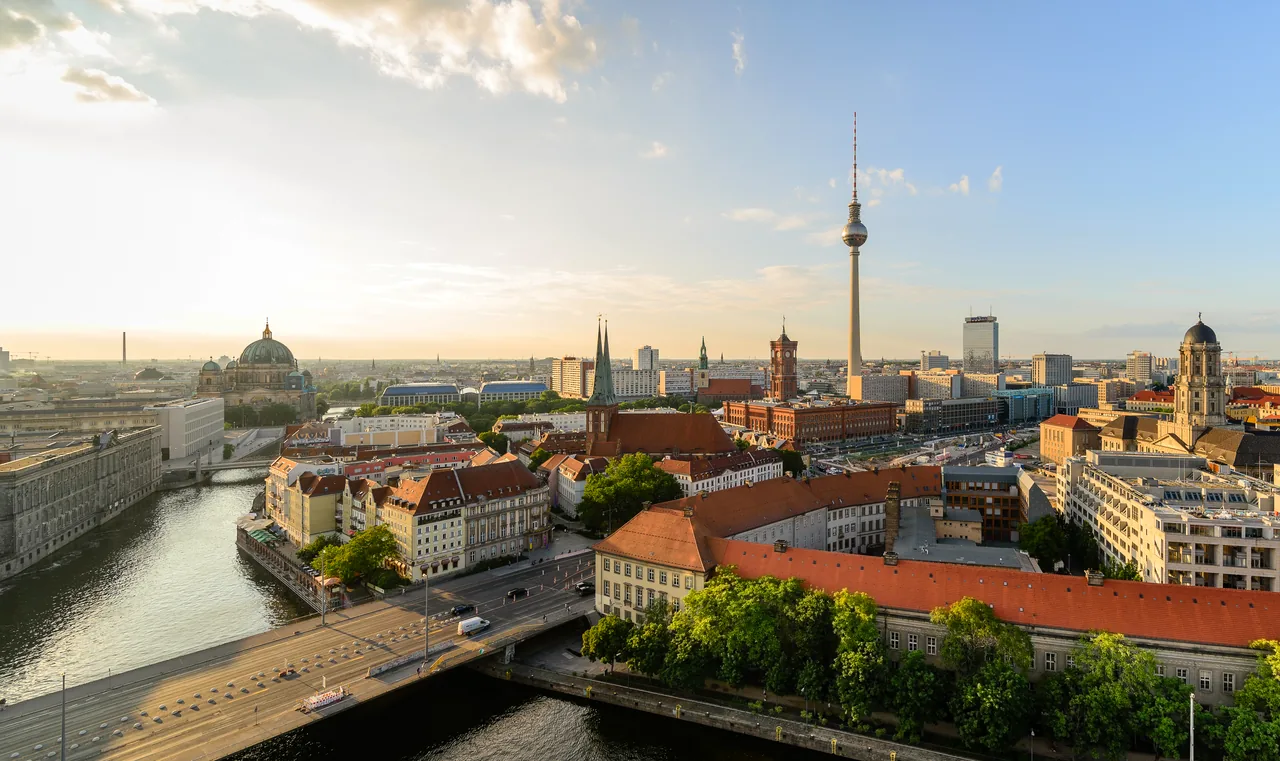
The TV Tower at Alexanderplatz, the Oberbaum Bridge across the Spree and Charlottenburg Palace lit up at night: three pictures of Berlin’s many faces. Every photo comes from Wikimedia Commons under a free licence; authors and licences are listed on the sources page.


Berlin Christmas Markets 2026
In Berlin the Christmas market (Weihnachtsmarkt) season begins in the last week of November, and the city sets up a market in almost every neighbourhood. The three that attract the most visitors are WeihnachtsZauber on Gendarmenmarkt, one of the city’s most beautiful squares; the market in front of the Prussian royal palace in Charlottenburg; and Berliner Weihnachtszeit at the Red Town Hall (Rotes Rathaus) at the foot of the TV Tower, with an ice rink and a 50-metre Ferris wheel. On Gendarmenmarkt, craftspeople work under white tents in front of the Konzerthaus and a stage hosts a music programme; this market charges admission. The Charlottenburg and Red Town Hall markets are free. Germans count down the four Sundays of Advent with candles and celebrate with family on the evening of 24 December (Heiligabend); 25 and 26 December are public holidays. Most markets are closed or open only briefly on 24 December.


| Event | Location | 2026 dates | Note |
|---|---|---|---|
| WeihnachtsZauber Gendarmenmarkt | Gendarmenmarkt, Mitte | 23 November – 31 December 2026 | Daily 11:00–22:00, Fri and Sat until 23:00; 24 Dec 11:00–18:00. Admission charged; free Mon–Fri 11:00–14:00 (except 24, 25, 26 and 31 Dec); under-12s free. New Year’s Eve ticketed separately. |
| Christmas market at Charlottenburg Palace | Spandauer Damm, Charlottenburg | 23 November – 27 December 2026 | Mon–Thu 13:00–22:00, Fri–Sun 12:00–22:00; closed 24 Dec. Free admission. |
| Berliner Weihnachtszeit | Red Town Hall and Neptune Fountain, Mitte | 23 November 2026 – 3 January 2027 | Mon–Fri 12:00–22:00, Sat–Sun 11:00–22:00; closed 24 and 31 Dec; 3 Jan until 20:00. Ice rink and Ferris wheel; free admission. |
| Neighbourhood markets | Across the city, berlin.de calendar | Advent season | Many districts hold short and weekend markets; check dates in the official Christmas market calendar on berlin.de. |
What to try
Glühwein
Spiced mulled wine (alcoholic); most stalls also sell alcohol-free Kinderpunsch. Mugs may carry a deposit.
Gebrannte Mandeln
Warm sugar-roasted almonds scented with cinnamon.
Bratwurst
Grilled sausage in a bread roll; usually pork, so ask.
Lebkuchen
Traditional Christmas biscuit with honey and spices.
Stollen
German Christmas cake with dried fruit and icing sugar.
Quarkbällchen
Small fried balls of quark dough.
Reibekuchen
Fried potato pancakes served with apple sauce.
Chestnuts
Hot roasted chestnuts from the stalls.
Tips for the Christmas markets
- To visit Gendarmenmarkt for free, go on a weekday between 11:00 and 14:00 (except 24, 25, 26 and 31 December).
- Markets are busiest in the evenings and at weekends; early afternoons are calmer.
- Most markets are closed or close early on 24 December; the Red Town Hall market is closed on 24 and 31 December.
- Carry some cash; not every stall accepts cards.
- Mugs may carry a deposit; return the mug for a refund or keep it as a souvenir.
- Dress warmly: December evening temperatures are often around freezing.
- Keep your wallet and phone in a front pocket in the crowds.
Check before you go: WeihnachtsZauber Gendarmenmarkt · FAQ (official) ↗ · Berlin.de · Weihnachtsmarkt am Schloss Charlottenburg (official) ↗ · Berlin.de · Weihnachtsmarkt am Roten Rathaus (official) ↗ · visitBerlin · Berliner Weihnachtszeit (official) ↗
Dates, hours and admission rules were checked on 29 October 2026 on the official WeihnachtsZauber Gendarmenmarkt, berlin.de and visitBerlin pages. Programmes and hours can change; check the official pages before your visit.
When to Go
Berlin has a climate with continental influence: summers are mild to occasionally hot, winters cold, grey and short. The most comfortable time for sightseeing is May to September, when parks, lakes and outdoor cafés come alive. Autumn is colourful and calmer. In December, despite the cold, Christmas markets and illuminated streets make the city attractive; January and February are quiet months that suit museums, concerts and theatres.
| Month | Sightseeing | Christmas markets | Outdoors | Crowds |
|---|---|---|---|---|
| January | Good | None | Difficult | Moderate |
| February | Good | None | Difficult | Moderate |
| March | Good | None | Good | Moderate |
| April | Very good | None | Good | Moderate |
| May | Very good | None | Very good | Busy |
| June | Very good | None | Very good | Busy |
| July | Very good | None | Very good | Busy |
| August | Very good | None | Very good | Busy |
| September | Very good | None | Very good | Moderate |
| October | Very good | None | Good | Moderate |
| November | Good | Partly | Difficult | Moderate |
| December | Good | Market season | Difficult | Busy |
- In December temperatures usually range from −2 to 5 °C; snow is possible and daylight ends around 16:00.
- Christmas markets from 23 November 2026; the Red Town Hall market stays open until 3 January 2027.
- Summer is the liveliest season with lakesides, parks and open-air events; accommodation demand also rises.
- Most shops are closed on Sundays and public holidays; museums are usually open.
Visa and Entry (Turkish citizens)
Turkish citizens holding ordinary (burgundy) passports need a Schengen visa for tourist travel to Germany. Different rules apply to special, service and diplomatic passports; check the current situation on the website of the Turkish Ministry of Foreign Affairs.
If Germany is your main destination, you apply according to the jurisdiction of the German missions in Türkiye; application channels and appointment information are explained on the official German missions’ website (tuerkei.diplo.de).
If you combine Berlin with other Schengen countries, apply to the country where you will stay longest, or, if stays are equal, the country of first entry.
Under the EU Entry/Exit System (EES), which is being introduced in stages, your biometric data (facial image and fingerprints) may be recorded on first entry; allow extra time at the airport.
Visa fees, waiting times and required documents can change; this guide gives no fees. Use the current lists on the official websites before applying.
Check before you go: T.C. Dışişleri Bakanlığı · Türk vatandaşlarının tabi olduğu vize uygulamaları ↗ · tuerkei.diplo.de ↗ · EES · europa.eu ↗ · Rota Atlası visa guide (TR)
Travel medical insurance
Check the official visa and entry sources above first: they state whether travel medical insurance is required and the minimum cover. Compare any policy’s cover amount, validity dates and countries covered with the official requirement.
Rota Atlası does not currently offer an insurance partnership; there are no paid links in this section. Last updated: 1 November 2026
Getting to Berlin
- By air: Berlin Brandenburg Airport (BER) lies about 20 km south-east of the city centre. From the station beneath the terminal, the FEX Airport Express, regional trains and S-Bahn lines run to the centre. The airport is in fare zone ABC. Check current flights from Türkiye only with airlines and airports; this guide does not recommend flights.
- By train: Berlin Hauptbahnhof (central station) has high-speed and international connections to cities such as Hamburg, Munich, Dresden, Prague, Warsaw and Copenhagen. Timetables at Deutsche Bahn.
- By coach: most long-distance coaches arrive at the central bus station ZOB near the Funkturm, with U-Bahn and S-Bahn links.
- By car: the city centre is a low-emission zone (Umweltzone) and vehicles need the appropriate green sticker; parking is limited.
Getting Around

U-Bahn and S-Bahn
The underground (U-Bahn) and suburban trains (S-Bahn) run frequently across the city; the S-Bahn Ring circles the centre.
Tram and bus
Trams are dense especially in the eastern districts; buses 100 and 300 pass many major sights.
Tickets and zones
The city is divided into fare zones A, B and C; the centre is in AB, BER and Potsdam are in zone C. Check current fares, day tickets and Deutschlandticket conditions with BVG.
Validating tickets
Validate paper tickets at the machine on the platform or in the vehicle on first use; inspections are frequent.
Cycling
There are wide cycle lanes; rental bikes and scooters are common. Watch out for tram tracks.
On foot
The main sights in Mitte are close together, but the city is huge; use public transport between districts.
Things to See
Berlin is a polycentric city without a single centre. The historic core in Mitte stretches from the Brandenburg Gate along Unter den Linden to Museum Island and Alexanderplatz. To the south lie Checkpoint Charlie and Potsdamer Platz, to the north the Wall Memorial and Prenzlauer Berg, to the east Friedrichshain and Kreuzberg, and to the west Kurfürstendamm and Charlottenburg. Tempelhofer Feld is in the south, and Potsdam is a short train ride to the south-west. The sections below follow this order so that neighbouring places can be combined in a day.
Symbol of reunification
Brandenburg Gate, Reichstag and Unter den Linden

Completed in 1791, the Brandenburg Gate is Berlin’s best-known landmark; it stood in the border zone during the Wall years and became the symbol of reunification after 1989. To the north rises the Reichstag building, where the German Bundestag sits. The glass dome designed by Norman Foster and opened in 1999 can be visited free of charge with advance registration; its spiral ramp offers views of the city and the plenary chamber. East of the gate, the lime-lined boulevard Unter den Linden runs past Humboldt University, the State Opera and Bebelplatz to Museum Island. Visiting the Reichstag dome (official) →
Don’t miss
- The Brandenburg Gate from Pariser Platz
- The Reichstag dome (free, with advance registration)
- A walk along Unter den Linden
- The book-burning memorial on Bebelplatz
- The eastern edge of the Tiergarten
Tips
- Register for the Reichstag dome in advance via bundestag.de; you need ID and there is a security check.
- The gate is less crowded when it is lit up at night.
- The dome may close at times because of parliamentary events.

Berlin’s most beautiful square
Gendarmenmarkt and Friedrichstraße

Gendarmenmarkt is a symmetrical square formed by Karl Friedrich Schinkel’s Konzerthaus and the French and German Churches (Französischer and Deutscher Dom) on either side; many consider it Berlin’s most beautiful square. The French Church is a legacy of the French Protestants (Huguenots) who found refuge in Prussia in the 17th century. Nearby Friedrichstraße is a shopping street. In December the square hosts the WeihnachtsZauber Christmas market.
Don’t miss
- The steps of the Konzerthaus
- The French and German Churches
- WeihnachtsZauber in December
- Friedrichstraße and its arcades
Tips
- Check the Konzerthaus programme on its official website; concert tickets can sell out quickly.
- During the Christmas market, entry to the square is charged (except weekday lunchtimes).
UNESCO World Heritage
Museum Island (Museumsinsel) and Berlin Cathedral

At the northern tip of the island in the middle of the Spree stand five museums built between 1830 and 1930: the Altes Museum, the Neues Museum (with the bust of Nefertiti), the Alte Nationalgalerie, the Bode Museum and the Pergamonmuseum. The ensemble has been on the UNESCO World Heritage List since 1999. The Pergamonmuseum is closed for renovation; according to the National Museums in Berlin it will reopen with its first section on 4 June 2027. At the entrance to the island, opposite the Lustgarten, stands the great dome of Berlin Cathedral, completed in 1905; its dome gallery offers city views. Opposite, the Humboldt Forum houses museums inside the rebuilt palace. UNESCO listing ↗ National Museums in Berlin (official) →
Don’t miss
- The bust of Nefertiti in the Neues Museum
- The Alte Nationalgalerie
- The Bode Museum and its sculpture collection
- Berlin Cathedral and its dome gallery
- The Lustgarten and Humboldt Forum
Tips
- The Pergamonmuseum is closed until 4 June 2027; plan accordingly.
- If you plan several museums, look at the combined ticket options on the official website.
- Many museums may be closed on Mondays; check current hours.


Centre of East Berlin
Alexanderplatz, the TV Tower and the Nikolaiviertel

Alexanderplatz is a large square redesigned in the GDR era; its symbols are the World Clock and the 368-metre TV Tower (Fernsehturm), completed in 1969. The tower’s observation deck at about 200 metres offers the highest view in the city. The nearby red-brick Red Town Hall (Rotes Rathaus) is the seat of Berlin’s mayor. On the banks of the Spree, the Nikolaiviertel, with its narrow streets rebuilt after the war around the Nikolaikirche, the city’s oldest church, recalls the place where Berlin was founded. Berliner Fernsehturm (official) →
Don’t miss
- The TV Tower observation deck
- The World Clock
- The Red Town Hall and Neptune Fountain
- The Nikolaikirche and Nikolaiviertel
- Berliner Weihnachtszeit in December
Tips
- Buy a timed ticket for the TV Tower in advance on the official website.
- Alexanderplatz is a busy transport hub; watch your belongings.
Memory of a divided city
Berlin Wall Memorial (Bernauer Straße) and Mauerpark

Built on 13 August 1961, the Berlin Wall divided the city for 28 years. The Berlin Wall Memorial (Gedenkstätte Berliner Mauer) on Bernauer Straße includes a preserved section of the border strip, a watchtower, traces of escape tunnels and a documentation centre; the open-air area is free. Nearby Mauerpark was laid out on the former border strip and is known for its Sunday flea market and open-air karaoke. Berlin Wall Foundation (official) →
Don’t miss
- The preserved border strip and watchtower
- The viewing platform of the documentation centre
- The visitor centre
- Mauerpark (especially on Sundays)
Tips
- Allow 1.5–2 hours to see the whole memorial.
- Metal strips in the pavement mark the former course of the Wall.

Cold War border crossing
Checkpoint Charlie and the Topography of Terror

Checkpoint Charlie on Friedrichstraße was the best-known crossing point between the American and Soviet sectors during the Wall era; in October 1961 American and Soviet tanks faced each other here. Today a replica of the guard hut and signs remain. A few hundred metres west, on the former site of the Gestapo and SS headquarters, the Topography of Terror (Topographie des Terrors) documentation centre explains the Nazi regime’s apparatus of repression; admission is free.
Don’t miss
- Checkpoint Charlie and the “You are leaving the American sector” sign
- The Topography of Terror documentation centre
- The remnant of the Wall on Niederkirchnerstraße
Tips
- People may offer paid photos in front of the hut; this is optional.
- The Topography of Terror is a free and informative stop linking the history of the Wall and the Nazi period.
Remembrance and the modern city
Holocaust Memorial, Potsdamer Platz and Tiergarten

South of the Brandenburg Gate, the Memorial to the Murdered Jews of Europe, designed by Peter Eisenman and opened in 2005, consists of 2,711 concrete stelae of varying heights; the information centre beneath tells the stories of the victims. A little further south, Potsdamer Platz, an empty border area during the Wall years, was rebuilt in the 1990s with glass towers, the Sony Center and a film museum. To the west lies the Tiergarten, the great park at the heart of the city, with the Victory Column (Siegessäule) at its centre. Memorial to the Murdered Jews of Europe (official) →
Don’t miss
- A walk between the stelae
- The information centre beneath
- Potsdamer Platz and the Sony Center
- The Tiergarten and Victory Column
- The Kulturforum and Gemäldegalerie
Tips
- The memorial is a place of remembrance: do not climb, sit on or jump between the stelae or speak loudly.
- Check the information centre’s opening days on the official website.

Alternative Berlin
Kreuzberg, Friedrichshain and the East Side Gallery

On the edge of West Berlin during the Wall years, Kreuzberg is a multicultural district shaped by immigrants from Türkiye, artists and students. The banks of the Landwehrkanal, the area around Kottbusser Tor and the market on Maybachufer reflect its character. The Oberbaum Bridge crosses the Spree to Friedrichshain. On the riverbank, the East Side Gallery is a roughly 1.3 km preserved section of the Wall painted in 1990 by artists from around the world, considered one of the longest open-air galleries in the world. East Side Gallery · Berlin Wall Foundation (official) →
Don’t miss
- The murals of the East Side Gallery
- The Oberbaum Bridge
- A walk along the Landwehrkanal
- The market on Maybachufer (check market days)
- The Jewish Museum Berlin
Tips
- Do not touch or write on the murals; they are protected.
- In Kreuzberg you will find shops and bakeries familiar to visitors from Türkiye.

Green and relaxed
Prenzlauer Berg and Kollwitzplatz

With its restored late-19th-century apartment buildings, tree-lined streets, cafés and parks, Prenzlauer Berg is one of Berlin’s most popular residential districts. The historic Wasserturm, the city’s oldest water tower, rises above a small park. Weekend markets are held around Kollwitzplatz; the nearby Kulturbrauerei, in the brick buildings of a former brewery, houses a cinema, event spaces and, in Advent, a Christmas market.
Don’t miss
- The Wasserturm and its park
- Kollwitzplatz and its markets
- The Kulturbrauerei
- Kastanienallee and its cafés
Tips
- Easily combined with Mauerpark and Bernauer Straße in half a day.
- Check the dates of the Kulturbrauerei Christmas market in the official calendar.
West Berlin’s showcase
City West: Kurfürstendamm, the Memorial Church and Charlottenburg Palace

The main street of City West, the centre of West Berlin during the Wall years, is the Kurfürstendamm (Ku’damm), known for its shops and theatres. The bomb-damaged tower of the Kaiser Wilhelm Memorial Church on Breitscheidplatz has been preserved as a reminder of war, with a new church of blue glass blocks added beside it in 1961. Nearby is KaDeWe, one of Europe’s largest department stores. A little to the north-west lie Charlottenburg Palace, built as a summer residence for the Prussian royal family, and its Baroque gardens; a Christmas market is held in front of it in December. Prussian Palaces and Gardens Foundation (official) →
Don’t miss
- The Kaiser Wilhelm Memorial Church and its blue glass hall
- A walk along the Kurfürstendamm
- The food hall of KaDeWe
- Charlottenburg Palace and gardens
- The Christmas market in front of the palace in December
Tips
- A Christmas market is also held on Breitscheidplatz during Advent; check dates in the official calendar.
- The palace interiors are ticketed; the garden is usually free.

Picnics on the runways
Tempelhofer Feld

Tempelhof Airport, through which West Berlin was supplied during the 1948–1949 Berlin Airlift, closed in 2008; its runways and meadows opened as a public park in 2010. On the roughly 300-hectare Tempelhofer Feld people now cycle on the runways, fly kites and picnic. The huge terminal building can be visited on guided tours and at events. Grün Berlin (official) →
Don’t miss
- A walk or bike ride on the old runways
- Kite-flyers and the wide sky
- The historic terminal building
Tips
- The park closes at sunset; opening hours vary by season.
- In winter the wind can be fierce; dress warmly.
Day trip · UNESCO
Potsdam: Sanssouci and Cecilienhof

South-west of Berlin, about half an hour by S-Bahn or regional train, Potsdam was the summer capital of the Prussian kings. The Rococo Sanssouci Palace, built for Frederick the Great in the 18th century, is famous for its terraced vineyards and vast park. Cecilienhof Palace in the New Garden, built in the style of an English country house, hosted the Potsdam Conference in 1945. The palaces and parks of Potsdam and Berlin have been on the UNESCO World Heritage List since 1990. UNESCO listing ↗ Sanssouci and Cecilienhof (SPSG, official) →
Don’t miss
- Sanssouci Palace and the vineyard terraces
- Sanssouci Park and the New Palace
- Cecilienhof Palace
- The Dutch Quarter
- Potsdam’s Christmas markets in Advent
Tips
- Potsdam is in fare zone C; buy an ABC ticket.
- Sanssouci Palace interiors are visited with timed tickets; check winter hours on the official website.

1–3 Day Itineraries, a Christmas Market Day + 5-Day Berlin–Potsdam Route
The itineraries keep distances short and leave evenings for the Christmas markets. Day 1: Brandenburg Gate, Reichstag, Unter den Linden and Gendarmenmarkt; day 2: Museum Island and Alexanderplatz; day 3: traces of the Wall, Kreuzberg and the East Side Gallery. The Christmas market day combines the three big markets; the 5-day route adds City West and Potsdam.
Day 1: From the Brandenburg Gate to Gendarmenmarkt
- Morning: the Reichstag dome (with advance registration).
- The Brandenburg Gate and Holocaust Memorial.
- Afternoon: Unter den Linden and Bebelplatz.
- Gendarmenmarkt, the Konzerthaus and the two churches.
- Evening: WeihnachtsZauber in December.
Day 2: Museum Island and Alexanderplatz
- Morning: the Neues Museum and the bust of Nefertiti.
- Berlin Cathedral and its dome gallery.
- Afternoon: the Alte Nationalgalerie or Humboldt Forum.
- The Nikolaiviertel and Red Town Hall.
- Evening: the TV Tower and Berliner Weihnachtszeit.
Day 3: Traces of the Wall and Kreuzberg
- Morning: the Berlin Wall Memorial on Bernauer Straße.
- Checkpoint Charlie and the Topography of Terror.
- Afternoon: Kreuzberg and the Landwehrkanal.
- The Oberbaum Bridge and East Side Gallery.
- Evening: Friedrichshain.
Christmas market day
- Midday: Gendarmenmarkt (free on weekdays 11:00–14:00).
- Christmas lights along Unter den Linden.
- Afternoon: the Red Town Hall, ice rink and Ferris wheel.
- U-Bahn to Charlottenburg.
- Evening: the Christmas market at Charlottenburg Palace.
5 days: Berlin and Potsdam
- Days 1–3: as above.
- Day 4: Kurfürstendamm, the Memorial Church, KaDeWe and Charlottenburg Palace.
- Day 5: Potsdam, Sanssouci and Cecilienhof.
- Optional: Tempelhofer Feld or Prenzlauer Berg.
- Return via BER.
Berlin Cuisine
Berlin’s cuisine ranges from simple, hearty Prussian dishes to flavours brought by immigrants; the spread of the döner kebab in Berlin is part of this story. These are traditional dishes and products, not restaurant recommendations.


Currywurst
Sliced sausage with curry sauce, usually served with fries. It may be pork or beef, so ask.
Döner
Very common in Berlin: döner in bread with vegetables and sauces.
Buletten
Berlin-style fried meatballs, usually with mustard.
Eisbein
Boiled pork knuckle with sauerkraut and pea purée.
Königsberger Klopse
Poached meatballs in a caper sauce.
Berliner Pfannkuchen
Jam-filled doughnut dusted with sugar.
Kartoffelsuppe
Hearty potato soup, a winter classic.
Spreewald gherkins
Pickled cucumbers from the nearby Spreewald region.
- Pork is common; ask about ingredients. Halal options are easy to find in Kreuzberg and Neukölln.
- Many places accept cards, but small snack bars and market stalls may want cash.
- Service is included; tipping about 5–10% or rounding up is common for good service.
- Most supermarkets are closed on Sundays; shops in the large stations are usually open.
Culture and Etiquette

- Berliners are direct and relaxed; “Hallo”, “Danke” and “Tschüss” go a long way.
- Do not walk in cycle lanes; crossing on a red light is frowned upon.
- Behave respectfully at memorials (Holocaust Memorial, Wall Memorial); do not climb the stelae.
- Sunday is considered a quiet day; many shops are closed.
- A deposit (Pfand) applies to plastic and glass bottles; you can return them at supermarkets.
- Many museums close on Mondays; timed tickets are common.
Safety and Health
- Berlin is generally a safe city; watch out for pickpockets at Alexanderplatz, Christmas markets, on public transport and at busy sights.
- Some stations and parks become quiet late at night; choose well-lit, busy routes.
- Watch for icy pavements in winter and wear suitable shoes.
- In an emergency call 112 (ambulance, fire) or 110 (police).
- Make sure your travel health insurance is valid in Germany.
- Keep a copy of your passport and visa separately.
What Your Budget Depends On
This guide does not give prices; prices change with season and year. Your budget depends on these factors:
Travel period
Summer, the Christmas market season, New Year and major trade fairs increase accommodation demand.
Accommodation
Berlin has a wide range of options; a city accommodation tax applies. Mitte is central, Friedrichshain and Kreuzberg are lively districts.
Transport
U-Bahn, S-Bahn, tram and bus; check day and weekly tickets and Deutschlandticket options with BVG.
Sights
The Reichstag dome, the Wall Memorial’s open-air area, the East Side Gallery and the Topography of Terror are free; museums and towers charge admission.
Christmas markets
Charlottenburg and the Red Town Hall are free; Gendarmenmarkt charges admission.
Day trips
An ABC ticket and palace tickets for Potsdam.
Practical Information
- Money: euro (EUR); cards are common, but small businesses may want cash.
- Language: German; English is widely spoken at sights.
- Electricity: 230 V, type C/F sockets (same as Türkiye).
- Time: CET (UTC+1) in winter, 2 hours behind Türkiye.
- Shops: open Monday–Saturday; most closed on Sundays and public holidays.
- Holidays: 25 and 26 December and 1 January are public holidays; 24 and 31 December are short working days.
- Tap water: drinkable.
- Emergency: 112, police 110.
Frequently Asked Questions
When do Berlin’s Christmas markets open in 2026?
The Gendarmenmarkt, Charlottenburg Palace and Red Town Hall markets open on 23 November 2026. Gendarmenmarkt runs until 31 December, Charlottenburg until 27 December and the Red Town Hall until 3 January 2027.
Does the Gendarmenmarkt Christmas market charge admission?
Yes. Entry is free Monday–Friday 11:00–14:00 (except 24, 25, 26 and 31 December), and children under 12 are free. Check current conditions on the official website.
Are the Christmas markets open on 24 December?
Gendarmenmarkt is open 11:00–18:00 on 24 December; the Charlottenburg and Red Town Hall markets are closed on 24 December.
How do I visit the Reichstag dome?
The visit is free but requires advance registration via bundestag.de. Bring your ID.
Is the Pergamonmuseum open?
No. According to the National Museums in Berlin, the museum will reopen with its first section on 4 June 2027.
How do I get from BER to the centre?
From the station beneath the terminal, the FEX Airport Express, regional trains and S-Bahn run to the centre. You need a zone ABC ticket; check current information with BVG and Deutsche Bahn.
Do Turkish citizens need a visa for Germany?
Ordinary passport holders need a Schengen visa. Check the current rules with the Turkish Ministry of Foreign Affairs and tuerkei.diplo.de.
Where can I see remains of the Berlin Wall?
The most comprehensive site is the Berlin Wall Memorial on Bernauer Straße; preserved sections also stand at the East Side Gallery and on Niederkirchnerstraße.
How many days do I need in Berlin?
Three days for the main sights; five with City West and Potsdam.
What is the time difference with Türkiye?
In winter Berlin is on UTC+1, 2 hours behind Türkiye.
Where to stay
Stay close to the areas where you will spend most time. The areas below are covered in detail in this guide; check public transport links in the getting-around section.
- Symbol of reunificationBrandenburg Gate, Reichstag and Unter den Linden
- Berlin’s most beautiful squareGendarmenmarkt and Friedrichstraße
- UNESCO World HeritageMuseum Island (Museumsinsel) and Berlin Cathedral
- Centre of East BerlinAlexanderplatz, the TV Tower and the Nikolaiviertel
- Memory of a divided cityBerlin Wall Memorial (Bernauer Straße) and Mauerpark
- Cold War border crossingCheckpoint Charlie and the Topography of Terror
- Remembrance and the modern cityHolocaust Memorial, Potsdamer Platz and Tiergarten
- Alternative BerlinKreuzberg, Friedrichshain and the East Side Gallery
- Green and relaxedPrenzlauer Berg and Kollwitzplatz
- West Berlin’s showcaseCity West: Kurfürstendamm, the Memorial Church and Charlottenburg Palace
- Picnics on the runwaysTempelhofer Feld
Search hotels in these areas (Hotellook) ↗ (affiliate link)Search on Booking.com ↗
Where to stay in Berlin → · 3 days in Berlin: ready-made itinerary →
Affiliate disclosure: Hotellook, Aviasales, Klook, Airalo, Tiqets and DiscoverCars links are affiliate links; Rota Atlası may earn a commission on bookings made through them, at no extra cost to you. Official and in-guide links are not paid. Last updated: 1 November 2026 · Privacy and affiliates
Transport and connectivity
- Airport transferOptions from the airport to the city are in this guide’s getting there section.
- Mobile data (eSIM)Airalo eSIM ↗ (affiliate link)
- TrainsOfficial rail website ↗
- Car hireYou rarely need a car within the city; see getting around first. Compare car hire on DiscoverCars ↗ (affiliate link)
Affiliate disclosure: Hotellook, Aviasales, Klook, Airalo, Tiqets and DiscoverCars links are affiliate links; Rota Atlası may earn a commission on bookings made through them, at no extra cost to you. Official and in-guide links are not paid. Last updated: 1 November 2026 · Privacy and affiliates
Search flights (affiliate link)
Search flights from any airport in any country. Results open on Aviasales in a new tab, where you book.
This form is an affiliate link: Rota Atlası may earn a commission on bookings made via Aviasales (Travelpayouts), at no extra cost to you. Check price, baggage and terms on the booking site. Airport data: OurAirports (public domain).
Flights, hotels and tours
Find tours and tickets
- Brandenburg Gate
GetYourGuide ↗ · Klook ↗ (affiliate link) - Memorial to the Murdered Jews of Europe
GetYourGuide ↗ · Klook ↗ (affiliate link) - Museum Island
GetYourGuide ↗ · Klook ↗ (affiliate link) - Berlin Cathedral
GetYourGuide ↗ · Klook ↗ (affiliate link)
Hotellook, Aviasales, Klook, Airalo and Tiqets links in this box are affiliate links (Travelpayouts): Rota Atlası may earn a commission on bookings made through them, at no extra cost to you. GetYourGuide links currently carry no affiliate code. Check prices and terms with the provider. Last updated: 1 November 2026 · Privacy and affiliates
Sources
- T.C. Dışişleri Bakanlığı · Türk vatandaşlarının tabi olduğu vize uygulamaları ↗
- Auswärtiges Amt · Deutsche Vertretungen in der Türkei (Visa) ↗
- European Union · Entry/Exit System (EES) ↗
- WeihnachtsZauber Gendarmenmarkt · FAQ (official) ↗
- Berlin.de · Weihnachtsmarkt am Schloss Charlottenburg (official) ↗
- Berlin.de · Weihnachtsmarkt am Roten Rathaus (official) ↗
- visitBerlin · Berliner Weihnachtszeit (official) ↗
- visitBerlin (official tourism board) ↗
- Berlin.de · official city portal ↗
- Deutscher Bundestag · Visiting the Reichstag dome (official) ↗
- Staatliche Museen zu Berlin (official) ↗
- Staatliche Museen zu Berlin · Pergamonmuseum reopens on 4 June 2027 (official) ↗
- UNESCO World Heritage Centre · Museumsinsel (Museum Island), Berlin ↗
- UNESCO World Heritage Centre · Palaces and Parks of Potsdam and Berlin ↗
- Berliner Dom (official) ↗
- Berliner Fernsehturm (official) ↗
- Stiftung Berliner Mauer · Berlin Wall Memorial and East Side Gallery (official) ↗
- Stiftung Denkmal für die ermordeten Juden Europas (official) ↗
- Grün Berlin · Tempelhofer Feld and city parks (official) ↗
- SPSG · Prussian Palaces and Gardens (Sanssouci, Charlottenburg, Cecilienhof) (official) ↗
- Berliner Philharmoniker (official) ↗
- BVG · Berlin public transport (official) ↗
- Deutsche Bahn (official) ↗
- BER · Berlin Brandenburg Airport (official) ↗
- Germany.travel (official tourism portal of Germany) ↗
- GOV.UK · Foreign travel advice · Germany ↗
This page is for information only. Dates, hours, entry rules and transport information can change; check the official sources above before travelling. No prices, flights, hotels or restaurants have been invented in this guide.
Photo credits
The photos on this page come from Wikimedia Commons and are used under the stated authors and licences (CC BY, CC BY-SA, CC0 or public domain). Full list of sources
- The Brandenburg Gate and Pariser Platz in morning light — Thomas Wolf, www.foto-tw.de · CC BY-SA 3.0 · Wikimedia Commons
- The glass dome of the Reichstag building with its mirrored cone — Ank Kumar · CC BY-SA 4.0 · Wikimedia Commons
- The WeihnachtsZauber Christmas market on Gendarmenmarkt with the Konzerthaus — Andreas Trojak · CC BY 2.0 · Wikimedia Commons
- The Christmas market in front of Charlottenburg Palace in the evening — Leonhard Lenz · CC0 · Wikimedia Commons
- The Christmas market at the Red Town Hall (Rotes Rathaus) — Leonhard Lenz · CC0 · Wikimedia Commons
- Pedestrians and lime trees on the Unter den Linden boulevard — Perituss · CC0 · Wikimedia Commons
- Gendarmenmarkt with the Konzerthaus and the French and German Churches — Tuxyso · CC BY-SA 3.0 · Wikimedia Commons
- Berlin Cathedral (Berliner Dom) seen from the Lustgarten — MrBenjo · CC BY-SA 4.0 · Wikimedia Commons
- The Bode Museum on Museum Island and the Spree at night, with the TV Tower behind — Diego Delso · CC BY-SA 4.0 · Wikimedia Commons
- The colonnaded façade of the Altes Museum facing the Lustgarten — Ansgar Koreng · CC BY 4.0 · Wikimedia Commons
- The Fernsehturm (TV Tower) near Alexanderplatz at night — Diego Delso · CC BY-SA 4.0 · Wikimedia Commons
- The historic Zum Nußbaum inn building in the Nikolaiviertel — Ziko · CC BY-SA 4.0 · Wikimedia Commons
- A preserved section of wall at the Berlin Wall Memorial on Bernauer Straße — Ansgar Koreng · CC BY 3.0 de · Wikimedia Commons
- The “You are leaving the American sector” sign at Checkpoint Charlie — Gzen92 · CC BY-SA 4.0 · Wikimedia Commons
- The concrete stelae of the Memorial to the Murdered Jews of Europe — Dietmar Rabich · CC BY-SA 4.0 · Wikimedia Commons
- The high-rises of Potsdamer Platz at dusk — Ansgar Koreng · CC BY-SA 4.0 · Wikimedia Commons
- Trees along the Landwehrkanal in Kreuzberg — A.Savin · CC BY-SA 3.0 · Wikimedia Commons
- The red-brick Oberbaum Bridge across the Spree — Dietmar Rabich · CC BY-SA 4.0 · Wikimedia Commons
- Murals on the Berlin Wall at the East Side Gallery — Ank Kumar · CC BY-SA 4.0 · Wikimedia Commons
- The historic water tower and park in Prenzlauer Berg — Joe Mabel · CC BY-SA 4.0 · Wikimedia Commons
- Mauerpark between Prenzlauer Berg and Wedding — Ansgar Koreng · CC BY-SA 3.0 de · Wikimedia Commons
- Charlottenburg Palace and its gate illuminated at night — Thomas Wolf, www.foto-tw.de · CC BY-SA 3.0 de · Wikimedia Commons
- The Kaiser Wilhelm Memorial Church on Breitscheidplatz — Flocci Nivis · CC BY 4.0 · Wikimedia Commons
- The Kurfürstendamm boulevard on a winter day — Maksym Kozlenko · CC BY-SA 4.0 · Wikimedia Commons
- The wide meadows of the former airport, Tempelhofer Feld — A.Savin · CC BY-SA 3.0 · Wikimedia Commons
- The colonnade of Sanssouci Palace in Potsdam — Flocci Nivis · CC BY 4.0 · Wikimedia Commons
- Cecilienhof Palace in Potsdam with the flower star in its courtyard — ernstol · CC BY-SA 3.0 · Wikimedia Commons
- A yellow U5 train at Berlin Hauptbahnhof U-Bahn station — JoachimKohler-HB · CC BY-SA 4.0 · Wikimedia Commons
- Berlin-style currywurst with fries on a paper tray — Maksym Kozlenko · CC BY-SA 4.0 · Wikimedia Commons
- Stalls inside Markthalle Neun in Kreuzberg — Dirk Ingo Franke · CC BY-SA 4.0 · Wikimedia Commons
- The Berlin Philharmonie illuminated at night — Ansgar Koreng · CC BY-SA 4.0 · Wikimedia Commons
Warsaw → · Hamburg → · Dresden → · Leipzig → · Prague → · Copenhagen → · Christmas markets