

Copenhagen (København, “merchants’ harbour”), the capital of Denmark, lies on the islands of Zealand and Amager on the Øresund, the strait that separates Denmark from Sweden. Founded as a fishing village and fortified by Bishop Absalon in the 12th century, it grew into the capital of a kingdom that once ruled Norway and southern Sweden, and its skyline of copper-green spires recalls that past. King Christian IV, the great builder of the early 17th century, left the Round Tower, the Old Stock Exchange with its dragon-tail spire, Rosenborg Castle and the sailors’ quarter Nyboder; in the 18th century Frederiksstaden was laid out with the four rococo palaces of Amalienborg, still the residence of the royal family. Nyhavn’s coloured houses, where Hans Christian Andersen lived, are the city’s postcard. Today Copenhagen is known for design and architecture, for its harbour baths and bicycles, and for the Danish idea of hygge – cosiness shared with friends. In Advent this is a city of lights: Tivoli Gardens, opened in 1843, becomes a Christmas world of trees, stalls and lights, the Christmas market at Nytorv and Gammeltorv fills the squares beside Strøget, and gløgg, æbleskiver and roasted almonds are sold on every corner. Day trips lead to Kronborg Castle in Helsingør and Roskilde Cathedral, both World Heritage sites, to Frederiksborg Castle and to the Louisiana Museum of Modern Art on the coast. This guide brings together all of them, with official sources throughout.
Content update: 28 October 2026 · Christmas dates checked against the official Tivoli and Nytorv & Gammeltorv Christmas market pages
Copenhagen at a Glance
- Country
- Denmark · capital city on Zealand and Amager
- Population
- Around 650,000 in the municipality; well over a million in the urban area
- Language
- Danish; English is spoken very widely
- Currency
- Danish krone (DKK); cards and mobile payment are accepted almost everywhere
- Time zone
- Central European Time (CET, UTC+1); two hours behind Türkiye in winter
- UNESCO
- Nearby: Kronborg Castle (2000) and Roskilde Cathedral (1995)
- Landmarks
- Tivoli, City Hall, Strøget, Nyhavn, Amalienborg, Frederik’s Church, Rosenborg, Christiansborg, Round Tower, Christianshavn
- Nearby
- Helsingør and Kronborg, Louisiana, Hillerød and Frederiksborg, Roskilde, Malmö across the Øresund
- Christmas
- Christmas in Tivoli 13 November 2026–3 January 2027; Nytorv & Gammeltorv market 6 November–21 December 2026
- Airport
- Copenhagen Airport (CPH) in Kastrup, linked to the centre by metro and train
- Electricity
- 230 V; Danish sockets take European two-pin plugs (type C), most newer sockets also take type F
- Emergency
- 112 (ambulance, fire, police); 114 police non-emergency
Copenhagen in Pictures
The coloured houses of Nyhavn, the roofs and spires from the Round Tower and the palace square of Amalienborg: Copenhagen in three frames.


Copenhagen Christmas Markets 2026
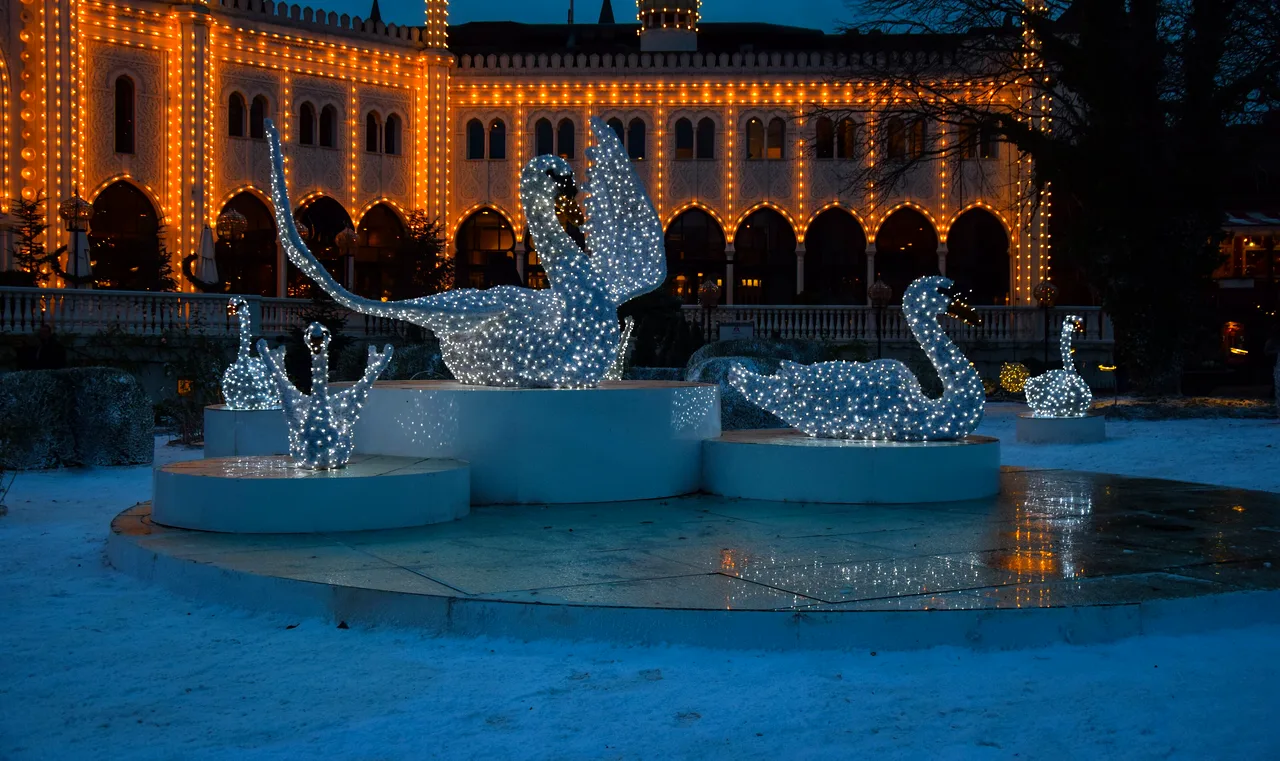
In Advent, Copenhagen lives up to its reputation as the home of hygge. The heart of the Danish Christmas season is Tivoli Gardens, the amusement park in the centre of the city opened in 1843: for Christmas in Tivoli the Gardens are filled with lit trees and decorated stalls, the lake reflects the lights of the Chinese pagoda and the old rides, and the smell of gløgg and æbleskiver hangs in the air. Entry requires a ticket and rides are paid separately. A few minutes’ walk away, the Christmas market at Nytorv & Gammeltorv sets up its huts on the two old squares beside Strøget and the Courthouse; it is free to enter, has activities for children and a visit from Santa Claus, and is about five minutes on foot from Gammel Strand metro station. Other Christmas markets appear each year in places such as Nyhavn, Kongens Nytorv and Højbro Plads, and Freetown Christiania holds its own Christmas market; their dates and organisers vary, so check them on Visit Copenhagen. Department stores decorate their windows, Strøget and the shopping streets are hung with lights, and the city’s churches hold Advent concerts. Danish traditions shape the season: candles in every window, Advent calendars and Advent wreaths, Lucia processions on 13 December, the julefrokost Christmas lunches, and on 24 December the main celebration, when families dance around the Christmas tree and eat risalamande, a rice pudding with a hidden whole almond.


| Event | Location | 2026 dates | Note |
|---|---|---|---|
| Christmas in Tivoli | Tivoli Gardens, Vesterbrogade 3 | 13 November 2026–3 January 2027 | Ticketed entry; rides and food paid separately. Check daily hours on tivoli.dk. |
| Christmas Market Nytorv & Gammeltorv | Nytorv and Gammeltorv, by Strøget and the Courthouse | 6 November–21 December 2026 | Free entry; Mon–Wed 11–20, Thu 11–21, Fri–Sat 11–22, Sun 12–19. |
| Nyhavn Christmas market | Along the Nyhavn canal | See Visit Copenhagen | Stalls in front of the coloured houses; dates announced each year. |
| Kongens Nytorv and Højbro Plads | Central squares near Strøget | See Visit Copenhagen | Seasonal stalls and decorations; dates vary from year to year. |
| Christiania Christmas market | Freetown Christiania | See Visit Copenhagen | Crafts in the Grey Hall; respect local rules on photography. |
| Advent concerts | Churches across the city | Throughout Advent | Programmes are published by the churches and the city. |
What to try
Gløgg
Danish mulled wine with raisins and almonds; alcoholic, though alcohol-free versions are widely available.
Æbleskiver
Round, fluffy pancake balls cooked in a special pan and served with jam and powdered sugar.
Brændte mandler
Roasted, sugar-coated almonds sold warm in paper cones.
Risalamande
Rice pudding with whipped cream, chopped almonds and cherry sauce; whoever finds the whole almond gets a small gift.
Pebernødder and klejner
Small spiced biscuits and deep-fried twisted pastries baked for Christmas.
Flæskesteg
Roast pork with crackling, the classic Christmas Eve dish; it contains pork, so ask if you avoid it.
Copenhagen Christmas tips
- In December it is dark by about 15:45 in Copenhagen; plan museums, palaces and the harbour for the short daylight and Tivoli and the markets for the evening.
- Buy Tivoli tickets online in advance and check opening hours, especially on 24, 25 and 31 December.
- Tivoli is busiest on weekend evenings; weekday afternoons are calmer, and the lights come on early.
- The Nytorv & Gammeltorv market is free; combine it with a walk along Strøget and the canal at Gammel Strand.
- Denmark is largely cashless: cards are accepted almost everywhere, even at many stalls.
- The wind from the sea makes it feel colder than the thermometer says; bring a hat, gloves and waterproof shoes.
- Many museums and palaces have reduced winter hours or close on Mondays; check before you go.
- On 24 December most of the city closes early for the family Christmas celebration.
Check before you go: Tivoli · Christmas in Tivoli 2026 (official) ↗ · Christmas market at Nytorv & Gammeltorv · plan your visit (official) ↗ · Københavns Kommune · Visitor Service (official) ↗ · Magasin · Christmas market at Kongens Nytorv (official) ↗
Dates were checked on 28 October 2026 against the official websites of Tivoli and the Christmas Market Nytorv & Gammeltorv. Dates of other Christmas markets in the city had not all been published; check Visit Copenhagen and the organisers’ pages before you visit.
When to Go
Copenhagen has a mild maritime climate, but winters are dark and windy. From May to August the days are very long, the harbour baths are open and life moves outdoors; this is the most popular time. Autumn brings colour to the parks and fewer visitors. From mid-November to the end of December Tivoli and the Christmas markets give the city a festive glow. January to March is cold, grey and quiet – the best time for museums and hygge in cafés.
| Month | City sightseeing | Christmas markets | Day trips and coast | Crowds |
|---|---|---|---|---|
| January | Difficult | None | Difficult | Quiet |
| February | Difficult | None | Difficult | Quiet |
| March | Difficult | None | Good | Quiet |
| April | Good | None | Good | Moderate |
| May | Very good | None | Very good | Moderate |
| June | Very good | None | Very good | Busy |
| July | Very good | None | Very good | Busy |
| August | Very good | None | Very good | Busy |
| September | Good | None | Very good | Moderate |
| October | Good | None | Good | Moderate |
| November | Difficult | Market season | Good | Moderate |
| December | Difficult | Market season | Difficult | Busy |
- Winters hover around freezing, often with wind and drizzle; snow is possible but rarely lasts.
- In December the sun rises around 8:30 and sets around 15:40; plan sightseeing for the short daylight hours.
- Christmas in Tivoli runs from 13 November 2026 to 3 January 2027; Nytorv & Gammeltorv from 6 November to 21 December 2026.
- Many palaces and towers have shorter winter hours; the outside staircase of the Church of Our Saviour may close in bad weather.
- In summer, hotels fill early, especially during big events; book early.
- Christmas Eve (24 December) is the main Danish celebration; many places close early.
Visa and Entry (Turkish citizens)
Turkish citizens holding an ordinary (burgundy) passport need a Schengen visa for tourist travel to Denmark. Different rules apply to special, service and diplomatic passports; check the current situation with the Turkish Ministry of Foreign Affairs.
Apply to the mission of your main destination. If Denmark is your main destination, the “Denmark in Türkiye” pages of the Danish Ministry of Foreign Affairs (um.dk) explain how to apply for a visa; general rules are published on nyidanmark.dk, the official Danish immigration portal.
If you combine Copenhagen with Hamburg or Lübeck (Germany) or Malmö (Sweden), apply to the country where you will stay longest; if stays are equal, the country of first entry applies. Checks may take place at internal borders, for example on the Øresund route; carry your passport.
Under the EU Entry/Exit System (EES), being phased in, your biometric data (facial image and fingerprints) may be taken on first entry; allow extra time at the border.
Visa fees, appointment waiting times and required documents can change; this guide gives no fees. Use the current list on the official sites before applying.
Travel medical insurance and accommodation and return details are part of the application; see the official sources for details.
Check before you go: T.C. Dışişleri Bakanlığı · Türk vatandaşlarının tabi olduğu vize uygulamaları ↗ · um.dk/tyrkiet · visa ↗ · EES · europa.eu ↗ · nyidanmark.dk ↗ · Rota Atlası visa guide (TR)
Travel medical insurance
Check the official visa and entry sources above first: they state whether travel medical insurance is required and the minimum cover. Compare any policy’s cover amount, validity dates and countries covered with the official requirement.
Rota Atlası does not currently offer an insurance partnership; there are no paid links in this section. Last updated: 1 November 2026
Getting to Copenhagen
- By air: Copenhagen Airport (CPH) in Kastrup is about 8 km from the centre; the M2 metro line and regional trains link it with the city, including Kongens Nytorv and the Central Station (København H). Check current flights from Türkiye only on airline and airport websites.
- By train from Germany: there are connections from Hamburg, among them via the new and older routes across the islands; check timetables on dsb.dk and bahn.de, as construction work can change routes.
- From Sweden: trains cross the Øresund Bridge between Malmö and Copenhagen Airport and the Central Station; ID checks may take place.
- From the Central Station: København H is right next to Tivoli and a short walk from City Hall Square and Strøget.
Getting Around

Metro
The driverless metro runs around the clock; the M1 and M2 lines and the City Circle Line M3 cover the centre. Check tickets on m.dk.
Train and S-train
S-trains and regional trains (DSB) serve the suburbs and day-trip destinations such as Helsingør, Hillerød and Roskilde.
Bus and harbour bus
City buses and the harbour buses on the water complete the network; one ticket system covers metro, trains and buses.
Bike
Copenhagen is famous for cycling, with wide bike lanes and its own traffic rules; ride carefully and signal clearly.
On foot
The medieval centre, Nyhavn, Amalienborg and Christianshavn are close together and best explored on foot.
City passes
Tourist passes may combine transport and museum entry; check current conditions on the official websites.
Things to See
Copenhagen’s centre lies between the Central Station and Tivoli in the west and the harbour in the east. The medieval core around Strøget, Nytorv and the Round Tower is crossed by shopping streets; Kongens Nytorv, Nyhavn and the royal quarter of Frederiksstaden with Amalienborg lie to the east; Rosenborg and the museums to the north; the island of Slotsholmen with Christiansborg in the middle; and Christianshavn across the harbour. Kronborg, Louisiana, Frederiksborg and Roskilde are easy day trips by train.
Since 1843
Tivoli Gardens and City Hall Square

Tivoli Gardens opened in 1843 on part of the old fortifications, founded by Georg Carstensen with the permission of King Christian VIII, who is said to have agreed in the belief that people who amuse themselves do not think about politics. It is one of the oldest amusement parks in the world, with historic rides, a pantomime theatre, a concert hall, gardens and a lake, and it inspired visitors from Hans Christian Andersen to Walt Disney. In Advent it becomes the centre of Christmas in Copenhagen. Next to it, City Hall Square (Rådhuspladsen) is dominated by the red-brick City Hall, completed in 1905 to designs by Martin Nyrop, with a tall tower and, inside, Jens Olsen’s astronomical World Clock.
Don’t miss
- Christmas in Tivoli in the evening
- The Chinese pagoda and the lake
- City Hall and its tower
- Jens Olsen’s World Clock in City Hall
Tips
- Check Tivoli’s opening days and hours on tivoli.dk; it is not open all year.
- City Hall tower tours run at fixed times; check on kk.dk.
- The Central Station is next door – ideal for arrival and departure days.
Old Copenhagen
Strøget, Copenhagen Cathedral and the Round Tower

Strøget, the chain of streets between City Hall Square and Kongens Nytorv, became one of Europe’s first and longest pedestrian streets in 1962. It passes Nytorv and Gammeltorv, the old squares where the Christmas market is held, and the side streets of the Latin Quarter around the university. Copenhagen Cathedral, the Church of Our Lady (Vor Frue Kirke), was rebuilt in neoclassical style by C. F. Hansen after the British bombardment of 1807; inside stand Bertel Thorvaldsen’s white marble statues of Christ and the apostles. Nearby, the Round Tower, built by Christian IV in the 1630s and 1640s as an observatory for the university, has no stairs but a wide spiral ramp leading to a viewing platform over the roofs.
Don’t miss
- A walk along Strøget under the Christmas lights
- Thorvaldsen’s Christ in the Cathedral
- The spiral ramp of the Round Tower
- The view from the top of the Round Tower
Tips
- Strøget is busy on Advent Saturdays; side streets such as Læderstræde are calmer.
- Check Round Tower hours on rundetaarn.dk.
- Combine with the Nytorv & Gammeltorv Christmas market.


Royal residence
Amalienborg and Frederik’s Church (the Marble Church)

Amalienborg, the winter residence of the Danish royal family, consists of four identical rococo palaces around an octagonal square in Frederiksstaden, the district laid out in the 18th century by King Frederick V. In the centre stands his equestrian statue by the French sculptor Jacques Saly. Every day at noon the Royal Life Guards march from Rosenborg to change the guard. Part of one palace is open as a museum of the royal family. On the axis of the square rises Frederik’s Church, known as the Marble Church, whose great green dome is one of the largest in Scandinavia; begun in the 18th century, it was completed only in 1894. Towards the harbour, the axis continues to the Opera on the opposite bank.
Don’t miss
- The changing of the guard at noon
- The square and the equestrian statue
- The interior and dome of the Marble Church
- The view along the axis to the Opera
Tips
- The guard ceremony is grander when the monarch is in residence; check details on kongernessamling.dk.
- The museum has seasonal hours; check before visiting.
- Nyhavn is about ten minutes’ walk away.
The postcard
Nyhavn, Kongens Nytorv and Nyboder

Nyhavn (“new harbour”) was dug in the 1670s to bring ships into the heart of the city, and its rows of brightly painted 17th- and 18th-century houses are now the most photographed sight in Copenhagen. Hans Christian Andersen lived in several of them during his life. Old wooden ships are moored in the canal, and in Advent stalls and lights line the quay. At its western end, Kongens Nytorv is the largest square in the city, with the Royal Danish Theatre and the Magasin department store. North of the centre, Nyboder is a quarter of long rows of low yellow houses that Christian IV began building in the 1630s for the families of naval sailors; it is still partly used by the navy.
Don’t miss
- The coloured houses and old ships of Nyhavn
- The houses where Andersen lived
- Kongens Nytorv and the Royal Danish Theatre
- The yellow terraced rows of Nyboder
Tips
- Nyhavn is most atmospheric in the early morning or after dark.
- Harbour boat tours start here; winter schedules are limited.
- Nyboder is residential; walk quietly.
Crown jewels
Rosenborg Castle and the King’s Garden

Rosenborg Castle was built in the early 17th century by Christian IV as a summer house outside the city walls and soon became his favourite residence. Its Dutch Renaissance rooms have kept their furnishings, and in the vaults below the treasury displays the Danish crown jewels and the royal regalia, including the crowns of the absolute monarchs. Around the castle lies the King’s Garden (Kongens Have), the oldest royal garden in the city, with avenues, a rose garden and statues; it is a favourite park for Copenhageners. The barracks of the Royal Life Guards are next door, and the daily changing of the guard starts from here.
Don’t miss
- The crown jewels and regalia in the treasury
- The Long Hall with the coronation thrones
- The King’s Garden and rose garden
- The guards marching out at about 11:30
Tips
- Rosenborg has limited winter opening; check kongernessamling.dk.
- A combined ticket with Amalienborg may be available; check the official site.
- The Botanical Garden and SMK are close by.

Slotsholmen
Christiansborg Palace and the Old Stock Exchange

Christiansborg Palace on the island of Slotsholmen is the only building in the world that houses all three branches of a country’s government: the Danish parliament (Folketing), the Prime Minister’s Office and the Supreme Court. Parts are still used by the monarchy, and the Royal Reception Rooms, the royal stables and the ruins of Bishop Absalon’s castle underneath can be visited; the palace tower has a viewing platform. Next to it stands the Old Stock Exchange (Børsen), built by Christian IV in the 17th century, with its famous spire of four intertwined dragon tails. On 16 April 2024 a fire destroyed the spire and much of the roof; the building is being restored, so the view today differs from older photos such as the one shown here.
Don’t miss
- The Royal Reception Rooms
- The ruins under the palace
- The view from the Christiansborg tower
- The Børsen restoration seen from outside
Tips
- Check opening hours and tickets for each part of the palace on kongeligeslotte.dk.
- The tower is a popular viewpoint; queues are possible.
- The Black Diamond and the harbour are just across the street.

Modern architecture
The Black Diamond, the Opera and the harbour front

Copenhagen’s harbour has become a showcase of modern architecture. On the waterfront next to Slotsholmen, the Black Diamond, an extension of the Royal Danish Library opened in 1999, is clad in black granite and glass and leans towards the water; its atrium and reading rooms are open to the public. Across the harbour on the island of Holmen, the Copenhagen Opera House, opened in 2005 and designed by Henning Larsen, faces Amalienborg with its huge projecting roof. Bridges for cyclists and pedestrians now link the banks, and harbour buses make it easy to hop between them.
Don’t miss
- The atrium of the Black Diamond
- The Opera seen from the Amalienborg axis
- A harbour bus ride
- The cycle and footbridges across the harbour
Tips
- Check opening hours of the library on kb.dk.
- Opera performances and tours are listed on the Royal Danish Theatre website.
- It is windy on the waterfront; dress warmly.

Across the canal
Christianshavn and the Church of Our Saviour

Christianshavn was laid out by Christian IV in the early 17th century on reclaimed land across the harbour, modelled on Dutch towns, and its canals with houseboats and old warehouses still feel like Amsterdam. Its landmark is the Church of Our Saviour (Vor Frelsers Kirke), whose Baroque spire has an external spiral staircase that winds up to a golden globe; the climb offers one of the best views of the city. Next to the district lies Freetown Christiania, a self-governing community founded in 1971 on a former military area, with its own rules.
Don’t miss
- The canals and houseboats of Christianshavn
- The spire of the Church of Our Saviour
- The view from the top of the spire
- A walk along the ramparts
Tips
- The spire may close in winter, in strong wind or bad weather; check the church website.
- In Christiania follow the local rules, and do not take photos where signs forbid it.
- The metro stops at Christianshavn station.

Art and history
National Museum, SMK and Designmuseum Danmark

Copenhagen has a remarkable range of museums. The National Museum of Denmark, in an 18th-century palace near Slotsholmen, tells the history of Denmark from the Stone Age and the Vikings to the present, with treasures such as the Sun Chariot. SMK, the National Gallery of Denmark, by the Østre Anlæg park, holds Danish and European art from the Renaissance to today, including the Danish Golden Age. Designmuseum Danmark, in an 18th-century former hospital, shows the Danish design tradition, from chairs to everyday objects. The Ny Carlsberg Glyptotek next to Tivoli, with its winter garden and ancient sculpture, is another highlight.
Don’t miss
- The Viking collections of the National Museum
- The Danish Golden Age paintings at SMK
- The chair collection at Designmuseum Danmark
- The winter garden of the Glyptotek
Tips
- Many museums close on Mondays; check opening days on the official sites.
- Some museums offer free entry on certain days; check current conditions.
- The museums are a good programme for dark winter afternoons.


Hamlet’s castle
Day trip: Kronborg Castle in Helsingør

Kronborg Castle stands at the narrowest point of the Øresund in Helsingør, about 45 kilometres north of Copenhagen, facing Sweden across the water. For centuries the Danish kings collected the Sound Dues here from every ship passing between the North Sea and the Baltic, which made the castle immensely rich. The Renaissance building was rebuilt after a fire in the 17th century. As “Elsinore” it is the setting of Shakespeare’s Hamlet, and performances are held here. In the dark casemates sleeps the legendary hero Holger Danske, who will awake if Denmark is in danger. UNESCO listed it as World Heritage in 2000. UNESCO listing ↗
Don’t miss
- The great ballroom
- The casemates and Holger Danske
- The view across the Øresund to Sweden
- The M/S Museet for Søfart (Maritime Museum) next door
Tips
- Regional trains run from Copenhagen to Helsingør; check dsb.dk.
- Check winter hours on kongeligeslotte.dk.
- Combine with Louisiana in Humlebæk on the same coastal line.
Art and castles
Louisiana Museum and Frederiksborg Castle

The Louisiana Museum of Modern Art in Humlebæk, on the coast north of Copenhagen, opened in 1958 and is famous as much for its setting as for its collection: low pavilions connected by glass corridors stand in a sculpture park on the edge of the Øresund. Inland in Hillerød, Frederiksborg Castle, built by Christian IV in the early 17th century on three islands in a lake, is one of the largest Renaissance castles in Scandinavia. It houses the Museum of National History, with portraits and rooms covering 500 years of Danish history, and its Baroque garden lies on the far side of the lake.
Don’t miss
- The sculpture park of Louisiana by the sea
- Changing exhibitions at Louisiana
- The castle chapel of Frederiksborg
- The Baroque garden of Frederiksborg
Tips
- Louisiana is near Humlebæk station on the coastal line to Helsingør; check louisiana.dk.
- Frederiksborg is reached by S-train to Hillerød; check opening hours on dnm.dk.
- Allow at least half a day for each.

Royal tombs
Day trip: Roskilde Cathedral and the Viking ships

Roskilde, about 30 kilometres west of Copenhagen, was the seat of Danish kings and bishops in the Middle Ages. Its cathedral, built in the 12th and 13th centuries, was one of the first Gothic cathedrals of brick in Scandinavia and has been the burial church of the Danish monarchs since the 15th century; around 40 kings and queens lie here in chapels of different centuries. The carved choir stalls and the medieval clock with its figures are highlights. Down by the fjord, the Viking Ship Museum displays five original Viking ships found in the Roskilde Fjord. UNESCO listed the cathedral as World Heritage in 1995. UNESCO listing ↗
Don’t miss
- The royal tombs and chapels
- The carved choir stalls
- The medieval clock in the cathedral
- The Viking Ship Museum by the fjord
Tips
- Trains from Copenhagen Central Station take around half an hour; check dsb.dk.
- Check cathedral opening hours on roskildedomkirke.dk – services and events can close it to visitors.
- Combine the cathedral and the Viking Ship Museum in one day.
1–3 Day Itineraries, Christmas Day + 7-Day Denmark Route
The itineraries keep walking short and take the short northern winter days into account. One day covers the centre and the royal quarter, two days add Rosenborg, the museums and Christianshavn, and three days add a day trip. The 7-day route links Copenhagen with Hamburg and Lübeck. Check museum and palace hours on official websites in advance.
Day 1: Centre and royal Copenhagen
- Start at City Hall Square and walk along Strøget.
- Visit the Cathedral and climb the Round Tower.
- Walk to Kongens Nytorv and Nyhavn.
- See Amalienborg (changing of the guard at noon) and the Marble Church.
- In the evening visit Tivoli (from 13 November).
Day 2: Palaces, museums and Christianshavn
- Visit Rosenborg and the crown jewels in the morning.
- Walk through the King’s Garden to SMK or the National Museum.
- Cross to Slotsholmen for Christiansborg and the tower.
- Continue to Christianshavn and the Church of Our Saviour.
- Take the harbour bus back in the early evening.
Day 3: Day trip
- Take the train north to Helsingør and visit Kronborg Castle.
- Stop at Louisiana in Humlebæk on the way back.
- Alternatively, go to Roskilde for the Cathedral and the Viking ships.
- Or take the S-train to Hillerød and Frederiksborg Castle.
- Return to Copenhagen for the evening.
Christmas day (6 November–21 December 2026)
- In daylight visit Rosenborg or the National Museum.
- In the afternoon walk along Strøget under the Christmas lights.
- Visit the Nytorv & Gammeltorv Christmas market (free entry) with gløgg and æbleskiver.
- At dusk walk to Nyhavn to see the lights on the canal.
- Spend the evening in Tivoli for Christmas in Tivoli (ticketed).
7 days: Denmark and northern Germany
- Days 1–3: Copenhagen – the centre, palaces, museums and a day trip.
- Day 4: Roskilde or Helsingør and Louisiana.
- Day 5: Travel south to Hamburg by train (check current routes).
- Day 6: Hamburg – the Rathausmarkt Christmas market and the harbour.
- Day 7: Lübeck – the “Christmas City of the North” – and departure from Hamburg.
Copenhagen and Danish Food
Danish food is built on bread, fish, dairy and seasonal produce, and Copenhagen also became known for New Nordic cuisine. Below are traditional specialities, not restaurant recommendations.


Smørrebrød
Open sandwiches on dark rye bread with toppings such as herring, egg and shrimp, or roast beef.
Æbleskiver
Round pancake balls served with jam and powdered sugar, especially in Advent.
Wienerbrød
The Danish pastry – flaky layered dough with custard, nuts or cinnamon.
Kanelsnegl
The cinnamon roll, a favourite in Danish bakeries.
Sild
Pickled herring in many varieties, a central part of the Christmas lunch.
Frikadeller
Danish meatballs; often made with pork, so ask about ingredients.
Rugbrød
Dense rye bread, the base of Danish everyday food.
Risalamande
The Christmas rice pudding with almonds and cherry sauce.
- Many traditional dishes contain pork; ask about ingredients.
- Tap water is excellent and free; ask for it in restaurants.
- Service is included in prices; tipping is not expected but is appreciated for good service.
- Bakeries open early and are ideal for breakfast.
Culture and Etiquette

- A simple “Hej” is the usual greeting; Danes are informal and use first names.
- Danes value modesty and equality; loud behaviour stands out.
- Queue tickets are common in shops, pharmacies and offices; take a number.
- Cyclists have their own lanes and rules; never walk in bike lanes.
- Signal and look before stepping onto a bike lane, especially at bus stops.
- Punctuality is expected for appointments and tours.
- Hygge – cosiness with candles and friends – is part of everyday life, especially in winter.
- Don’t walk around churches during services and avoid flash photography.
- In Christiania respect the local rules, including no photography in certain areas.
- Ask before photographing people, especially at markets.
Safety and Health
- Copenhagen is generally safe; watch your valuables in crowds, at the Central Station and on Strøget.
- Watch out for cyclists – they are fast and numerous.
- Pavements and bridges can be icy in winter; wear non-slip shoes.
- The wind by the harbour and the sea can be strong; dress warmly.
- In an emergency call 112; for police non-emergencies call 114.
- Make sure your travel medical insurance covers the Schengen area.
- Pharmacies (apotek) are marked clearly; some in the centre are open around the clock.
What Your Budget Depends On
This guide does not give prices; prices change with season and year. Your budget depends on these factors:
Dates
December weekends, Tivoli’s Christmas season and summer increase hotel demand.
Where you stay
The centre and Vesterbro near the station are convenient; Nørrebro, Østerbro and Christianshavn are alternatives.
Transport
The metro and trains are efficient; tourist passes may combine transport and museums.
Museums and palaces
Entry is charged separately; some museums have free days.
Food and drink
Bakeries, smørrebrød and market snacks are cheaper than sit-down dinners.
Day trips
Trains to Helsingør, Roskilde or Hillerød add transport costs.
Free experiences
The Nytorv & Gammeltorv market, Nyhavn, Amalienborg and the changing of the guard, the King’s Garden and the Christiansborg tower cost little or nothing.
Practical Information
- Money: Danish krone (DKK); cards and mobile payment are accepted almost everywhere.
- Language: Danish; English is spoken very widely.
- Plugs: 230 V; European two-pin plugs fit.
- Time: two hours behind Türkiye in winter (CET, UTC+1).
- Opening hours: many museums close on Mondays; check before you go.
- Shops: open on many Sundays in the centre in December.
- Holidays: hours change on 24–26 and 31 December and 1 January.
- Weather: in December temperatures hover around freezing, often with wind.
- Daylight: in December the sun sets around 15:40.
- Emergency: 112; police non-emergency 114.
Frequently Asked Questions
When is Christmas in Tivoli 2026?
According to Tivoli, from 13 November 2026 to 3 January 2027; entry requires a ticket.
When is the Nytorv & Gammeltorv Christmas market?
From 6 November to 21 December 2026; Mon–Wed 11–20, Thu 11–21, Fri–Sat 11–22 and Sun 12–19, according to the official page.
Is entry to the markets free?
The Nytorv & Gammeltorv market is free; Tivoli charges entry.
Do Turkish citizens need a visa?
Ordinary passport holders need a Schengen visa. If Denmark is the main destination, see the “Denmark in Türkiye” pages on um.dk and nyidanmark.dk.
Do I need cash?
Very little; cards and mobile payment are accepted almost everywhere.
How do I get from the airport to the centre?
By the M2 metro line or by train to Copenhagen Central Station; check m.dk and dsb.dk.
How many days are enough?
Two days for the centre and the palaces, three or more to add a day trip.
Can I visit the Old Stock Exchange?
The Børsen was damaged by fire in April 2024 and is under restoration; see it from outside.
Is the climb up the Church of Our Saviour open in winter?
It can close in winter or bad weather; check before you go.
What should I eat at Christmas?
Gløgg, æbleskiver, roasted almonds and, if you are invited, risalamande.
Where to stay
Stay close to the areas where you will spend most time. The areas below are covered in detail in this guide; check public transport links in the getting-around section.
- Since 1843Tivoli Gardens and City Hall Square
- Old CopenhagenStrøget, Copenhagen Cathedral and the Round Tower
- Royal residenceAmalienborg and Frederik’s Church (the Marble Church)
- The postcardNyhavn, Kongens Nytorv and Nyboder
- Crown jewelsRosenborg Castle and the King’s Garden
- SlotsholmenChristiansborg Palace and the Old Stock Exchange
- Modern architectureThe Black Diamond, the Opera and the harbour front
- Across the canalChristianshavn and the Church of Our Saviour
- Art and historyNational Museum, SMK and Designmuseum Danmark
- Hamlet’s castleDay trip: Kronborg Castle in Helsingør
- Art and castlesLouisiana Museum and Frederiksborg Castle
- Royal tombsDay trip: Roskilde Cathedral and the Viking ships
Search hotels in these areas (Hotellook) ↗ (affiliate link)Search on Booking.com ↗
Where to stay in Copenhagen → · 3 days in Copenhagen: ready-made itinerary →
Affiliate disclosure: Hotellook, Aviasales, Klook, Airalo, Tiqets and DiscoverCars links are affiliate links; Rota Atlası may earn a commission on bookings made through them, at no extra cost to you. Official and in-guide links are not paid. Last updated: 1 November 2026 · Privacy and affiliates
Transport and connectivity
- Airport transferOptions from the airport to the city are in this guide’s getting there section.
- Mobile data (eSIM)Airalo eSIM ↗ (affiliate link)
- TrainsOfficial rail website ↗
- Car hireYou rarely need a car within the city; see getting around first. Compare car hire on DiscoverCars ↗ (affiliate link)
Affiliate disclosure: Hotellook, Aviasales, Klook, Airalo, Tiqets and DiscoverCars links are affiliate links; Rota Atlası may earn a commission on bookings made through them, at no extra cost to you. Official and in-guide links are not paid. Last updated: 1 November 2026 · Privacy and affiliates
Search flights (affiliate link)
Search flights from any airport in any country. Results open on Aviasales in a new tab, where you book.
This form is an affiliate link: Rota Atlası may earn a commission on bookings made via Aviasales (Travelpayouts), at no extra cost to you. Check price, baggage and terms on the booking site. Airport data: OurAirports (public domain).
Flights, hotels and tours
Find tours and tickets
- Christmas in Tivoli
GetYourGuide ↗ · Klook ↗ (affiliate link) - City Hall Square (Rådhuspladsen)
GetYourGuide ↗ · Klook ↗ (affiliate link) - Strøget
GetYourGuide ↗ · Klook ↗ (affiliate link) - Nyhavn
GetYourGuide ↗ · Klook ↗ (affiliate link)
Hotellook, Aviasales, Klook, Airalo and Tiqets links in this box are affiliate links (Travelpayouts): Rota Atlası may earn a commission on bookings made through them, at no extra cost to you. GetYourGuide links currently carry no affiliate code. Check prices and terms with the provider. Last updated: 1 November 2026 · Privacy and affiliates
Sources
- T.C. Dışişleri Bakanlığı · Türk vatandaşlarının tabi olduğu vize uygulamaları ↗
- Udenrigsministeriet · Denmark in Türkiye · How to apply for a visa ↗
- European Union · Entry/Exit System (EES) ↗
- New to Denmark · nyidanmark.dk (official) ↗
- Wonderful Copenhagen · visitcopenhagen.com (official) ↗
- Københavns Kommune · kk.dk (official) ↗
- Tivoli · Christmas in Tivoli (official) ↗
- The Royal Danish Collection · Rosenborg & Amalienborg (official) ↗
- The Royal Danish Palaces · Christiansborg & Kronborg (official) ↗
- National Museum of Denmark (official) ↗
- SMK – National Gallery of Denmark (official) ↗
- Ny Carlsberg Glyptotek (official) ↗
- Designmuseum Danmark (official) ↗
- Rundetaarn (official) ↗
- Louisiana Museum of Modern Art (official) ↗
- Roskilde Cathedral (official) ↗
- Metroselskabet · Copenhagen Metro (official) ↗
- DSB · Danish State Railways (official) ↗
- Copenhagen Airport (official) ↗
- GOV.UK · Foreign travel advice · Denmark ↗
- UNESCO World Heritage Centre · Kronborg Castle ↗
- UNESCO World Heritage Centre · Roskilde Cathedral ↗
- Tivoli · Christmas in Tivoli 2026 (official) ↗
- Christmas market at Nytorv & Gammeltorv · plan your visit (official) ↗
- Københavns Kommune · Visitor Service (official) ↗
- Magasin · Christmas market at Kongens Nytorv (official) ↗
This page is for information only. Dates, hours, entry rules and transport information can change; check the official sources above before travelling. No prices, flights, hotels or restaurants have been invented in this guide.
Photo credits
The photos on this page come from Wikimedia Commons and are used under the stated authors and licences (CC BY, CC BY-SA, CC0 or public domain). Full list of sources
- Tivoli Gardens in Copenhagen decorated with Christmas lights — Johan Wessman / News Oresund · CC BY 2.0 · Wikimedia Commons
- Lit stalls at the Christmas market in Tivoli — Maria Eklind · CC BY-SA 2.0 · Wikimedia Commons
- Christmas decorations and visitors in Tivoli — Maria Eklind · CC BY-SA 2.0 · Wikimedia Commons
- Stalls of the Nytorv Christmas market beside the Courthouse — Jordi Vila De Grácia · CC BY-SA 4.0 · Wikimedia Commons
- An illuminated Ferris wheel at a Copenhagen Christmas market at night — Jordidews · CC BY-SA 4.0 · Wikimedia Commons
- An illuminated ride and reflections at night in Tivoli — Guillaume Baviere from Copenhagen, Denmark · CC BY-SA 2.0 · Wikimedia Commons
- The Chinese pagoda on the Tivoli lake with Christmas lights — Guillaume Baviere from Copenhagen, Denmark · CC BY-SA 2.0 · Wikimedia Commons
- A lit Christmas tree on a Copenhagen square at dusk — Jan M · CC BY-SA 3.0 · Wikimedia Commons
- A red-and-white wooden hut at a Copenhagen Christmas market — Susanne Nilsson · CC BY-SA 2.0 · Wikimedia Commons
- Colourful 17th-century houses and boats along the Nyhavn canal — Jakub Hałun · CC BY-SA 4.0 · Wikimedia Commons
- Rådhuspladsen square and Copenhagen City Hall — Jorge Láscar from Melbourne, Australia · CC BY 2.0 · Wikimedia Commons
- Strøget, Copenhagen’s pedestrian shopping street — Aram Zucker-Scharff from Fairfax, VA, USA · CC BY 2.0 · Wikimedia Commons
- The Amalienborg palace square and its equestrian statue — Jakub Hałun · CC BY-SA 4.0 · Wikimedia Commons
- The great dome of Frederik’s Church (the Marble Church) — Arild Vågen · CC BY-SA 4.0 · Wikimedia Commons
- The Renaissance Rosenborg Castle — kallerna · CC BY-SA 4.0 · Wikimedia Commons
- The rose garden in Kongens Have near Rosenborg — Jakub Hałun · CC BY-SA 4.0 · Wikimedia Commons
- Christiansborg Palace seen from the Marble Bridge — Moahim · CC BY-SA 4.0 · Wikimedia Commons
- The Old Stock Exchange with its dragon-tail spire (before the 2024 fire) — Alf van Beem · CC0 · Wikimedia Commons
- The 17th-century Round Tower (Rundetårn) — Dietmar Rabich · CC BY-SA 4.0 · Wikimedia Commons
- Copenhagen roofs and spires from the Round Tower — Jakub Hałun · CC BY-SA 4.0 · Wikimedia Commons
- Copenhagen seen from the Church of Our Saviour — Jorge Láscar from Melbourne, Australia · CC BY 2.0 · Wikimedia Commons
- The Christianshavn canal with boats and historic houses — Doyle of London · CC BY-SA 4.0 · Wikimedia Commons
- The entrance of the National Museum of Denmark — Richard Mortel from Riyadh, Saudi Arabia · CC BY 2.0 · Wikimedia Commons
- The SMK – National Gallery of Denmark building — Jiří Komárek · CC BY-SA 4.0 · Wikimedia Commons
- The courtyard and building of Designmuseum Danmark — Patti Manolis · CC BY 2.0 · Wikimedia Commons
- The Copenhagen Opera House on the harbour front — Dietmar Rabich · CC BY-SA 4.0 · Wikimedia Commons
- The glass-and-granite “Black Diamond” of the Royal Danish Library — Julian Herzog (Website) · CC BY 4.0 · Wikimedia Commons
- The yellow naval terraced houses of Nyboder — Pudelek · CC BY-SA 4.0 · Wikimedia Commons
- The driverless Copenhagen Metro on a snowy day — Leif Jørgensen · CC BY-SA 4.0 · Wikimedia Commons
- Cyclists in the bike lane on Holmens Kanal — Tony Webster from Portland, Oregon, United States · CC BY 2.0 · Wikimedia Commons
- Danish open sandwiches (smørrebrød) with various toppings — Kritzolina · CC BY-SA 4.0 · Wikimedia Commons
- Traditional æbleskiver cooking in a cast-iron pan — Dansker · CC BY-SA 3.0 · Wikimedia Commons
- Kronborg Castle on the Øresund at Helsingør — ArildV · CC BY-SA 4.0 · Wikimedia Commons
- The grounds and building of the Louisiana Museum of Modern Art — Lars Plougmann · CC BY-SA 2.0 · Wikimedia Commons
- The carved choir stalls of Roskilde Cathedral — Jakub Hałun · CC BY-SA 4.0 · Wikimedia Commons
- Frederiksborg Castle by the lake with a boat — Casper Moller from London, United Kingdom · CC BY 2.0 · Wikimedia Commons
- The neoclassical interior of Copenhagen Cathedral (Vor Frue Kirke) — Ib Rasmussen · Public domain · Wikimedia Commons
Hamburg → · Lübeck → · Berlin → · Amsterdam → · Riga → · Christmas markets