

Tallinn is the capital and largest city of Estonia, a port city of about 450,000 people on the Gulf of Finland. Known as Reval in the Middle Ages, it was an important member of the Hanseatic League; for centuries the lower town, run by German merchants, and Toompea hill, home of the nobility and the church, lived almost like two separate towns. Having passed through Danish, Teutonic Order, Swedish and Russian Imperial rule, Tallinn is the capital of Estonia, which won its independence in 1918 and restored it in 1991. The Old Town, with its walls, watchtowers, Gothic churches and merchants’ houses largely preserved, has been on the UNESCO World Heritage List since 1997. Today Tallinn is also a modern capital known for its digital state and tech start-ups: former industrial areas such as Rotermann and Telliskivi have come alive with new architecture, cafés and art. In winter the city takes on a special magic: according to the official Tallinn Christmas Market website, the market on Raekoja plats (Town Hall Square) runs from 20 November 2026 to 6 January 2027, with a giant Christmas tree in the middle of the square. This guide brings together the Christmas market, the towers and passages of the Old Town, the Toompea viewing platforms, the wooden houses of Kalamaja, the palace of Kadriorg and day trips to Lahemaa and Helsinki, with official sources throughout.
Content update: 28 October 2026 · Christmas market dates and hours checked against the official christmasmarket.ee and Visit Tallinn pages
Tallinn at a Glance
- Country
- Estonia · capital
- Population
- About 450,000
- Language
- Estonian; English is spoken well in tourist areas and Russian is also common
- Currency
- Euro (EUR); cards and contactless payment very common
- Time zone
- Eastern European Time (EET, UTC+2); one hour behind Türkiye in winter
- Highlights
- UNESCO-listed Old Town, walls and towers, Hanseatic heritage, digital capital, seaside
- Landmarks
- Town Hall, Raekoja plats, Toompea, Alexander Nevsky Cathedral, St Olaf’s, Kiek in de Kök, Kadriorg Palace
- Nearby
- Lahemaa National Park, Helsinki (by ferry), Tartu, Pärnu, Riga
- Christmas
- Raekoja plats Christmas market 20 November 2026–6 January 2027; opening 20 November 18:00
- Airport
- Tallinn Airport (Lennart Meri), about 4 km from the centre
- Electricity
- 230 V, European type C/F sockets
- Emergency
- 112
Tallinn in Pictures
The view from Toompea over the red roofs, the Old Town skyline from the sea and the merchants’ houses of Pikk street: Tallinn in three frames.


Tallinn Christmas Market 2026
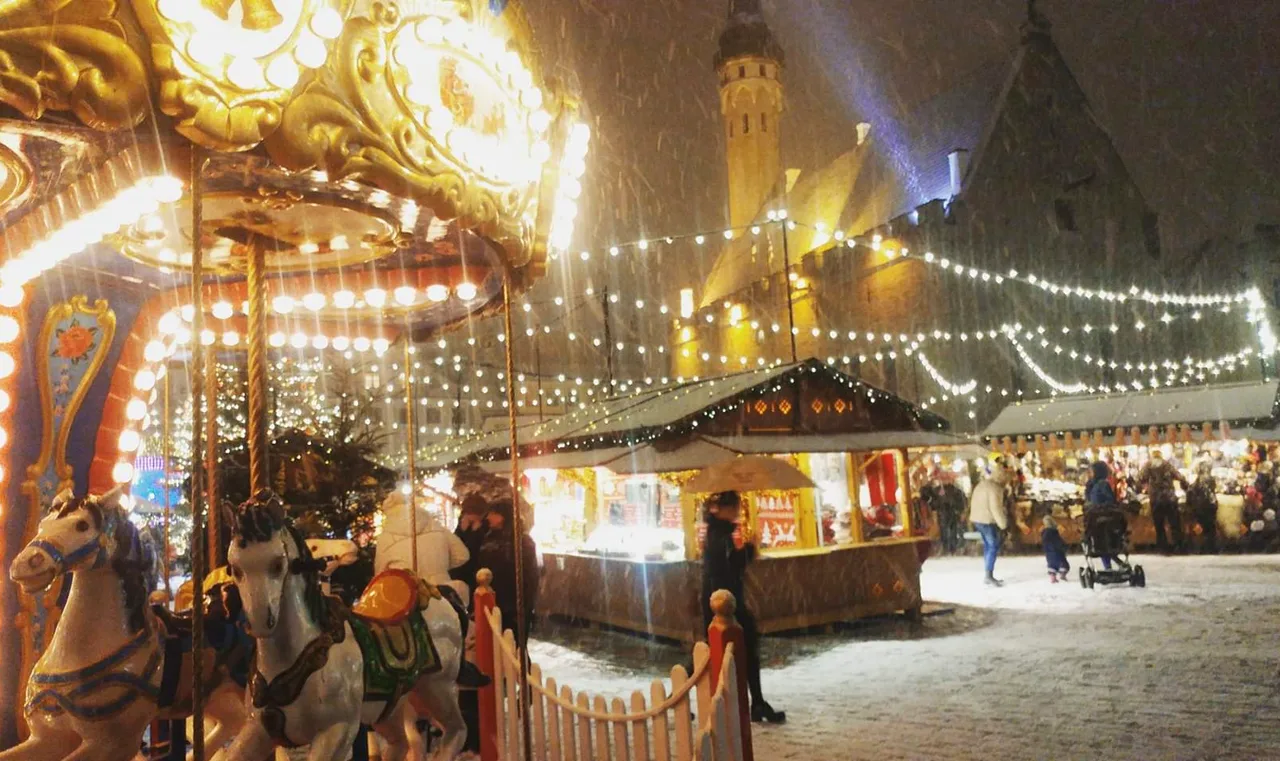
Christmas in Tallinn begins on Raekoja plats (Town Hall Square) in the heart of the Old Town. A giant Christmas tree rises among the wooden huts in front of the Gothic Town Hall; based on the tradition that in 1441 the Brotherhood of Blackheads set up a tree on this square and danced around it, Tallinn claims to have had “the first public Christmas tree in Europe” – Riga makes the same claim with a record from 1510, and the friendly rivalry between the two cities continues. According to the official website, the 26th edition of the market runs from 20 November 2026 to 6 January 2027; it is open daily 10:00–20:00, with hot drink stalls open until 22:00 and until 23:00 on Fridays and Saturdays. It opens on 20 November at 18:00 with the lighting of the lights; on 29 November the Advent season is officially proclaimed and Santa’s house opens the same day (daily 12:00–18:00). There is a stage programme from Friday to Sunday, carousels await children on the square and the market is also open on 31 December. The official website says the market offers the city’s widest selection of glögg (hot spiced drink), including alcohol-free options, and that a €2 deposit applies to reusable tableware. Visit Estonia notes that the Tallinn market was named “Best Christmas Market in Europe” in 2019. In winter the sun sets in Tallinn around 15:30 in the afternoon; the moment the lights come on in the early-darkening square is one of the warmest moments of a northern European winter.


| Event | Location | 2026 dates | Note |
|---|---|---|---|
| Tallinn Christmas Market | Raekoja plats | 20 November 2026–6 January 2027 | Daily 10:00–20:00; hot drinks until 22:00, Fri–Sat until 23:00. |
| Opening and lighting of the lights | Raekoja plats | 20 November 2026, 18:00 | The Christmas tree lights are switched on; the square gets very crowded. |
| Advent proclamation and Santa’s house | Raekoja plats | From 29 November 2026 | Santa’s house is open daily 12:00–18:00. |
| Stage programme | Raekoja plats | Throughout the market period | Stage performances Friday–Sunday; check the current programme on the official website. |
| New Year’s Eve | Raekoja plats | 31 December 2026 | The market is also open on 31 December; check hours on the official website. |
What to try
Glögg
Estonia’s hot spiced drink; the market has alcoholic and alcohol-free versions.
Verivorst
Blood sausage, a traditional Estonian Christmas dish, usually served with sauerkraut.
Hapukapsas
Sauerkraut, baked or stewed – a must on the Christmas table.
Piparkook
Spiced gingerbread biscuit, found in every home and at the market at Christmas.
Cinnamon and cardamom buns
Freshly baked buns from the market’s Sweet House.
Almonds and hot snacks
Roasted sugared almonds and hot snacks help in the cold.
Tallinn Christmas market tips
- In December the sun sets around 15:30; the lights are at their most striking from mid-afternoon.
- The opening day (20 November, 18:00) and weekends are very crowded; come on a weekday morning for a calmer visit.
- Hot drinks are served in reusable tableware; get your €2 deposit back by returning it.
- You can ask for alcohol-free glögg; the official website says alcohol-free options are available.
- Pavements and cobbled streets get icy; wear non-slip, waterproof shoes.
- Temperatures can drop below zero; a hat, gloves and layers are essential.
- After the market, climb to the Toompea viewing platforms to see the illuminated roofs.
- The market is open until 6 January 2027; after Christmas and early January are a calmer alternative.
Check before you go: Tallinn Christmas Market · christmasmarket.ee (official) ↗ · Visit Tallinn · Christmas in Tallinn (official) ↗
Dates and hours were checked on 28 October 2026 against the official christmasmarket.ee and Visit Tallinn pages. The stage programme and some hours may change; check the official pages again before your visit.
When to Go
Tallinn has two faces: from May to September long white nights, open-air cafés, the seaside and day visitors from Helsinki; from late November to early January the Christmas market, a chance of snow and short days. January–March is cold and dark but the city is quiet. June–August and cruise-ship days are the busiest times in the Old Town.
| Month | City sightseeing | Christmas market | Nature and day trips | Crowds |
|---|---|---|---|---|
| January | Difficult | Partly | Difficult | Quiet |
| February | Difficult | None | Difficult | Quiet |
| March | Difficult | None | Difficult | Quiet |
| April | Good | None | Good | Moderate |
| May | Very good | None | Very good | Moderate |
| June | Very good | None | Very good | Busy |
| July | Very good | None | Very good | Busy |
| August | Very good | None | Very good | Busy |
| September | Good | None | Good | Moderate |
| October | Good | None | Good | Moderate |
| November | Difficult | Market season | Difficult | Quiet |
| December | Difficult | Market season | Difficult | Moderate |
- Winter is cold and windy; temperatures often drop below zero, and the wind by the sea makes it feel colder.
- The Christmas market is open from 20 November 2026 to 6 January 2027; you can still see it in the first days of January.
- Days are very long in June; Jaanipäev (Midsummer), celebrated on the evening of 23 June, is one of Estonia’s favourite holidays.
- Some places such as St Olaf’s tower are open only seasonally and may be closed in winter; check official hours.
- On summer days when cruise ships are in port, the Old Town gets very crowded around midday.
- Winter days are short; plan sightseeing around daylight and leave museums for the dark hours.
Visa and Entry (Turkish citizens)
Turkish citizens holding ordinary (burgundy) passports need a Schengen visa for tourist travel to Estonia. Rules differ for special, service and diplomatic passports; check the current situation with the Turkish Ministry of Foreign Affairs.
The official page of the Embassy of Estonia in Ankara explains where in Türkiye an Estonian Schengen visa application can be lodged; applications are accepted through VFS Global. Check the current application centre and appointment system on the official page.
The Schengen visa page of the Estonian Ministry of Foreign Affairs (vm.ee) explains the application conditions, required documents and processing times in detail.
If you combine Tallinn with Riga and Vilnius, apply to the country where you will spend the longest; if stays are equal, the country of first entry applies. Checks may take place at internal borders, so carry your passport.
Under the EU Entry/Exit System (EES), which is being introduced in stages, your biometric data (facial image and fingerprints) may be taken on first entry; allow extra time at the border.
Visa fees, appointment times and required documents can change; this guide does not give fees. Use the current lists on the official websites before applying.
Check before you go: T.C. Dışişleri Bakanlığı · Türk vatandaşlarının tabi olduğu vize uygulamaları ↗ · vm.ee ↗ · EES · europa.eu ↗ · Rota Atlası visa guide (TR)
Travel medical insurance
Check the official visa and entry sources above first: they state whether travel medical insurance is required and the minimum cover. Compare any policy’s cover amount, validity dates and countries covered with the official requirement.
Rota Atlası does not currently offer an insurance partnership; there are no paid links in this section. Last updated: 1 November 2026
Getting to Tallinn
- By air: Tallinn Airport (Lennart Meri) is about 4 km from the city centre, one of the closest capital-city airports to its centre in Europe. Depending on the season there may be direct or connecting flights from Türkiye; check current flights only on airline and airport websites.
- From the airport to the city: tram line 4 links the airport with the city centre; buses and taxis are also available. Check current route information on transport.tallinn.ee.
- By sea: ferries run throughout the day from Tallinn port to Helsinki, and there is also a regular route to Stockholm. Check timetables on the official websites of companies such as Tallink Silja, Viking Line and Eckerö Line.
- By road and rail: international bus routes link Tallinn with Riga and Vilnius; the Rail Baltica line is still under construction. Elron trains run to Tartu, Pärnu and other Estonian towns.
Getting Around

On foot
The Old Town is small and largely pedestrianised; steep but short lanes lead from the lower town up to Toompea.
Tram and bus
Tallinn has a tram, bus and trolleybus network; check ticket options for visitors and timetables on transport.tallinn.ee.
Kadriorg and Pirita
Kadriorg is easily reached by tram; bus routes run to the Pirita coast.
Bike and scooter
Shared bikes and scooters are common in summer; not recommended in winter because of ice.
Taxi
Licensed taxis and ride apps are available; check the fare in the app or on the meter before you get in.
Train
Elron trains leave from Balti jaam (Baltic Station), just north-west of the Old Town.
Things to See
Most of Tallinn’s sights are concentrated in the walled Old Town: the merchants’ town below and Toompea hill above. Outside the Old Town lie Kalamaja and Telliskivi to the north-west, the Seaplane Harbour on the shore, Rotermann to the east and, a little further, Kadriorg. Lahemaa National Park and Helsinki broaden the horizon as day trips. The sections below follow a logical walking order, from Town Hall Square up to Toompea and around the walls, then out to the newer districts and the day trips.
Old Town
Raekoja plats, the Town Hall and the Town Hall Pharmacy

Raekoja plats, the heart of the Old Town, has been a marketplace and meeting point since the Middle Ages. The Town Hall (Raekoda) on the south side of the square took its present form in the early 15th century and is regarded as one of the oldest preserved Gothic town halls in northern Europe; at the top of its tower is the city’s symbol, the Vana Toomas (Old Thomas) weathervane. In the corner of the square, the Raeapteek (Town Hall Pharmacy) is one of the oldest pharmacies in Europe still operating in the same building; it is first mentioned in 15th-century records and houses a small exhibition of old medical items. In winter the square hosts the Christmas market. UNESCO listing ↗
Don’t miss
- The Town Hall and the Vana Toomas weathervane
- The historic pharmacy exhibition in the Raeapteek
- The colourful merchants’ houses around the square
- The Christmas market and tree in winter
Tips
- The Town Hall and its tower open seasonally and at set times; check official hours.
- Check the Raeapteek’s opening hours at raeapteek.ee.
- The square is at its calmest early in the morning.

Art
Niguliste Museum

St Nicholas’ Church (Niguliste) was founded in the 13th century as the merchants’ church; after heavy damage in the Second World War it was restored and is today the Art Museum of Estonia’s museum of ecclesiastical art. Its most famous work is the surviving fragment of the Danse Macabre (Dance of Death) by the Lübeck master Bernt Notke, dated to the late 15th century; showing Death inviting people of every rank to the dance, it is one of the most important examples of its kind. Hermen Rode’s high altar and the silver collection of the Brotherhood of Blackheads are also displayed here, and thanks to its acoustics the church also hosts concerts.
Don’t miss
- Bernt Notke’s Danse Macabre
- Hermen Rode’s altarpiece
- The silver treasury
- Organ concerts
Tips
- Check opening hours and the concert programme at nigulistemuuseum.ekm.ee.
- The museum is often closed on Mondays; check before you visit.
- The stairs next to the church are the start of the climb to Toompea.
Upper town
Toompea Castle and the Alexander Nevsky Cathedral

Toompea is Tallinn’s limestone hill and the upper town where rulers have lived throughout history. Toompea Castle on the hill is today home to the Estonian parliament, the Riigikogu; the pink baroque façade added in the 18th century contrasts strikingly with the Pikk Hermann (Tall Hermann) tower at the castle’s corner. The Estonian flag flies from the top of Pikk Hermann and is raised every morning in a ceremony. Opposite, the onion-domed Alexander Nevsky Cathedral is an Orthodox cathedral completed in 1900 under the Russian Empire; its construction was controversial at the time, and today it is visited for its impressive interior.
Don’t miss
- Toompea Castle and the Pikk Hermann tower
- The interior of the Alexander Nevsky Cathedral
- The climb via Lühike jalg and Pikk jalg
Tips
- The cathedral is a place of worship; be respectful during services, and shoulders should be covered.
- In winter the Pikk jalg and Lühike jalg lanes can be icy; walk carefully.
- Check visiting options for the Riigikogu building with official sources.

Views
Patkuli and Kohtuotsa viewing platforms, Toomkirik

The viewing platforms on the northern edge of Toompea offer Tallinn’s postcard views. From the Kohtuotsa platform you see the red roofs, the spire of St Olaf’s and the modern city centre behind; the Patkuli platform shows the walls, towers and port from a different angle. Between them, Toomkirik (St Mary’s Cathedral, the “Dome Church”), first mentioned in 1233, is the oldest church on Toompea; the wooden coats of arms and tombstones of noble families on its walls tell of the centuries-long influence of the Baltic German aristocracy.
Don’t miss
- The view over the roofs from Kohtuotsa
- The walls and port from Patkuli
- The family coats of arms in Toomkirik
Tips
- The platforms are loveliest early in the morning and at sunset; in winter the sun sets around 15:30.
- The platforms can be crowded during the day; be patient.
- Check Toomkirik’s opening hours at toomkirik.ee.

Walls
The city walls and Kiek in de Kök

Tallinn’s medieval walls are among the best-preserved fortifications in northern Europe; a long stretch and a significant number of towers still stand today. Parts of the walls can be walked; the section between the Nunne, Sauna and Kuldjala towers is especially famous for its red-capped towers. At the foot of Toompea, Kiek in de Kök is a mighty 15th-century cannon tower; its name means “peek into the kitchen” in Low German, because soldiers in the tower were said to be able to see into the kitchens of houses below. Now part of the Tallinn City Museum, the tower tells the history of the city’s defences and can be visited together with the bastion tunnels.
Don’t miss
- The wall walk between Nunne, Sauna and Kuldjala
- The Kiek in de Kök cannon tower
- The bastion tunnels
- Neitsitorn (Maiden Tower)
Tips
- The wall walk and tunnels may open on seasonal hours; check at linnamuuseum.ee.
- Find out the times of guided tunnel tours in advance.
- The Tornide väljak (Square of Towers) park outside the walls is a good photo spot.

Passages
St Catherine’s Passage and the Viru Gate

Katariina käik (St Catherine’s Passage) is a narrow cobbled lane running along the wall of the former Dominican monastery; old tombstones set into the wall, arches and workshops give it a medieval air. Along the passage you will find craft workshops for glass, ceramics, textiles and jewellery. The Viru Gate at the eastern entrance to the Old Town, with two elegant towers remaining from the old gate system, is the most used entry point; from the gate you walk along Viru street to Raekoja plats.
Don’t miss
- The tombstones of St Catherine’s Passage
- Craft workshops
- The Viru Gate towers
- The wall along Müürivahe street
Tips
- Workshop hours vary; some may close early in winter.
- The area around the Viru Gate is very busy during the day.
- The passage is especially atmospheric in the evening light.

Northern Old Town
St Olaf’s Church, the Three Sisters and Fat Margaret

The tower of St Olaf’s Church (Oleviste) at the northern end of Pikk street is said to have been, at about 159 metres in the 16th and 17th centuries, for a time the tallest structure in the world; rebuilt several times after lightning and fires, it is lower today. The tower can be climbed seasonally, giving wide views of the Old Town and the port. Nearby, the Three Sisters (Kolm Õde) are three adjoining 15th-century merchants’ houses. The street ends at the Fat Margaret (Paks Margareeta) cannon tower at the Great Coast Gate; the tower is now part of the Estonian Maritime Museum.
Don’t miss
- St Olaf’s tower (seasonal)
- The merchants’ houses of Pikk street
- The façades of the Three Sisters
- The Fat Margaret tower
Tips
- The climb up St Olaf’s tower is usually open only from spring to autumn.
- The tower stairs are narrow and steep.
- Check visiting conditions for Fat Margaret at meremuuseum.ee.


Modern architecture
Rotermann Quarter

The Rotermann Quarter between the Old Town and the port was an industrial complex founded in the 19th century; with its mills, warehouses and factory buildings it represents Tallinn’s industrial past. Since the 2000s a transformation has combined the old stone and brick buildings with bold contemporary architecture, and today the quarter shows the city’s modern face with shops, offices, cafés and homes. This contrast, which you can walk alongside the medieval fabric of the Old Town, tells of Tallinn’s historic and innovative identity at the same time.
Don’t miss
- The contrast between old brick warehouses and new buildings
- Passages and squares within the quarter
- A walk from the Old Town to the port
Tips
- It is a few minutes’ walk from the Viru Gate.
- In bad weather indoor shops and cafés offer a good break.
- Choose daylight for architecture photos.
Neighbourhood
Kalamaja and Telliskivi

Kalamaja, north-west of the Old Town, takes its name from an old fishing settlement meaning “fish house”; with its colourful wooden houses, quiet streets and green courtyards it is one of Tallinn’s best-loved neighbourhoods. Next door, Telliskivi Creative City (Telliskivi Loomelinnak) was set up on a former factory site and, with galleries, workshops, design shops and cafés, has become one of the city’s creative hubs. The Balti jaama turg market beside the Baltic Station is also in this area, bringing together local produce and street food.
Don’t miss
- The wooden houses of Kalamaja
- Telliskivi Creative City
- Balti jaama turg market
- Kalamaja park
Tips
- Easily reached on foot or by tram from the Old Town.
- Check Telliskivi events and exhibitions with official sources.
- Telliskivi gets busy at weekends.

Museum
Seaplane Harbour (Lennusadam)

The Seaplane Harbour is housed in seaplane hangars built for the Russian Empire during the First World War; the hangars’ large thin concrete shell domes are regarded as an engineering achievement of their time. This branch of the Estonian Maritime Museum opened in 2012 after a long renovation; inside are the submarine Lembit, built in 1936, a seaplane replica and interactive exhibitions. Historic ships can also be seen in the outdoor harbour. It is a good choice especially for families with children and for anyone looking for an indoor activity in bad weather. (The photo on this page shows the hangars before renovation.)
Don’t miss
- The submarine Lembit
- The concrete-domed hangar
- Historic ships in the outdoor harbour
Tips
- Check opening hours and tickets at meremuuseum.ee.
- You can walk there along the shore from the Old Town or via Kalamaja.
- The wind can be harsh in the outdoor harbour in winter.
Palace and park
Kadriorg Palace and the Kumu Art Museum

Kadriorg Palace is a baroque palace commissioned by Tsar Peter the Great for his wife Catherine from 1718, designed by the Italian architect Niccolò Michetti; its name means “Catherine’s valley”. Today it is the Kadriorg Art Museum, home to the Art Museum of Estonia’s foreign art collection; the large park around the palace, with its flower garden and ponds, is one of the city’s favourite places for a walk. At the other end of the park, Kumu, opened in 2006 in a contemporary building, displays the main collection of Estonian art from the 18th century to the present. The office of the President of Estonia is also in the park.
Don’t miss
- The great hall of Kadriorg Palace
- Kumu’s Estonian art collection
- Kadriorg park and Swan Pond
Tips
- Check museum hours and closing days on the ekm.ee websites.
- Kadriorg is easily reached by tram from the Old Town.
- The park is beautiful under snow in winter, but paths can be icy.

Day trip
Lahemaa National Park and Helsinki

About 70 km east of Tallinn, Lahemaa, founded in 1971, is Estonia’s first national park; with rocky headlands, bays, large glacial boulders, pine forests, bogs and old manor houses it shows the nature of the north Estonian coast. Public transport links are limited, so an organised tour or a rental car is more practical. The other classic day trip is Helsinki on the opposite shore of the Gulf of Finland: ferries link the two capitals throughout the day and the crossing takes about two hours. In Helsinki you can see Senate Square, the Cathedral and, in winter, the Christmas market.
Don’t miss
- The Lahemaa coast and manor houses
- The ferry crossing to Helsinki
- Senate Square in Helsinki
Tips
- Because of short daylight, a winter trip to Lahemaa needs an early start.
- Check ferry times and ticket conditions on the companies’ official websites.
- Take your passport when travelling to Helsinki.

1–3 Day Itineraries, Christmas Day + 7-Day Baltic Route
Tallinn’s Old Town can be seen in one day; two days add Kalamaja, Kadriorg and the museums, and three days a day trip to Lahemaa or Helsinki. The regional route is a one-week plan linking the Baltic capitals by bus. Check museum hours and closing days on official websites in advance.
Day 1: Old Town and Toompea
- In the morning enter through the Viru Gate and walk to Raekoja plats; see the Town Hall and the Raeapteek.
- Visit the Danse Macabre at the Niguliste Museum.
- Climb Lühike jalg to Toompea; the Alexander Nevsky Cathedral and Toompea Castle.
- Take in the views from the Kohtuotsa and Patkuli platforms and stop at Toomkirik.
- In the evening return via St Catherine’s Passage and Pikk street to the Christmas market on Raekoja plats.
Day 2: Walls, Kalamaja and the sea
- In the morning Kiek in de Kök and the bastion tunnels.
- The wall walk and the St Olaf’s–Three Sisters–Fat Margaret line.
- In the afternoon the wooden houses of Kalamaja, Telliskivi and Balti jaama turg.
- For an indoor activity, the Seaplane Harbour.
Day 3: Kadriorg and a day trip
- In the morning take the tram to Kadriorg: palace, park and Kumu.
- In the afternoon the Rotermann Quarter.
- Alternative: spend the whole day on a Lahemaa tour or take the ferry to Helsinki.
Christmas market day (20 November 2026–6 January 2027)
- Before noon explore Toompea and the viewing platforms in daylight.
- Around midday visit a museum.
- Arrive at Raekoja plats around 15:00 and browse the market as the lights come on at sunset.
- Stop by Santa’s house (from 29 November, 12:00–18:00) and the carousels.
- End the day with an evening walk through St Catherine’s Passage and along the illuminated walls.
7 days: Baltic trio (Tallinn–Riga–Vilnius)
- Days 1–2: Tallinn Old Town, Toompea and the Raekoja plats Christmas market.
- Day 3: Kalamaja and Kadriorg, or a ferry day trip to Helsinki.
- Day 4: Bus to Riga; in the evening the Doma laukums Christmas market.
- Day 5: Old Riga and the Art Nouveau district.
- Day 6: Bus to Vilnius; the Christmas tree on Cathedral Square.
- Day 7: Vilnius Old Town; departure.
Estonian Food
Estonian cuisine is the simple, hearty food of the north: rye bread, potatoes, sauerkraut, fish and seasonal forest produce. Below are regional specialities, not restaurant recommendations.


Must leib
Dark, sourdough rye bread – the foundation of the Estonian table.
Verivorst
Blood sausage, a traditional Christmas dish served with sauerkraut and lingonberry jam.
Hapukapsas
Sauerkraut, baked on the Christmas table.
Kama
A flour made from a roasted grain mix, eaten mixed with kefir or yoghurt.
Kiluvõileib
Spiced sprats (kilu) on rye bread – a classic snack.
Mulgipuder
Potato and barley porridge, a hearty dish from southern Estonia.
Piparkoogid
Spiced gingerbread biscuits – a Christmas essential.
Kringel
A braided sweet bread with cinnamon, baked for birthdays and holidays.
- Pork and blood are used in verivorst and some traditional dishes; ask about ingredients.
- Hot drinks may be alcoholic or alcohol-free; say which you want when ordering.
- Tap water is drinkable.
- Tipping is not compulsory in restaurants; a small tip can be left if you are happy with the service.
Culture and Etiquette

- Say “Tere” for hello and “Aitäh” for thank you in Estonian.
- Estonians tend to be calm and reserved; silence is a habit, not a sign of disrespect.
- The singing tradition is very strong; the Baltic song and dance celebrations are on UNESCO’s intangible cultural heritage list.
- The “Singing Revolution” of the late 1980s is a symbol of the independence movement; the Song Festival Grounds (Lauluväljak) tell this story.
- Don’t walk around churches during services and don’t use flash.
- In the Orthodox cathedral women may be expected to cover their heads, and shoulders should be covered.
- Sauna culture is widespread; respect the rules and the quiet.
- Queuing and personal space matter.
- Estonia is known for its digital state; card and contactless payment are common for most services.
- Estonia’s Struve Geodetic Arc points (e.g. around Tartu Observatory) are on the UNESCO list.
Safety and Health
- Tallinn is generally a safe city; watch out for pickpockets in the Christmas market and Old Town crowds.
- In some Old Town bars, ask the price in advance and see the menu.
- In winter pavements, cobbled streets and the Toompea lanes get icy; wear non-slip shoes.
- In extreme cold and sea wind a hat, gloves and layers are essential.
- In an emergency call 112.
- Make sure your travel medical insurance covers the Schengen area.
- Avoid unlicensed taxis; use apps or official taxi ranks.
What Your Budget Depends On
This guide does not give prices; prices change with season and year. Your budget depends on these factors:
Dates
Christmas market weekends, New Year week and the summer months are the periods of highest accommodation demand.
Where you stay
Inside the Old Town is the most expensive area; Kalamaja, Kadriorg or the area around the centre may be alternatives.
Transport
Public transport ticket types vary; the airport is linked to the centre by tram.
Museums
Art Museum of Estonia branches and the City Museum have separate tickets; look at combination options on official websites.
Food and drink
Market stalls and Balti jaama turg are budget options; places on the main square of the Old Town are more expensive.
Day trips
The Helsinki ferry and Lahemaa tours require extra budget.
Free experiences
Browsing the Christmas market, the Toompea viewing platforms, St Catherine’s Passage, the outside of the walls, Kalamaja and Kadriorg park are free.
Practical Information
- Money: the euro is used; cards and contactless payment are very common.
- Language: Estonian is the official language; English is spoken well and Russian is also common.
- Plugs: 230 V, European type C/F.
- Time: one hour behind Türkiye in winter (EET, UTC+2).
- Opening hours: most museums may be closed on Mondays; check before you go.
- Holidays: shop and museum hours change on 24–26 December and 1 January; the Christmas market is open.
- Weather: in December temperatures are usually around or below zero; the sea wind makes it feel colder.
- Daylight: in December the sun rises around 9:15 and sets around 15:20.
- Internet: mobile data and free Wi-Fi are very widespread.
- Emergency: 112.
Frequently Asked Questions
When is the Tallinn Christmas market in 2026?
According to the official website, the market on Raekoja plats is open from 20 November 2026 to 6 January 2027.
What are the market’s opening hours?
Daily 10:00–20:00; hot drink stalls are open until 22:00, and until 23:00 on Fridays and Saturdays.
When is the opening?
On 20 November 2026 at 18:00 with the lighting of the lights.
When is Santa’s house open?
Daily 12:00–18:00 from 29 November 2026.
Do Turkish citizens need a visa?
Ordinary passport holders need a Schengen visa; according to the Embassy of Estonia in Ankara, applications are accepted through VFS Global.
How many days are enough for Tallinn?
One day for the Old Town, two for Kalamaja and Kadriorg, three for a day trip to Helsinki or Lahemaa.
How do I get from the airport to the city?
By tram line 4; check current information on transport.tallinn.ee.
Can I do a day trip from Tallinn to Helsinki?
Yes, the ferry takes about two hours; check times with the ferry companies.
Is the “first Christmas tree” claim true?
Tallinn bases the claim on records from 1441 and Riga on records from 1510; it is a tradition and a city narrative, not a definitive historical verdict.
Are there alcohol-free drinks at the market?
Yes, the official website says alcohol-free glögg options are available.
Where to stay
Stay close to the areas where you will spend most time. The areas below are covered in detail in this guide; check public transport links in the getting-around section.
- Old TownRaekoja plats, the Town Hall and the Town Hall Pharmacy
- ArtNiguliste Museum
- Upper townToompea Castle and the Alexander Nevsky Cathedral
- ViewsPatkuli and Kohtuotsa viewing platforms, Toomkirik
- WallsThe city walls and Kiek in de Kök
- PassagesSt Catherine’s Passage and the Viru Gate
- Northern Old TownSt Olaf’s Church, the Three Sisters and Fat Margaret
- Modern architectureRotermann Quarter
- NeighbourhoodKalamaja and Telliskivi
- MuseumSeaplane Harbour (Lennusadam)
- Palace and parkKadriorg Palace and the Kumu Art Museum
Search hotels in these areas (Hotellook) ↗ (affiliate link)Search on Booking.com ↗
Affiliate disclosure: Hotellook, Aviasales, Klook, Airalo, Tiqets and DiscoverCars links are affiliate links; Rota Atlası may earn a commission on bookings made through them, at no extra cost to you. Official and in-guide links are not paid. Last updated: 1 November 2026 · Privacy and affiliates
Transport and connectivity
- Airport transferOptions from the airport to the city are in this guide’s getting there section.
- Mobile data (eSIM)Airalo eSIM ↗ (affiliate link)
- TrainsOfficial rail website ↗
- Car hireYou rarely need a car within the city; see getting around first. Compare car hire on DiscoverCars ↗ (affiliate link)
Affiliate disclosure: Hotellook, Aviasales, Klook, Airalo, Tiqets and DiscoverCars links are affiliate links; Rota Atlası may earn a commission on bookings made through them, at no extra cost to you. Official and in-guide links are not paid. Last updated: 1 November 2026 · Privacy and affiliates
Search flights (affiliate link)
Search flights from any airport in any country. Results open on Aviasales in a new tab, where you book.
This form is an affiliate link: Rota Atlası may earn a commission on bookings made via Aviasales (Travelpayouts), at no extra cost to you. Check price, baggage and terms on the booking site. Airport data: OurAirports (public domain).
Flights, hotels and tours
Find tours and tickets
- Tallinn Christmas Market
GetYourGuide ↗ · Klook ↗ (affiliate link) - Town Hall (Raekoda)
GetYourGuide ↗ · Klook ↗ (affiliate link) - Toompea
GetYourGuide ↗ · Klook ↗ (affiliate link) - Old Town walls and towers
GetYourGuide ↗ · Klook ↗ (affiliate link)
Hotellook, Aviasales, Klook, Airalo and Tiqets links in this box are affiliate links (Travelpayouts): Rota Atlası may earn a commission on bookings made through them, at no extra cost to you. GetYourGuide links currently carry no affiliate code. Check prices and terms with the provider. Last updated: 1 November 2026 · Privacy and affiliates
Sources
- T.C. Dışişleri Bakanlığı · Türk vatandaşlarının tabi olduğu vize uygulamaları ↗
- Estonian Ministry of Foreign Affairs · Schengen visa application (official) ↗
- European Union · Entry/Exit System (EES) ↗
- Embassy of Estonia in Ankara · where to lodge a Schengen visa application (official) ↗
- Visit Tallinn · visittallinn.ee (official) ↗
- Visit Estonia (official) ↗
- Niguliste Museum · Art Museum of Estonia (official) ↗
- Kumu Art Museum (official) ↗
- Kadriorg Art Museum (official) ↗
- Seaplane Harbour · Estonian Maritime Museum (official) ↗
- Kiek in de Kök · Tallinn City Museum (official) ↗
- Town Hall Pharmacy · Raeapteek (official) ↗
- St Mary's Cathedral · Toomkirik (official) ↗
- Tallinn Song Festival Grounds (official) ↗
- Tallinn public transport timetables (official) ↗
- Tallinn Airport (official) ↗
- Elron · Estonian trains (official) ↗
- Tallink Silja (ferries) ↗
- Viking Line (ferries) ↗
- Eckerö Line (ferries) ↗
- MyHelsinki (official) ↗
- GOV.UK · Foreign travel advice · Estonia ↗
- UNESCO World Heritage Centre · Historic Centre (Old Town) of Tallinn ↗
- UNESCO World Heritage Centre · Struve Geodetic Arc ↗
- UNESCO Intangible Cultural Heritage · Baltic song and dance celebrations ↗
- Tallinn Christmas Market · christmasmarket.ee (official) ↗
- Visit Tallinn · Christmas in Tallinn (official) ↗
This page is for information only. Dates, hours, entry rules and transport information can change; check the official sources above before travelling. No prices, flights, hotels or restaurants have been invented in this guide.
Photo credits
The photos on this page come from Wikimedia Commons and are used under the stated authors and licences (CC BY, CC BY-SA, CC0 or public domain). Full list of sources
- The Christmas tree and Christmas market on Raekoja plats (Town Hall Square) — Marit & Toomas Hinnosaar · CC BY 2.0 · Wikimedia Commons
- Tallinn seen from Toompea hill — Paulius Malinovskis from Uppsala, Sweden · CC BY 2.0 · Wikimedia Commons
- Tallinn Old Town at sunrise from the Patkuli viewing platform — Hendrik Mändla · CC BY-SA 4.0 · Wikimedia Commons
- Pikk Street in Tallinn — Diego Delso · CC BY-SA 3.0 · Wikimedia Commons
- Tallinn’s Christmas tree on a snowy Raekoja plats, 2024 — Marmuras · CC0 · Wikimedia Commons
- The Christmas market at night with Tallinn Town Hall on the right — Maasaak · CC BY-SA 4.0 · Wikimedia Commons
- Stalls of the Tallinn Christmas Market on Raekoja plats — Ypsilon from Finland · CC0 · Wikimedia Commons
- Tallinn Christmas Market on a snowy night — jonathan exon · CC BY-SA 3.0 · Wikimedia Commons
- Tallinn Old Town covered in snow — Ilya Orehov iliched · CC0 · Wikimedia Commons
- The illuminated carousel at the Tallinn Christmas Market, 2017 — Araldica81 · CC BY-SA 4.0 · Wikimedia Commons
- Tallinn Town Hall (Raekoda, 1402–1404) — Ivar Leidus · CC BY-SA 3.0 ee · Wikimedia Commons
- The Town Hall Pharmacy (Raeapteek) — Diego Delso · CC BY-SA 3.0 · Wikimedia Commons
- St Nicholas’ Church (Niguliste) — Suicasmo · CC BY-SA 4.0 · Wikimedia Commons
- Toompea Castle in the snow in January — Hannu · Public domain · Wikimedia Commons
- Alexander Nevsky Cathedral — Diego Delso · CC BY-SA 3.0 · Wikimedia Commons
- The Patkuli viewing platform — Raita Futo from Tokyo, Japan · CC BY 2.0 · Wikimedia Commons
- St Mary’s Cathedral (Toomkirik) on Toompea — Viktar Palstsiuk · CC BY-SA 3.0 · Wikimedia Commons
- The city wall from Towers’ Square in January — Abrget47j · CC BY-SA 3.0 · Wikimedia Commons
- The entrance to the Kiek in de Kök tower — Nord68 · CC BY-SA 4.0 · Wikimedia Commons
- St Catherine’s Passage (Katariina käik) — Diego Delso · CC BY-SA 3.0 · Wikimedia Commons
- The towers of Viru Gate — Diego Delso · CC BY-SA 3.0 · Wikimedia Commons
- St Olaf’s Church (Oleviste) and Old Town roofs — A.palu · CC BY-SA 3.0 ee · Wikimedia Commons
- The Three Sisters houses at Pikk 71 — Alma Pater · CC BY-SA 3.0 · Wikimedia Commons
- The Fat Margaret (Paks Margareeta) cannon tower — Jennifer Boyer from Maryland, USA · CC BY 2.0 · Wikimedia Commons
- New and old buildings in the Rotermann Quarter, 2023 — Liilia Moroz · CC BY-SA 4.0 · Wikimedia Commons
- Wooden houses in Kalamaja at Kopli and Telliskivi streets — Raki_Man · CC BY 3.0 · Wikimedia Commons
- Telliskivi Creative City in the evening — Relkmsaiia · CC BY-SA 4.0 · Wikimedia Commons
- The Seaplane Harbour (Lennusadam) hangars before renovation — Pk2000 · CC BY-SA 3.0 · Wikimedia Commons
- Kadriorg Palace — Holger Vaga · CC BY 2.0 · Wikimedia Commons
- The terrace and light wells of the Kumu Art Museum — Jean-Pierre Dalbéra from Paris, France · CC BY 2.0 · Wikimedia Commons
- Hauaneeme bay on the north Estonian coast at sunset — Ireen Trummer · CC BY-SA 3.0 ee · Wikimedia Commons
- Helsinki Senate Square and Helsinki Cathedral — JIP · CC BY-SA 4.0 · Wikimedia Commons
- A tram in front of St John’s Church in Tallinn — Pjotr Mahhonin · CC BY-SA 4.0 · Wikimedia Commons
- Blood sausage (generic example image) — Pannet · CC BY-SA 4.0 · Wikimedia Commons
- A kama-like grain flour with berries and yoghurt (Finnish talkkuna example) — Tappinen · CC BY-SA 3.0 · Wikimedia Commons
- Rye bread and tartare from Estonian cuisine — Pauloleong2002 · CC BY-SA 4.0 · Wikimedia Commons
- A stall at Balti jaama turg (Baltic Station Market) — VargaA · CC BY-SA 4.0 · Wikimedia Commons
- The Tallinn Song Festival Grounds (Lauluväljak) — Diego Delso · CC BY-SA 3.0 · Wikimedia Commons
Riga → · Vilnius → · Copenhagen → · Gdańsk → · Bruges → · Christmas markets