

Stockholm is the capital and largest city of Sweden, spread over fourteen islands where Lake Mälaren meets the Baltic Sea. Water is never far away: bridges link the islands, ferries cross the harbour, and to the east the archipelago scatters roughly 30,000 islands, islets and skerries towards the open sea. The city is traditionally said to have been founded around 1252, and its old town, Gamla Stan, still keeps its medieval street plan around the Royal Palace and the great church of Storkyrkan. In the 17th century Sweden became a great power in northern Europe, and the warship Vasa, which sank on its maiden voyage in 1628 and was raised in 1961, is one of the most striking traces of that age. Today Stockholm is home to the Nobel Prize ceremonies, to world-famous design and music, and to a metro whose stations are known as the world’s longest art gallery. About one million people live in the city itself. The currency is the Swedish krona (SEK), and Sweden is one of the most cashless societies in the world. The official language is Swedish, and English is very widely spoken. Sweden is part of the Schengen area. This guide brings together districts, day trips, food, etiquette, safety and entry requirements based on official sources; it does not recommend prices, hotels, restaurants or flights.
Content update: 30 October 2026 · Visa information checked with the Turkish Ministry of Foreign Affairs and the European Commission, Christmas market dates with Skansen’s official website
Stockholm at a Glance
- Country
- Sweden · capital
- Population
- About one million in the city
- Language
- Swedish; English is very widely spoken
- Currency
- Swedish krona (SEK); card and mobile payment almost everywhere
- Time zone
- Central European Time (UTC+1, summer UTC+2); 2 hours behind Türkiye in winter, 1 hour in summer
- Highlights
- Gamla Stan, Royal Palace, City Hall, Vasa Museum, Skansen, Södermalm, the archipelago, Drottningholm
- Airport
- Stockholm Arlanda (ARN), about 40 km north; Arlanda Express, commuter trains and buses
- Christmas
- Skansen Christmas market Fri–Sun, 27 Nov – 20 Dec 2026; Lucia 13 Dec; julafton 24 Dec
Stockholm in Pictures
Katarina Church in January snow, the bridge to Skeppsholmen and skaters on the ice: three winter scenes from a city of islands and water. All photos come from Wikimedia Commons under free licences; authors and licences are listed on the sources page.


Christmas in Stockholm: Skansen, Gamla Stan Market, Lucia and Julbord
Christmas in Sweden begins with Advent: from the first Sunday of Advent, candle holders and paper stars glow in almost every window, and the city lights up against afternoons that turn dark soon after three o’clock. The best-known market is at Skansen, the open-air museum on Djurgården, which has a long Christmas market tradition. According to its official website, in 2026 the market opens on Fridays, Saturdays and Sundays from 27 November to 20 December; stalls sell handicrafts, smoked sausages, sweets and Christmas decorations among the museum’s historic farmhouses, and old traditions such as dancing around the Christmas tree are shown. Entry to Skansen is charged, so check tickets and opening hours before your visit. The traditional market on Stortorget, the small square at the heart of Gamla Stan, fills the old town with red wooden huts every year; its 2026 dates could not be confirmed on an official site at the time of writing, so check before you go. On 13 December Sweden celebrates Lucia: processions of singers dressed in white with candles in their hair are held in churches, schools and concert halls, accompanied by saffron buns (lussekatter) and gingerbread (pepparkakor). The main celebration is on Christmas Eve, julafton, 24 December, with the julbord, a Christmas buffet of ham, herring, meatballs and Jansson’s temptation; on that afternoon many Swedes watch the same Disney cartoon special on television, a tradition for decades. The season ends on 13 January, Tjugondag Knut, when the Christmas tree is taken down.


| Event | Place | Dates | Note |
|---|---|---|---|
| Skansen Christmas market | Skansen, Djurgården | Fri–Sun, 27 Nov – 20 Dec 2026 | Entry to Skansen is charged. Check hours and tickets on the official site. |
| Stortorget Christmas market | Stortorget, Gamla Stan | Late November – December (check before you go) | A traditional market in the old town; the 2026 dates could not be confirmed on an official site. |
| Advent | Churches and homes | From 29 November 2026 (first Sunday of Advent) | Candles and paper stars appear in windows; church concerts throughout December. |
| Nobel Day | Stockholm Concert Hall and City Hall | 10 December | The Nobel Prize award ceremony and banquet; invitation-only events, not open to visitors. |
| Lucia | Churches, schools and concert halls | 13 December | Processions with candles and songs; some concerts require tickets, check the organisers. |
| Julafton and Christmas | Homes and churches | 24–26 December | Christmas Eve is the main day of celebration; 25 and 26 December are public holidays, and many places close or keep shorter hours. |
What to try in winter
Glögg
Swedish mulled wine, served with raisins and almonds; alcohol-free versions are widely available.
Lussekatter
S-shaped saffron buns with raisins, eaten especially around Lucia.
Pepparkakor
Thin, spiced gingerbread biscuits; houses are also built from the dough.
Julbord
The Christmas buffet: ham (julskinka), pickled herring, meatballs, sausages and Jansson’s temptation.
Risgrynsgröt
Rice pudding; tradition says whoever finds the hidden almond will marry in the coming year.
Knäck
A chewy Christmas toffee made with syrup, sugar and cream.
Winter tips
- In December Stockholm has only about six hours of daylight; plan outdoor sights for the middle of the day.
- It is cold, damp and windy by the water; thermal layers, a hat, gloves and waterproof shoes help.
- Pavements can be icy; shoes with good grip, or simple ice grips, are useful.
- Skansen’s market is only open at weekends; check which days and hours fit your trip.
Check before you go: Skansen · Christmas Market (official) ↗ · Visit Stockholm (official) ↗
As of 30 October 2026, Skansen’s official website lists the Christmas market for Fridays–Sundays from 27 November to 20 December 2026. The dates of the Stortorget market in Gamla Stan could not be confirmed on an official site; check before you go. Hours, tickets and the Lucia programme may change.
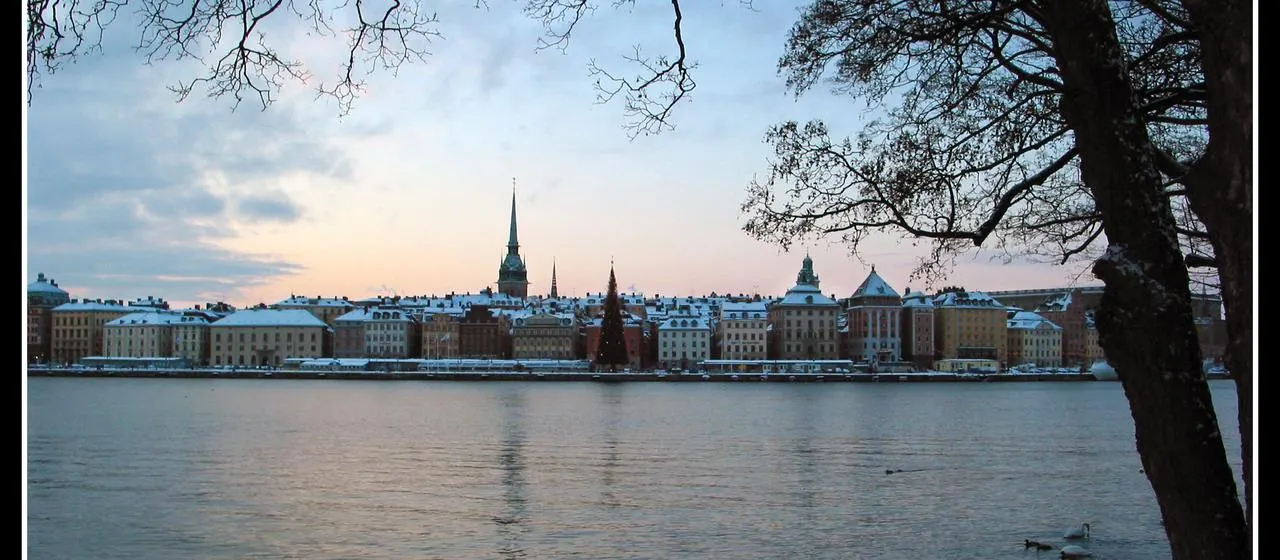
Photo: © R.Möhler · CC BY-SA 3.0 · Wikimedia Commons
When to Go
Stockholm has four distinct seasons. Summer is mild and bright: around midsummer it barely gets dark, and the archipelago comes alive with boats and swimming. Spring arrives late, around May. Autumn brings colour in September and early October, then grey, dark days. Winter is cold, often hovering around freezing, with snow in some years; the sea and lakes may freeze in cold winters. Daylight is the key factor: in December the sun rises late and sets in mid-afternoon, while in June the days are almost endless. December’s lights, markets and Lucia make up for the darkness. Many archipelago boats and some summer sights run on reduced schedules out of season, so check before planning a day trip.
| Month | Travel | Christmas season | Weather | Crowds |
|---|---|---|---|---|
| January | Good | None | Cold | Quiet |
| February | Good | None | Cold | Quiet |
| March | Good | None | Cold | Quiet |
| April | Good | None | Cold | Quiet |
| May | Very good | None | Mild | Moderate |
| June | Very good | None | Warm | Moderate |
| July | Very good | None | Warm | Busy |
| August | Very good | None | Warm | Busy |
| September | Very good | None | Mild | Moderate |
| October | Good | None | Cold | Quiet |
| November | Good | Partly | Cold | Moderate |
| December | Very good | Christmas market | Cold | Moderate |
- April – May: spring arrives late; lighter evenings and the parks turn green.
- June – August: long, bright days; midsummer, archipelago boats and the busiest tourist season.
- September – October: autumn colours, mild days and fewer visitors.
- November – December: Skansen Christmas market from 27 November 2026, Lucia on 13 December; very short days.
- January – February: cold and quiet; skating when the ice allows, good for museums.
Visa and Entry (Turkish citizens)
Sweden has applied the Schengen rules since 2001. According to the Turkish Ministry of Foreign Affairs, Turkish citizens holding ordinary (burgundy) passports need a Schengen visa to travel to Sweden.
For short stays the Schengen rule of a maximum of 90 days in any 180-day period applies, and days spent in Sweden count towards this total. A valid Schengen visa issued by another member state can also be used within its conditions.
The EU Entry/Exit System (EES) applies at Schengen external borders: on first entry your fingerprints and facial image are recorded instead of a passport stamp. Allow extra time at the border.
Applications are made via Sweden’s consular representation or its authorised service provider; check documents, the appointment process and passport validity on the official sites.
Rules may change; this guide does not state fees. Check the official site before you go.
Check before you go: T.C. Dışişleri Bakanlığı · Türk vatandaşlarının tabi olduğu vize uygulamaları ↗ · EES · europa.eu ↗ · Schengen · ec.europa.eu ↗ · Rota Atlası visa guide (TR)
Travel medical insurance
Check the official visa and entry sources above first: they state whether travel medical insurance is required and the minimum cover. Compare any policy’s cover amount, validity dates and countries covered with the official requirement.
Rota Atlası does not currently offer an insurance partnership; there are no paid links in this section. Last updated: 1 November 2026
Getting to Stockholm
- By air: Stockholm Arlanda Airport (ARN), operated by Swedavia, lies about 40 km north of the city. The Arlanda Express train runs to Stockholm Central Station; commuter trains and airport buses are other options. Direct flights from Istanbul and the airlines serving them vary by season; check current flights only with the airlines and the airport’s official website. This guide does not recommend flights.
- By train: Stockholm Central Station (Stockholm C) is the hub for SJ and other operators, with trains to Uppsala, Gothenburg, Malmö and onwards to Copenhagen, and night trains to the far north. Check timetables on the operators’ official sites.
- By ferry: overnight ferries connect Stockholm with Helsinki, Tallinn, Riga and the Åland Islands; check routes and timetables with the shipping companies.
- This guide does not recommend flights, ferries or prices; check the official sources again close to your trip.
Getting Around

On foot
Gamla Stan, Norrmalm and Östermalm are close together; bridges make walking between the islands easy, though distances add up.
Metro
The tunnelbana has three main lines; more than ninety of its stations are decorated with art. Tap a contactless card at the gates or use the SL app.
Buses and trams
SL buses and trams cover the city; the tram from the centre runs out to Djurgården.
Ferries
Ferries cross between Slussen, Djurgården and Skeppsholmen; Waxholmsbolaget boats serve the archipelago, with fewer departures in winter.
Taxi
Taxi prices are not fixed by law; before getting in, check the yellow comparison-price sticker on the rear side window.
Car
There is a congestion tax in central Stockholm and parking is limited; public transport is far more practical for visitors.
Things to See
Stockholm is best understood island by island: medieval Gamla Stan with its palace and churches, the city hall on Kungsholmen, the green royal park of Djurgården with its museums, bohemian Södermalm, and elegant Östermalm along the water. The first eight sections below cover the city; the last four show places within reach on day trips or longer journeys: the archipelago, the UNESCO sites of Drottningholm and Skogskyrkogården, Uppsala and Sigtuna, and further afield Gothenburg and Swedish Lapland. Each section includes a short history, highlights and practical tips. This guide does not give fixed opening hours or ticket prices; check the official sites before your visit.
The old town
Gamla Stan and Stortorget

Gamla Stan, the old town, occupies the island where Stockholm began in the 13th century. Narrow lanes such as Västerlånggatan and Österlånggatan follow the curve of the old shoreline, and the tall, ochre and red merchant houses date mostly from the 17th and 18th centuries. Mårten Trotzigs gränd, the narrowest lane, is less than a metre wide at its narrowest point. At the centre lies Stortorget, the oldest square in the city, ringed by colourful gabled houses. In 1520 it was the scene of the Stockholm Bloodbath, when the Danish king Christian II had dozens of Swedish nobles and clergy executed, an event that helped to spark Sweden’s break from the Kalmar Union. The former Stock Exchange building on the square houses the Nobel Prize Museum and the Swedish Academy.
Don’t miss
- The gabled houses on Stortorget
- The Nobel Prize Museum in the old Stock Exchange
- Mårten Trotzigs gränd, the narrowest lane
- A walk along Västerlånggatan and Österlånggatan
Tips
- Gamla Stan is very busy in summer and on December weekends; early mornings are quieter.
- The cobblestones become slippery in winter; wear shoes with good grip.

Royal Stockholm
The Royal Palace and Storkyrkan

The Royal Palace (Kungliga slottet) is the official residence of the Swedish monarch and one of the largest palaces in Europe, with more than 600 rooms. It was built in the 18th century to designs by Nicodemus Tessin the Younger after the old Tre Kronor castle burned down in 1697. Visitors can see the royal apartments, the Treasury with the regalia, the Tre Kronor Museum in the vaults of the old castle and the Armoury; the changing of the guard takes place in the outer courtyard. Next to the palace stands Storkyrkan, Stockholm Cathedral and the oldest church in Gamla Stan. Inside are the late-Gothic statue of St George and the Dragon, carved by Bernt Notke in the late 15th century, and the Vädersolstavlan, a painting showing a sun-dog phenomenon over Stockholm in 1535 and the oldest known picture of the city.
Don’t miss
- The royal apartments and the Treasury
- The changing of the guard
- St George and the Dragon in Storkyrkan
- The Vädersolstavlan painting
Tips
- Parts of the palace may close for official events; check the Royal Court’s website before you go.
- Storkyrkan is a place of worship; keep quiet during services.

Kungsholmen and the burial church
Stockholm City Hall and Riddarholmen

Stockholm City Hall (Stadshuset), on the shore of Kungsholmen, is one of the city’s symbols. Designed by Ragnar Östberg in the National Romantic style and completed in 1923, it was built from around eight million bricks, and its tower is topped by the three crowns of Sweden. The Blue Hall, which is not actually blue, hosts the Nobel banquet on 10 December, and the Golden Hall is covered with millions of gold mosaic pieces. Guided tours show the interiors, and in season the tower can be climbed for a view over Gamla Stan and Riddarfjärden. Opposite, on the small island of Riddarholmen, stands Riddarholmen Church with its openwork cast-iron spire; it is the burial church of the Swedish monarchs.
Don’t miss
- The Blue Hall and the Golden Hall on a guided tour
- The view from the City Hall tower
- Riddarholmen Church and the royal tombs
- The waterside view from Riddarholmen
Tips
- City Hall can only be seen on a guided tour, and it may close for events; check times on the official site.
- The tower is closed in parts of the winter season; check before you go.

A warship from 1628
The Vasa Museum

The Vasa Museum on Djurgården houses the only almost fully preserved 17th-century ship in the world. The warship Vasa sank in Stockholm harbour on its maiden voyage in 1628, only a short distance after setting sail. It lay on the seabed for 333 years until it was raised in 1961; the brackish, cold water of the Baltic had protected it from the shipworm. Around 98 percent of the ship is original, including hundreds of carved sculptures that once displayed the power of the Swedish crown. The museum shows the ship from several levels, along with exhibitions on life on board, the people who died in the sinking, and the raising and conservation of the hull. It is one of the most visited museums in Scandinavia.
Don’t miss
- The ship seen from the upper galleries
- The carved stern and sculptures
- The exhibition on life on board
- The model showing the original colours
Tips
- Queues are long in summer and at weekends; buy tickets online and go early.
- The museum is kept dim and cool to protect the ship; bring a layer.
The world’s first open-air museum
Skansen and Djurgården

Djurgården was once a royal hunting park and is now a green island of museums, villas and walking paths. Skansen, founded in 1891 by Artur Hazelius, is the world’s oldest open-air museum: farmsteads, workshops and manor houses from all over Sweden were moved here to show how people lived in past centuries, and Nordic animals such as moose, bears and wolves live in its enclosures. Next to the entrance to the island stands the Nordic Museum, also founded by Hazelius, in a grand building whose great hall is dominated by a statue of King Gustav Vasa; its collections cover Swedish everyday life and traditions. Djurgården is also home to the Gröna Lund amusement park, ABBA The Museum and other museums. Ferries and the tram connect the island with the centre.
Don’t miss
- Historic farmhouses and craftspeople at Skansen
- Nordic animals in Skansen’s enclosures
- The great hall of the Nordic Museum
- A walk on Djurgården’s waterside paths
Tips
- Skansen is large and hilly; allow at least half a day.
- Djurgården ferries are part of the public transport network; check timetables and fares with SL.


The southern heights
Södermalm and Fotografiska

Södermalm, the large island to the south, was once a working-class district; today it is known for its creative scene, vintage shops, cafés and parks. Along its northern cliffs, the Monteliusvägen path offers one of the best views over Riddarfjärden, City Hall and Gamla Stan, and the Fjällgatan street gives a similar panorama to the east. Around Mariatorget and in the area known as SoFo, south of Folkungagatan, small boutiques and design shops line the streets. On the Stadsgården quay stands Fotografiska, a centre for contemporary photography in a former customs building from the early 20th century; its top-floor café looks out over the harbour.
Don’t miss
- The view from Monteliusvägen
- Fjällgatan and the old wooden houses
- Shops and cafés in SoFo
- Exhibitions at Fotografiska
Tips
- The paths along the cliffs can be icy in winter; take care on stairs.
- Fotografiska stays open later than many museums; check the evening hours.

Art on the water
Nationalmuseum and Moderna Museet

Sweden’s national museum of art and design, Nationalmuseum, stands on the Blasieholmen peninsula facing the Royal Palace. Its Renaissance-style building from the 19th century reopened in 2018 after a long renovation, and the collections range from old master paintings and Swedish art to design and applied arts. Across a short bridge, on the island of Skeppsholmen, lies Moderna Museet, one of Europe’s leading museums of modern and contemporary art, opened in 1958, with works by artists such as Picasso, Dalí and Warhol alongside Nordic art. Skeppsholmen itself, once a naval island, is a quiet place to walk with views of Gamla Stan and Djurgården.
Don’t miss
- Old masters and Swedish art at Nationalmuseum
- Design and applied arts collections
- Modern art at Moderna Museet
- A walk around Skeppsholmen
Tips
- Opening hours and admission rules vary; check the official sites.
- The museums are a good plan for dark winter afternoons.

Elegant Stockholm
Strandvägen and Östermalm

Strandvägen, the waterfront boulevard that leads from Nybroplan towards Djurgården, was laid out in the late 19th century and is lined with grand stone apartment buildings and old steamboats moored along the quay. Behind it lies Östermalm, Stockholm’s most elegant district, with wide streets, embassies and the green squares of Karlaplan and Humlegården, home of the National Library. Östermalms Saluhall, the market hall opened in 1888 and reopened in 2020 after a long renovation, is a temple of Swedish food under its red-brick vaults, with fish, cheese, game and delicatessen counters. Nearby Stureplan is known for shopping and nightlife.
Don’t miss
- A stroll along Strandvägen
- The red-brick Östermalms Saluhall
- Humlegården and the National Library
- Nybroplan and the boats to the archipelago
Tips
- Market halls close earlier than restaurants; check opening hours.
- Many boat trips into the archipelago leave from Strandvägen and Nybroplan in season; check schedules.

Thousands of islands
The Stockholm Archipelago and Vaxholm

East of the city, the Stockholm archipelago (skärgården) stretches some 80 kilometres towards the Baltic, with roughly 30,000 islands, islets and skerries. Red wooden cottages, jetties and pine forests define the landscape. Waxholmsbolaget, the public archipelago shipping company, links many islands all year round, while summer brings many more routes. The most accessible destination is Vaxholm, a small town with wooden houses and a fortress guarding the old sea route to Stockholm; fortifications have stood here since the 16th century. Further out, islands such as Grinda, Sandhamn and Utö are popular in summer for walking, swimming and sailing.
Don’t miss
- The boat journey through the islands
- Vaxholm’s fortress and wooden houses
- A summer island day on Grinda or Utö
- Sandhamn, the sailing centre
Tips
- In winter there are far fewer boats, and some routes stop entirely; check timetables before setting off.
- Sweden’s right of public access (allemansrätten) allows you to walk in nature, but respect private gardens and nature reserves.

UNESCO · Palace and forest cemetery
Drottningholm and Skogskyrkogården

Drottningholm Palace, on an island in Lake Mälaren west of the city, is the private residence of the Swedish royal family. Built mainly in the 17th century and inspired by Versailles, it is surrounded by baroque and English-style gardens, a Chinese Pavilion, and the Palace Theatre from 1766, which still has its original stage machinery. The whole Royal Domain of Drottningholm was inscribed on the UNESCO World Heritage List in 1991. In the south of the city, Skogskyrkogården, the Woodland Cemetery designed by Gunnar Asplund and Sigurd Lewerentz in the early 20th century, blends architecture and landscape so harmoniously that it was inscribed by UNESCO in 1994 (whc.unesco.org/en/list/558). Quiet and contemplative, it is still an active cemetery. UNESCO listing ↗
Don’t miss
- Drottningholm Palace and its gardens
- The Palace Theatre and the Chinese Pavilion
- The landscape of Skogskyrkogården
- Asplund’s Woodland Chapel
Tips
- Drottningholm has limited opening in winter; check the Royal Palaces’ website. In summer, boats run from City Hall.
- Skogskyrkogården is an active cemetery; be quiet and respectful, and do not photograph funerals.

Old university towns
Uppsala and Sigtuna

North of Stockholm and easily reached by train, Uppsala is Sweden’s fourth-largest city and home to the oldest university in the Nordic countries, founded in 1477. Its Gothic cathedral is the largest church in Scandinavia, and the coronations and tombs of many Swedish kings took place here. The botanist Carl Linnaeus taught at the university, and his garden can still be visited; at Gamla Uppsala, just north of the city, great royal burial mounds recall the pre-Christian era. Sigtuna, on the shore of Lake Mälaren, was founded around the end of the 10th century and is often described as Sweden’s oldest town; its main street is lined with small wooden houses, and church ruins and runestones lie scattered around the town.
Don’t miss
- Uppsala Cathedral
- Gamla Uppsala and the royal mounds
- The Linnaeus Garden
- Sigtuna’s main street and runestones
Tips
- Trains from Stockholm Central and Arlanda go to Uppsala; check timetables with the operators.
- Many attractions in Sigtuna have limited winter hours; check before you go.

West coast and Lapland
Gothenburg and Kiruna

Gothenburg (Göteborg), Sweden’s second city on the west coast, can be reached from Stockholm by train or plane. It is a relaxed port city with canals, the wooden houses and cafés of the Haga district, a southern archipelago reachable by public ferry, and the Liseberg amusement park, which holds a large Christmas market in winter; check the dates before you go. Far to the north, beyond the Arctic Circle, lies Swedish Lapland. Kiruna, Sweden’s northernmost town, is known for its iron mine and for being moved bit by bit to a new centre because of the mining. From around September to March the northern lights can appear in clear, dark skies; Abisko National Park, west of Kiruna, is one of the best-known places to see them. Around midwinter the sun barely rises above the horizon in this region. Sámi culture, reindeer and snow landscapes make the north a world of its own.
Don’t miss
- The Haga district in Gothenburg
- Gothenburg’s southern archipelago
- Northern lights in Abisko
- Winter landscapes and Sámi culture around Kiruna
Tips
- Kiruna can be reached by plane or by night train from Stockholm; check timetables well in advance.
- Temperatures in Lapland can fall far below freezing; proper winter clothing is essential, and aurora sightings depend on the weather.

Stockholm Itineraries: 2 Days, 7, 10 and 14 Days in Sweden
The itineraries group nearby places, put museums in the mornings or on dark afternoons, and leave room for walks along the water. Stockholm’s islands are close together, but distances add up and winter days are short. Archipelago boats and some sights run reduced schedules out of season. Opening hours vary with the season; check the official sites before your visit. The itineraries are editorial suggestions, not live navigation.
2 days: Stockholm in brief
- Day 1 morning: Gamla Stan, Stortorget and the Nobel Prize Museum.
- Day 1 afternoon: the Royal Palace and Storkyrkan; then Riddarholmen.
- Day 1 evening: the view from Monteliusvägen on Södermalm.
- Day 2: Djurgården: the Vasa Museum in the morning, Skansen in the afternoon; in the evening City Hall from the water and a walk along Strandvägen.
Christmas day route
- Morning: the Vasa Museum or Nationalmuseum.
- Midday: Skansen’s Christmas market (Friday to Sunday only).
- Afternoon: Gamla Stan and Stortorget as the lights come on.
- Evening: the lights in Kungsträdgården and along the shopping streets of Norrmalm; a glögg to warm up.
7 days: Stockholm and the Mälaren region
- Days 1–2: the two-day Stockholm itinerary above.
- Day 3: Nationalmuseum, Moderna Museet and Skeppsholmen.
- Day 4: the archipelago by boat to Vaxholm; check winter timetables.
- Day 5: Drottningholm Palace in the morning, Skogskyrkogården in the afternoon.
- Day 6: Uppsala: cathedral, Gamla Uppsala and the Linnaeus Garden.
- Day 7: Sigtuna, or Östermalm, the market hall and Södermalm’s shops.
10 days: Stockholm and Gothenburg
- Days 1–7: the seven-day itinerary above.
- Day 8: train to Gothenburg; afternoon in the Haga district and along the canals.
- Day 9: Gothenburg’s southern archipelago by public ferry, or Liseberg in season.
- Day 10: return to Stockholm or travel on; check connections.
14 days: from the capital to Lapland
- Days 1–10: the ten-day itinerary above.
- Day 11: by plane or night train to Kiruna in Swedish Lapland.
- Day 12: Kiruna and its surroundings; winter landscapes and Sámi culture.
- Day 13: Abisko National Park; in clear weather, a night out looking for the northern lights.
- Day 14: return to Stockholm and a farewell walk.
Swedish Food: What to Eat
Swedish cuisine is built on fish from the cold seas and lakes, forest berries, root vegetables, dairy and rye bread, with sweet baked goods playing a big role in everyday life. In Stockholm you can find everything from classic husmanskost (home cooking) to New Nordic cuisine and international food. This guide does not recommend restaurants; check the menu and opening hours before you go in.


Köttbullar
Swedish meatballs with cream sauce, lingonberry jam, mashed potatoes and pickled cucumber.
Gravlax
Salmon cured with salt, sugar and dill, served with a sweet mustard and dill sauce.
Sill
Pickled herring in many flavours; a fixture on the Christmas and midsummer tables.
Jansson’s temptation
A creamy potato and onion gratin with sprats; a classic of the julbord.
Räksmörgås
An open sandwich piled with prawns, egg and mayonnaise.
Kanelbulle
The cinnamon bun, the heart of fika; it even has its own day on 4 October.
Prinsesstårta
A layered sponge cake with cream and custard under a green marzipan dome.
Semla
A cardamom bun filled with almond paste and whipped cream, eaten in the weeks before Lent.
- Some dishes such as the Christmas ham and certain sausages contain pork; ask if you are unsure.
- Many restaurants serve a set lunch on weekdays (dagens lunch), usually including salad, bread and coffee.
- Tap water is of very high quality; water is often free in restaurants.
- Alcohol stronger than 3.5 percent is only sold in shops at the state-owned Systembolaget, to people aged 20 and over; in bars and restaurants the age limit is 18.
Culture and Etiquette


- Fika, the coffee break with something sweet, is a social institution; accepting an invitation to fika is a friendly gesture.
- Swedes value punctuality, quiet and personal space; speaking loudly on public transport is frowned upon.
- It is customary to take off your shoes when entering someone’s home.
- In many shops, pharmacies and offices you take a queue number (nummerlapp) and wait to be called.
- Sweden is largely cashless; many places do not accept cash at all, so carry a card.
- Tipping is not required; service is included, but rounding up or leaving a small tip for good service is common.
Safety and Health
- The emergency number in Sweden is 112; the police non-emergency number is 114 14 and the healthcare advice line is 1177.
- Stockholm is generally safe; watch your belongings in crowded places such as the Central Station, the metro and Gamla Stan.
- In winter, pavements and stairs can be icy; walk carefully and wear suitable shoes.
- Lakes and the sea can freeze in cold winters, but never walk on ice unless it has been officially declared safe.
- In Lapland, temperatures can be extremely low; follow local advice and do not venture out unprepared.
- Check the current travel advice of the Turkish Ministry of Foreign Affairs.
What Your Budget Depends On
This guide does not give prices; prices change with season and year. Your budget depends on these factors:
Season
Summer and the Christmas period are the busiest; January to March and November are usually quieter.
Location
Gamla Stan, Norrmalm and Östermalm are within walking distance; Södermalm and Kungsholmen are a short metro ride away.
Transport
The SL network covers metro, buses, trams, commuter trains and some ferries; compare single tickets and travel passes on SL’s official site.
Museums
Many museums charge admission; the cost depends on how many you choose, so check official sites and any combined offers.
Food
A weekday set lunch is a traditional way to eat out; costs depend on your choices.
Money
Payments are in Swedish krona; card and mobile payment are used almost everywhere.
Practical Information
- Plugs in Sweden are type C/F, 230 V.
- Mobile data: Sweden is in the EU; check your operator’s international packages before you go.
- Many sights have shorter hours in winter; check the official sites.
- Public holidays in Sweden include 1 January, 6 January, Good Friday, Easter Monday, 1 May, Ascension Day, 6 June (National Day), Midsummer, All Saints’ Day and 25–26 December; Christmas Eve, Midsummer Eve and New Year’s Eve are not official holidays, but most places close or keep short hours.
- Smoking is banned in restaurants and bars, including outdoor seating areas.
- The right of public access (allemansrätten) lets you walk in nature; respect private land and nature reserve rules.
- Water: tap water is drinkable and of very high quality.
- In December there are only about six hours of daylight; plan your days accordingly.
Frequently Asked Questions
Do Turkish citizens need a visa for Stockholm?
Yes. Sweden is a Schengen member; according to the Turkish Ministry of Foreign Affairs, Turkish citizens with ordinary passports need a Schengen visa. The EU Entry/Exit System (EES) applies at the external border. Rules may change; check the official site before you go.
When is the Christmas market in Stockholm?
According to Skansen’s official website, the Skansen Christmas market opens Friday to Sunday from 27 November to 20 December 2026; entry to Skansen is charged. The dates of the Stortorget market in Gamla Stan could not be confirmed on an official site, so check before you go.
Can I pay cash in Stockholm?
Sweden is largely cashless and many places do not accept cash. Make sure you have a card or a mobile payment option.
How do I get from Arlanda to the city centre?
The Arlanda Express train, commuter trains and airport buses link Arlanda with the city centre. Check timetables on the operators’ official sites.
How many days do I need for Stockholm?
Two or three days are enough for the city; a week with the archipelago, Drottningholm and Uppsala, and 10–14 days with Gothenburg or Lapland.
Is there a time difference with Türkiye?
Sweden is 2 hours behind Türkiye in winter and 1 hour behind in summer.
What is Lucia?
Lucia is celebrated on 13 December with processions of singers dressed in white, carrying candles, in churches, schools and concert halls. Some concerts require tickets; check the organisers.
Can I see the northern lights from Stockholm?
Only very rarely. The best chances are in Swedish Lapland, for example around Kiruna and Abisko, from around September to March in clear, dark skies.
Where to stay
Stay close to the areas where you will spend most time. The areas below are covered in detail in this guide; check public transport links in the getting-around section.
- The old townGamla Stan and Stortorget
- Royal StockholmThe Royal Palace and Storkyrkan
- Kungsholmen and the burial churchStockholm City Hall and Riddarholmen
- A warship from 1628The Vasa Museum
- The world’s first open-air museumSkansen and Djurgården
- The southern heightsSödermalm and Fotografiska
- Art on the waterNationalmuseum and Moderna Museet
- Elegant StockholmStrandvägen and Östermalm
- Thousands of islandsThe Stockholm Archipelago and Vaxholm
- UNESCO · Palace and forest cemeteryDrottningholm and Skogskyrkogården
- Old university townsUppsala and Sigtuna
- West coast and LaplandGothenburg and Kiruna
Search hotels in these areas (Hotellook) ↗ (affiliate link)Search on Booking.com ↗
Where to stay in Stockholm → · 3 days in Stockholm: ready-made itinerary →
Affiliate disclosure: Hotellook, Aviasales, Klook, Airalo, Tiqets and DiscoverCars links are affiliate links; Rota Atlası may earn a commission on bookings made through them, at no extra cost to you. Official and in-guide links are not paid. Last updated: 1 November 2026 · Privacy and affiliates
Transport and connectivity
- Airport transferOptions from the airport to the city are in this guide’s getting there section.
- Mobile data (eSIM)Airalo eSIM ↗ (affiliate link)
- TrainsOfficial rail website ↗
- Car hireYou rarely need a car within the city; see getting around first. Compare car hire on DiscoverCars ↗ (affiliate link)
Affiliate disclosure: Hotellook, Aviasales, Klook, Airalo, Tiqets and DiscoverCars links are affiliate links; Rota Atlası may earn a commission on bookings made through them, at no extra cost to you. Official and in-guide links are not paid. Last updated: 1 November 2026 · Privacy and affiliates
Search flights (affiliate link)
Search flights from any airport in any country. Results open on Aviasales in a new tab, where you book.
This form is an affiliate link: Rota Atlası may earn a commission on bookings made via Aviasales (Travelpayouts), at no extra cost to you. Check price, baggage and terms on the booking site. Airport data: OurAirports (public domain).
Flights, hotels and tours
Find tours and tickets
- Gamla Stan
GetYourGuide ↗ · Klook ↗ (affiliate link) - Vasa Museum
GetYourGuide ↗ · Klook ↗ (affiliate link) - Skansen
GetYourGuide ↗ · Klook ↗ (affiliate link) - Stockholm Archipelago
GetYourGuide ↗ · Klook ↗ (affiliate link)
Hotellook, Aviasales, Klook, Airalo and Tiqets links in this box are affiliate links (Travelpayouts): Rota Atlası may earn a commission on bookings made through them, at no extra cost to you. GetYourGuide links currently carry no affiliate code. Check prices and terms with the provider. Last updated: 1 November 2026 · Privacy and affiliates
Sources
- T.C. Dışişleri Bakanlığı · Türk vatandaşlarının tabi olduğu vize uygulamaları ↗
- European Union · Entry/Exit System (EES) ↗
- European Commission · Schengen visa policy (official) ↗
- Skansen · Christmas Market (official) ↗
- Skansen · opening hours and prices (official) ↗
- Visit Stockholm (official) ↗
- Stockholms stad · City of Stockholm (official) ↗
- Visit Sweden (official) ↗
- Kungliga slotten · The Royal Palaces (official) ↗
- Vasamuseet · Vasa Museum (official) ↗
- Nobelprismuseet · Nobel Prize Museum (official) ↗
- Nordiska museet · Nordic Museum (official) ↗
- Nationalmuseum (official) ↗
- Moderna Museet (official) ↗
- Fotografiska (official) ↗
- Waxholmsbolaget · archipelago boats (official) ↗
- Swedavia · Stockholm Arlanda Airport (official) ↗
- Arlanda Express (official) ↗
- SL · Stockholm public transport (official) ↗
- SJ · Swedish railways (official) ↗
- UNESCO World Heritage Centre · Royal Domain of Drottningholm ↗
- UNESCO World Heritage Centre · Skogskyrkogården ↗
- UNESCO World Heritage Centre · Birka and Hovgården ↗
- GOV.UK · Foreign travel advice · Sweden ↗
This page is for information only. Dates, hours, entry rules and transport information can change; check the official sources above before travelling. No prices, flights, hotels or restaurants have been invented in this guide.
Photo credits
The photos on this page come from Wikimedia Commons and are used under the stated authors and licences (CC BY, CC BY-SA, CC0 or public domain). Full list of sources
- The skyline of Gamla Stan across the water — © R.Möhler · CC BY-SA 3.0 · Wikimedia Commons
- Corner of Österlånggatan in Gamla Stan in December — Ximonic (Simo Räsänen) · CC BY-SA 4.0 · Wikimedia Commons
- The colourful houses of Stortorget in Gamla Stan — Øyvind Holmstad · CC BY-SA 3.0 · Wikimedia Commons
- Storkyrkan and the Royal Palace — Julian Herzog (Website) · CC BY 4.0 · Wikimedia Commons
- Interior and choir of Storkyrkan — Zairon · CC BY-SA 3.0 · Wikimedia Commons
- Stockholm City Hall in winter — ArildV · CC BY-SA 4.0 · Wikimedia Commons
- Riddarholmen Church and Riddarfjärden — Holger.Ellgaard · CC BY-SA 3.0 · Wikimedia Commons
- Side view of the Vasa ship in the Vasa Museum — Jules Verne Times Two · CC BY-SA 4.0 · Wikimedia Commons
- Traditional wooden house at Skansen — Pudelek · CC BY-SA 4.0 · Wikimedia Commons
- The great hall of the Nordic Museum — Arild Vågen · CC BY-SA 3.0 · Wikimedia Commons
- A Djurgården ferry in Stockholm — ArildV · CC BY-SA 4.0 · Wikimedia Commons
- The Monteliusvägen path on Södermalm — Esquilo · CC BY-SA 3.0 · Wikimedia Commons
- Fotografiska on the Stadsgården quay — ArildV · CC BY-SA 4.0 · Wikimedia Commons
- Nationalmuseum on Blasieholmen — Arild Vågen · CC BY-SA 4.0 · Wikimedia Commons
- Moderna Museet on Skeppsholmen — Holger.Ellgaard · CC BY-SA 3.0 · Wikimedia Commons
- Strandvägen and boats along the quay — Arild Vågen · CC BY-SA 4.0 · Wikimedia Commons
- Östermalms Saluhall market hall — AleWi · CC BY-SA 4.0 · Wikimedia Commons
- Red wooden house and jetty in the Stockholm archipelago — Christof46 · CC BY-SA 4.0 · Wikimedia Commons
- Vaxholm Fortress in the evening lights — Arild Vågen · CC BY-SA 3.0 · Wikimedia Commons
- Drottningholm Palace by the lake — Pudelek · CC BY-SA 4.0 · Wikimedia Commons
- The Monument Hall at the Holy Cross Chapel, Skogskyrkogården — ArildV · CC BY-SA 4.0 · Wikimedia Commons
- Interior of Uppsala Cathedral — Arild Vågen · CC BY-SA 3.0 · Wikimedia Commons
- Historic building in Sigtuna — Arild Vågen · CC BY-SA 3.0 · Wikimedia Commons
- Haga Nygata in Gothenburg — Eskil Malmberg · CC BY 4.0 · Wikimedia Commons
- Northern lights near Torneträsk in Abisko — Pavel.shyshkouski · CC BY-SA 4.0 · Wikimedia Commons
- Christmas market on Stortorget in Gamla Stan — Bysmon · CC BY-SA 4.0 · Wikimedia Commons
- A stall at the Skansen Christmas market — Holger.Ellgaard · CC BY-SA 3.0 · Wikimedia Commons
- Lucia singers in white at the Swedish Museum of Natural History — IngimarE · CC BY-SA 4.0 · Wikimedia Commons
- Katarina Church in January snow — Arild Vågen · CC BY-SA 3.0 · Wikimedia Commons
- Skeppsholmsbron, the bridge to Skeppsholmen — I99pema · CC BY-SA 3.0 · Wikimedia Commons
- Skaters on the ice in Stockholm — Antony Stanley from Gloucester, UK · CC BY-SA 2.0 · Wikimedia Commons
- Art at Rådmansgatan metro station — PineappleDolly · CC BY-SA 4.0 · Wikimedia Commons
- Swedish meatballs with mashed potatoes and lingonberries — Gunnar Creutz · CC BY-SA 4.0 · Wikimedia Commons
- Saffron lussekatt buns — Jonas Bergsten · Public domain · Wikimedia Commons
- Fika: coffee and a cinnamon bun — Andy Li · CC0 · Wikimedia Commons
Copenhagen → · Tallinn → · Riga → · Edinburgh → · Ljubljana → · All cities